


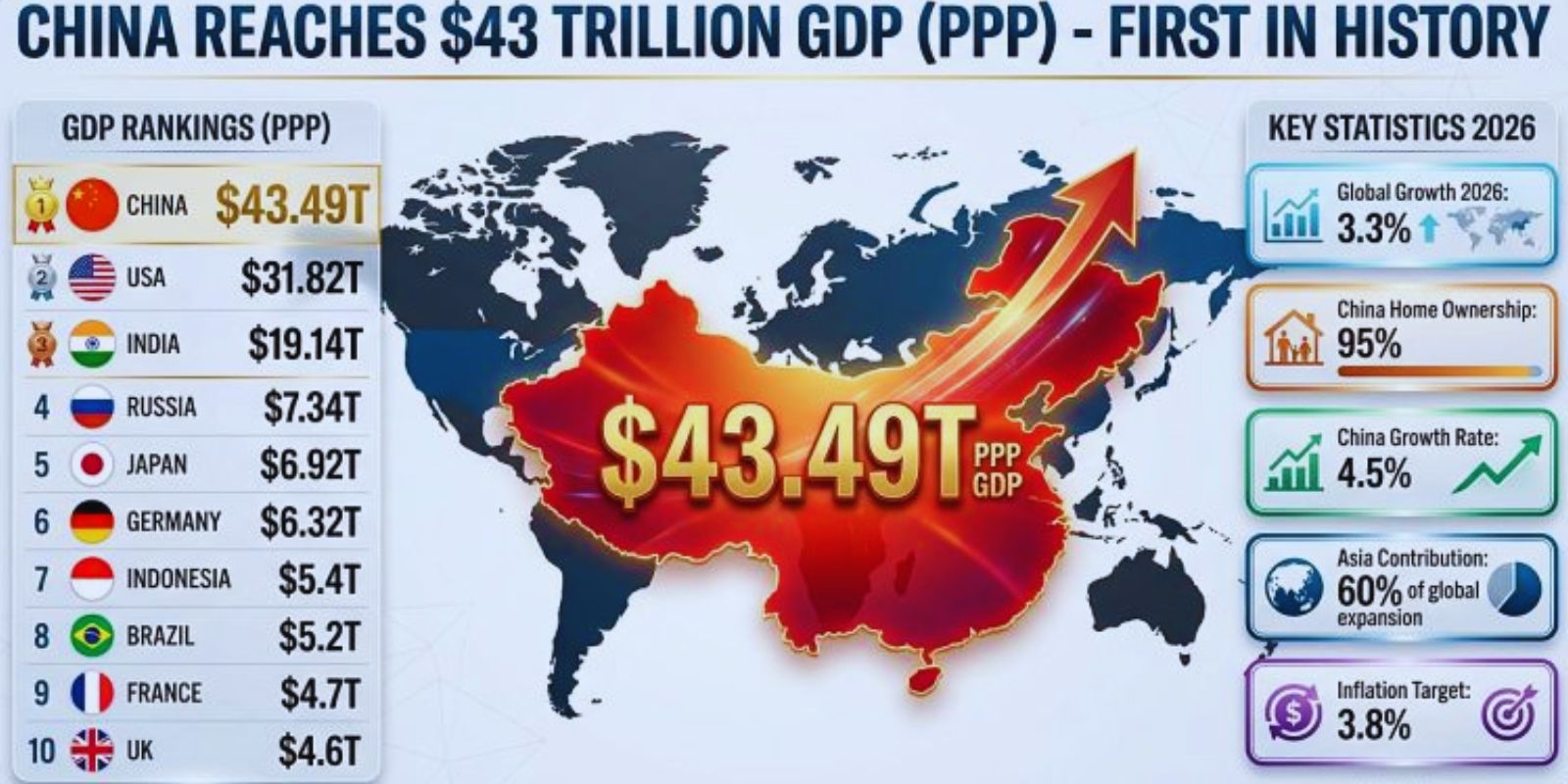
The China economy in 2026 continues to attract global attention due to its significant role in international trade, manufacturing, and technological development. As one of the world’s largest economies, China remains a major driver of global economic activity. Analysts expect growth to be supported by investments in advanced technology, infrastructure projects, renewable energy, and domestic consumption.
China’s focus on innovation has strengthened sectors such as artificial intelligence, electric vehicles, green energy, and digital services. Government policies continue to encourage modernization and industrial upgrades, helping businesses improve productivity and competitiveness. The country also benefits from its large consumer market, which supports retail, e-commerce, and service industries.
At the same time, China faces challenges such as demographic changes, global trade uncertainties, and shifts in international supply chains. Economic planners continue to address these issues through reforms and long-term development strategies.
The future outlook for China’s economy depends on its ability to balance growth, innovation, sustainability, and market stability. With ongoing investments and economic reforms, China is expected to remain a key influence on global markets and economic trends in the years ahead.
China Economy 2026: Growth Trends and Future Outlook remains a major topic for economists, investors, and business leaders around the world. China continues to play a critical role in global trade, manufacturing, technology, and investment. Its large consumer market and industrial capacity support economic activity across many sectors.
Technology drives much of China’s economic growth. Companies invest heavily in artificial intelligence, electric vehicles, robotics, digital services, and renewable energy. These industries create jobs, improve productivity, and strengthen global competitiveness. China also expands its infrastructure projects to support transportation, logistics, and urban development.
Manufacturing remains a key strength of the Chinese economy. Factories produce a wide range of products for domestic and international markets. Businesses continue to improve production efficiency through automation and advanced technologies. E-commerce platforms also contribute significantly to economic activity as millions of consumers shop online every day.
Consumer spending supports economic growth across retail, healthcare, entertainment, and service industries. Rising incomes encourage people to purchase more goods and services. Government policies aim to strengthen domestic demand and maintain economic stability.
China also faces several economic challenges. Demographic changes reduce workforce growth in some sectors. Global trade tensions create uncertainty for exporters. Supply chain adjustments influence international business operations. Economic planners continue to introduce reforms that support long-term development and market confidence.
Investors closely monitor China’s economic performance because changes in its economy often affect global markets. Strong growth in China creates opportunities for businesses and trading partners worldwide.
Conclusion:
China remains one of the most influential economies in the world. Technology, manufacturing, consumer spending, and infrastructure development continue to support economic growth in 2026. Government reforms and innovation strategies help strengthen competitiveness and encourage future expansion. Economic challenges require careful planning and effective policy decisions to maintain stability and progress. Global markets continue to watch China’s performance because of its impact on international trade and investment. For more informative articles about business, economics, and global developments, visit DailyinfoRoom, your trusted source for reliable knowledge, market insights, and educational content every day.
Top of Form