


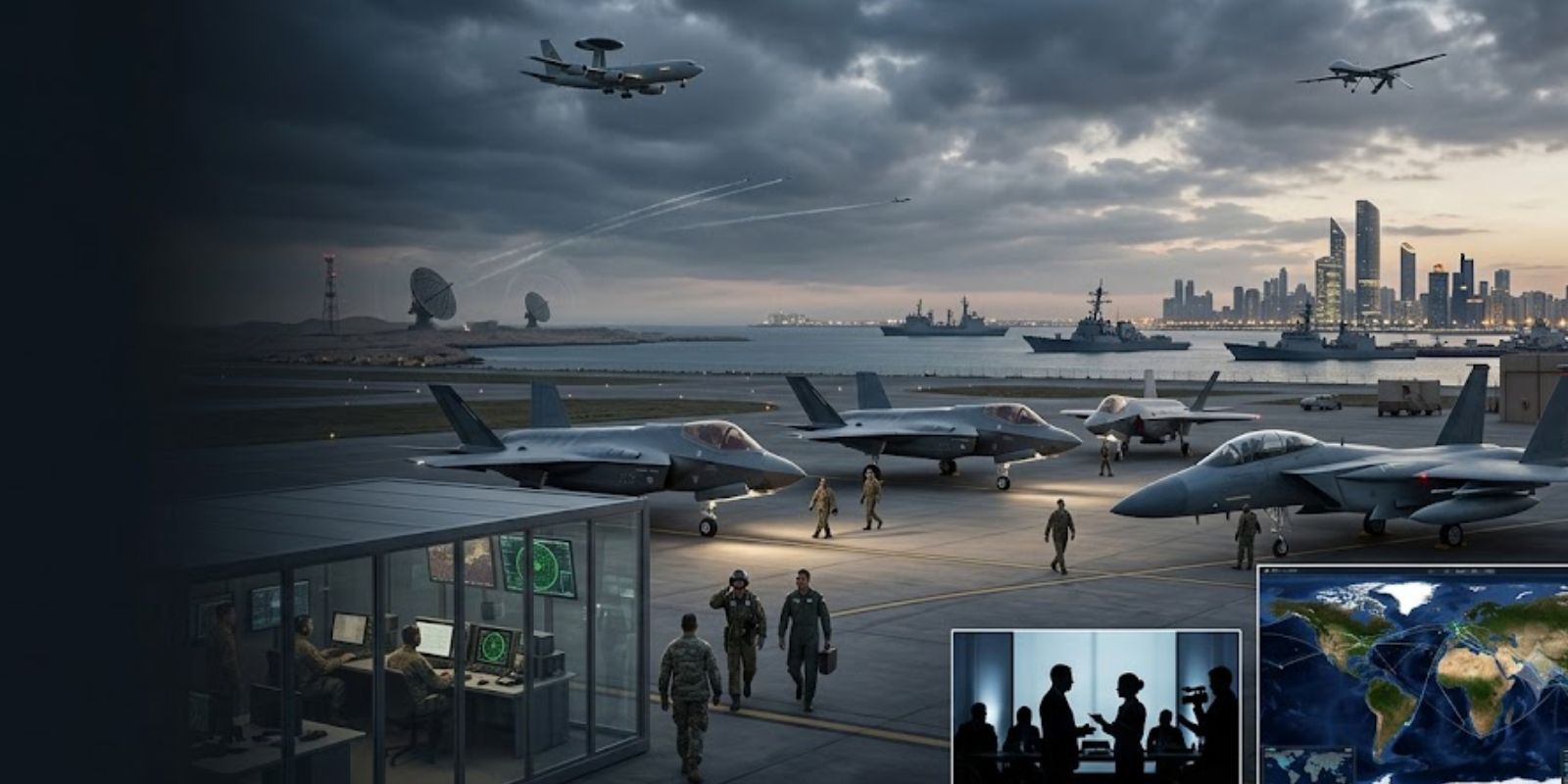
Iran ‘targets US combat aircraft‘ at Bahrain Air Base and this single development has sent shockwaves through military command centers, foreign ministries, and intelligence agencies across the globe. The reported targeting of American fighter jets stationed at one of the US military’s most strategically critical installations in the Middle East marks a serious and dangerous escalation in the already volatile relationship between Washington and Tehran. Bahrain hosts the US Navy’s Fifth Fleet headquarters, making it one of the most heavily guarded military positions in the entire region. Any hostile action directed at assets there carries consequences that stretch far beyond two nations. Understanding what happened, why it happened, and what comes next demands careful, clear-eyed analysis.
What Happened Breaking Down Iran ‘Targets US Combat Aircraft’ at Bahrain
The claim that Iran ‘targets US combat aircraft’ at a Bahrain air base did not emerge in isolation. It arrived against a backdrop of sustained military posturing, proxy conflict escalation, and deepening hostility between Iranian forces and American military assets operating across the broader Middle East theater.
The Targeting Claim and What It Involves
Iranian military sources and state-affiliated media released statements indicating that Iranian forces identified, tracked, and locked targeting systems onto US combat aircraft stationed at a Bahrain air base. Whether this targeting involved radar lock, drone surveillance, missile guidance systems, or some combination of these capabilities remains a subject of active military and intelligence assessment.
US defense officials took the claim seriously. The Fifth Fleet command, based at Naval Support Activity Bahrain, confirmed heightened security protocols and increased force protection measures across all installations in the region. American military leadership does not publicly acknowledge every Iranian threat or provocation, but the scale and specificity of this claim demanded an official response.
Bahrain’s Strategic Significance
Understanding why Iran ‘targets US combat aircraft’ at this specific location requires knowing what Bahrain represents in American military strategy. The island nation sits at the mouth of the Persian Gulf directly adjacent to Saudi Arabia and within short striking distance of Iranian territory across the water.
The US Fifth Fleet commands naval operations across the Persian Gulf, Red Sea, Arabian Sea, and parts of the Indian Ocean from its Bahrain headquarters. American combat aircraft based there provide air cover for carrier strike groups, enforce freedom of navigation operations, and project air power across a region where Iran has steadily expanded its military influence through proxy networks in Yemen, Iraq, Syria, and Lebanon.
Targeting American combat aircraft at Bahrain does not just threaten hardware. It challenges the entire architecture of US military deterrence in the Gulf region and Iran knows exactly what signal that sends.
Iran’s Strategic Calculation
Iran ‘targets US combat aircraft’ not randomly but as part of a deliberate strategic communication. Tehran consistently uses demonstrated military capability or the credible appearance of it as a negotiating tool, a deterrent signal, and a domestic political statement simultaneously.
Iranian military commanders face pressure from hardline domestic factions to display strength against American presence in the region. Publicly claiming the ability to target US assets at a major allied base serves that political purpose without necessarily requiring actual kinetic action. The line between demonstrating capability and committing an act of war is one Iranian military planners navigate with calculated precision.
Regional Tensions and Global Reactions What Iran ‘Targets US Combat Aircraft’ Means for the World
The claim that Iran ‘targets US combat aircraft’ at Bahrain carries consequences across multiple dimensions military, diplomatic, economic, and geopolitical. Governments, military alliances, and markets all responded with alarm.
US Military Response and Force Posture
The American military response to Iran ‘targets US combat aircraft’ claims followed established escalation management protocols. US Central Command increased surveillance operations over Iranian military installations, repositioned naval assets in the Gulf, and issued direct warnings through both military and diplomatic channels.
The Pentagon authorized additional air defense system deployments to protect US assets across the region. Patriot missile batteries and Terminal High Altitude Area Defense systems known as THAAD provide layered protection against Iranian ballistic missiles and drone attacks. American commanders made these deployments visible deliberately, communicating defensive resolve without crossing into offensive escalation.
US combat aircraft stationed across the region shifted to higher readiness states. Flight patterns changed, dispersal protocols activated, and maintenance schedules accelerated to maximize operational availability. Every American military installation in the Gulf region treats Iranian targeting claims as credible until proven otherwise the cost of underreaction far exceeds the cost of precautionary preparedness.
Bahrain and Gulf Cooperation Council Reactions
Bahrain’s government issued a formal statement condemning the Iranian targeting claim and reaffirming its security partnership with the United States. The Bahraini Foreign Ministry summoned the Iranian chargé d’affaires and delivered a formal diplomatic protest demanding clarification and accountability.
The Gulf Cooperation Council comprising Saudi Arabia, the UAE, Kuwait, Qatar, Oman, and Bahrain convened emergency consultations following the incident. Member states view any Iranian action against US military assets on Gulf soil as a direct threat to regional security architecture that protects their own governments and populations.
Saudi Arabia and the UAE, both of which host significant US military assets and face their own direct Iranian threats through Houthi proxy attacks from Yemen, placed their air defense systems on elevated alert status. The coordination between Gulf state militaries and US Central Command intensified across all intelligence-sharing and joint operational planning channels.
Israel’s Reaction and the Broader Axis of Pressure
Israel watches every Iran-US military development with acute strategic attention. Israeli defense officials publicly stated that Iran ‘targets US combat aircraft’ in Bahrain as part of a broader pattern of Iranian aggression that connects directly to threats Israel faces from Hezbollah in Lebanon, Hamas remnants in Gaza, and Iranian ballistic missile programs.
Israeli intelligence services maintain detailed assessments of Iranian military capabilities and shared relevant threat intelligence with American counterparts following the Bahrain targeting claims. The US-Israel security relationship operates at its highest coordination level whenever Iranian military provocations reach this level of specificity and public declaration.
European and NATO Responses
European governments and NATO allies expressed concern about the Bahrain targeting claim without matching the urgency of Gulf state reactions. France, Germany, and the United Kingdom issued coordinated statements calling for de-escalation and urging both the United States and Iran to pursue diplomatic channels.
NATO secretary general statements acknowledged the threat to allied personnel and assets US forces in Bahrain include significant personnel from allied nations and reaffirmed collective defense commitments under Article 5 frameworks that extend to allied troops operating in the region under US command structures.
Economic and Energy Market Reactions
Global energy markets reacted immediately to news that Iran ‘targets US combat aircraft’ at a Gulf air base. Oil prices spiked as traders priced in elevated risk of conflict that could disrupt shipping through the Strait of Hormuz the narrow waterway through which approximately 20% of global oil supply passes daily.
Insurance premiums for commercial shipping in the Persian Gulf region increased sharply. Shipping companies operating in Gulf waters activated war risk protocols and rerouted some vessels as a precautionary measure. Energy analysts warned that any actual military exchange between Iranian and American forces near Bahrain could trigger an oil price surge that would ripple through global inflation figures within weeks.
Diplomatic Channels and De-escalation Efforts
Behind the public statements, diplomatic back-channels activated rapidly following the targeting claim. Oman which traditionally serves as a quiet intermediary between Washington and Tehran reportedly facilitated initial communications aimed at establishing red lines and preventing miscalculation from triggering unintended escalation.
Qatar, which hosts the largest US air base in the Middle East at Al Udeid, also engaged in quiet diplomatic outreach. The fragile diplomatic architecture that connects adversarial states through neutral intermediaries in the Gulf represents the primary mechanism preventing military incidents from spiraling into open warfare.
Iran ‘targets US combat aircraft’ as a deliberate provocation, but both sides share a fundamental interest in avoiding a direct military confrontation that neither government has positioned itself to manage without catastrophic consequences. That mutual interest in avoiding full-scale war creates the narrow diplomatic space where de-escalation remains possible even in the most dangerous moments.
Conclusion;
The claim that Iran ‘targets US combat aircraft’ at Bahrain Air Base represents far more than a military incident it signals the dangerous fragility of peace in one of the world’s most strategically critical regions. American military assets, Gulf state security, global energy supplies, and international diplomatic frameworks all sit within the blast radius of any miscalculation between Washington and Tehran. The world watches this situation with urgent attention and justified concern. Staying informed about these developments is not optional for anyone who cares about global stability and security. For sharp, accurate, and timely coverage of geopolitical events, military developments, and international affairs that shape the world, visit DailyInfoRoom where serious news meets clear, reliable analysis.












