


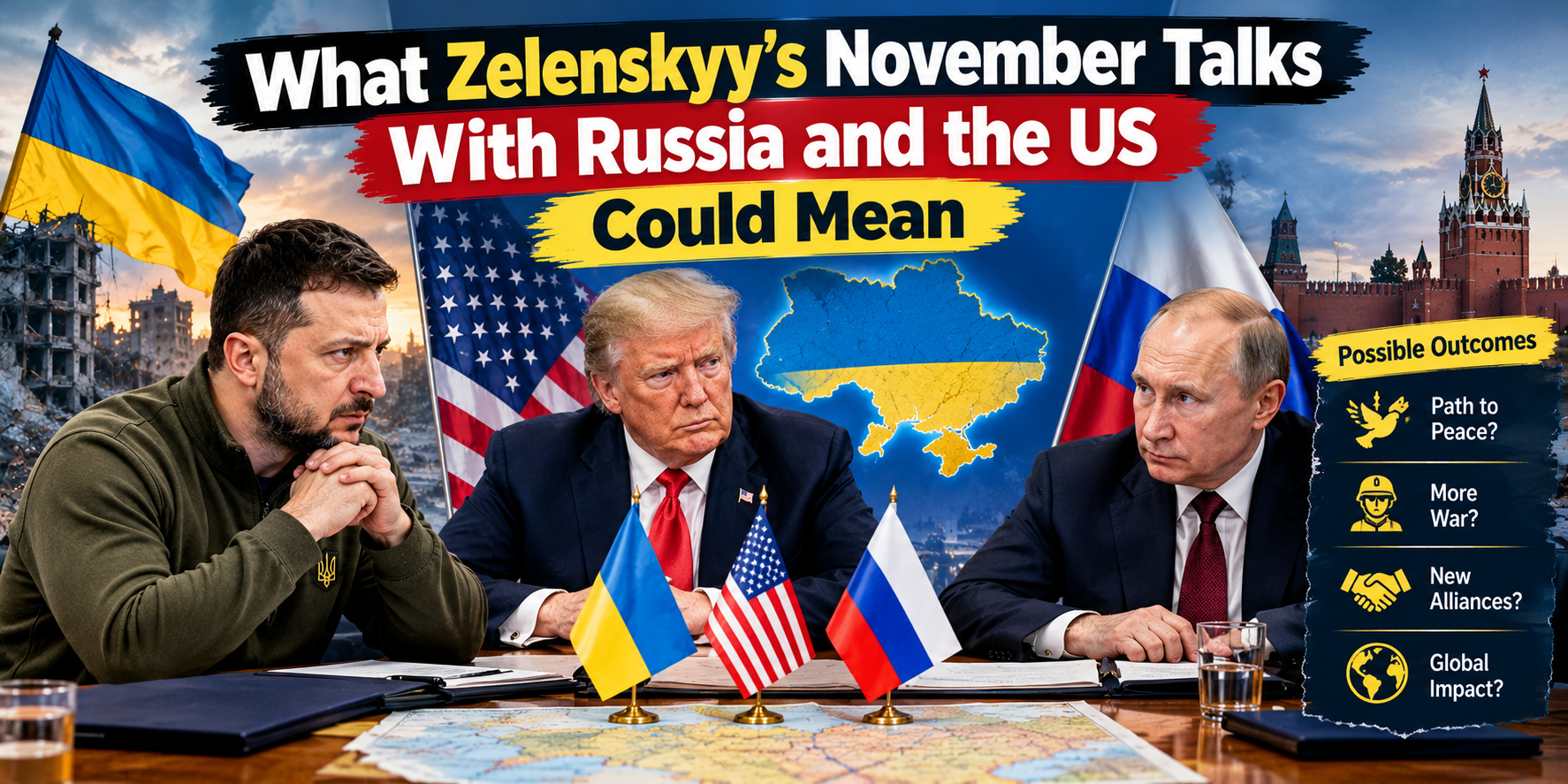
The war between Russia and Ukraine may enter another diplomatic phase in November 2026 as Kyiv, Moscow, and Washington prepare for renewed peace talks. Ukrainian President Volodymyr Zelenskyy has expressed support for a trilateral meeting aimed at restarting negotiations and exploring ways to end the conflict. The proposed discussions follow meetings between U.S. envoy Steve Witkoff, Zelenskyy, Russian President Vladimir Putin, and European leaders. Zelenskyy’s November Talks With Russia could create an opportunity to discuss ceasefire proposals, humanitarian concerns, and future security arrangements. The outcome will depend on whether the three sides can find common ground on issues that have repeatedly blocked previous negotiations.
What Could Zelenskyy’s November Talks With Russia Achieve?
The planned talks aim to bring Ukraine, Russia, and the United States together through their negotiating teams. Zelenskyy said on October 23 that the meeting should take place during the first half of November. He also stressed that Ukraine stood ready to begin discussions as soon as the other sides agreed on the arrangements.
According to reporting from Reuters, Moscow has expressed support in principle for renewed U.S.-mediated negotiations. The latest diplomatic efforts followed meetings between Witkoff and Zelenskyy in Norway and Witkoff’s discussions with Putin in St. Petersburg. The United States hopes to use these contacts to restart a process that has struggled to produce major progress.
One possible goal involves a ceasefire. Ukraine wants an end to Russian attacks and has supported proposals to stop strikes on energy infrastructure. An agreement to protect power plants, electricity networks, and other essential facilities could reduce risks for civilians as winter approaches.
Humanitarian issues could also feature prominently. Previous rounds of negotiations produced prisoner exchanges, offering families a chance to reunite with relatives held in captivity. Further talks could explore additional exchanges, the return of detained civilians, and other measures that reduce human suffering.
The negotiators may also discuss the conditions needed for a broader peace agreement. These could include monitoring arrangements, security guarantees, and a framework for future diplomatic meetings. Technical teams can examine practical details and prepare proposals for political leaders to consider.
The November meeting would represent a diplomatic opportunity, not a guarantee of peace. Earlier negotiations struggled because Moscow and Kyiv maintained sharply different positions on territory, security, and the future direction of Ukraine. The new talks must address these disagreements before either side can accept a lasting settlement.
The Main Obstacles and What the Talks Could Mean for Global Security
Territory remains one of the hardest issues in the Russia-Ukraine war. Russia occupies Ukrainian territory and has demanded terms that Kyiv considers unacceptable. Zelenskyy has argued that territorial questions require discussions at the leadership level, rather than decisions by technical negotiating teams alone.
Ukraine also rejects demands that would weaken its ability to defend itself. Zelenskyy has said that restrictions on Ukraine’s armed forces and enforced neutrality are not acceptable negotiating outcomes. Kyiv wants reliable security arrangements that reduce the risk of another Russian attack after any ceasefire or peace agreement.
Russia has its own demands about security and the future relationship between Ukraine and Western countries. The two governments have not reached agreement on these central questions. A meeting could help clarify their positions, but it cannot resolve the differences without meaningful compromises.
The role of the United States will also matter. Washington is trying to bring both sides back to negotiations and encourage progress toward ending the war. American diplomatic influence, military assistance to Ukraine, and relations with Moscow could shape the discussions. European governments will also seek a role because the war directly affects European security and regional stability.
The talks could influence energy markets, international trade, and military planning. A credible ceasefire could reduce pressure on energy infrastructure and help communities recover from repeated attacks. A wider settlement could support reconstruction, improve investor confidence, and allow displaced Ukrainians to consider returning home.
A failed meeting could deepen mistrust and leave both sides preparing for further fighting. Continued attacks during negotiations would make it harder for officials to build confidence in any proposed agreement. The participants will need clear commitments, credible monitoring, and practical steps that each side can verify.
Reports have identified Abu Dhabi as a possible location for the November negotiations. The precise schedule and final agenda still depend on arrangements between the three countries. Readers should distinguish announced plans from confirmed agreements and avoid treating diplomatic discussions as proof that a settlement is near.
Conclusion: Can November Talks Bring Ukraine Closer to Peace?
Zelenskyy’s November Talks With Russia could reopen a path toward a ceasefire and broader peace negotiations. The three countries have reasons to explore diplomacy, but disagreements over territory, security guarantees, and Ukraine’s future remain serious obstacles. The first measure of progress will be whether the sides agree on practical steps that protect civilians and reduce attacks. A lasting settlement will require credible commitments, continued international engagement, and difficult political decisions. Visit DailyInfoRoom for more informative coverage of world politics, international security, and the events shaping global affairs.












