


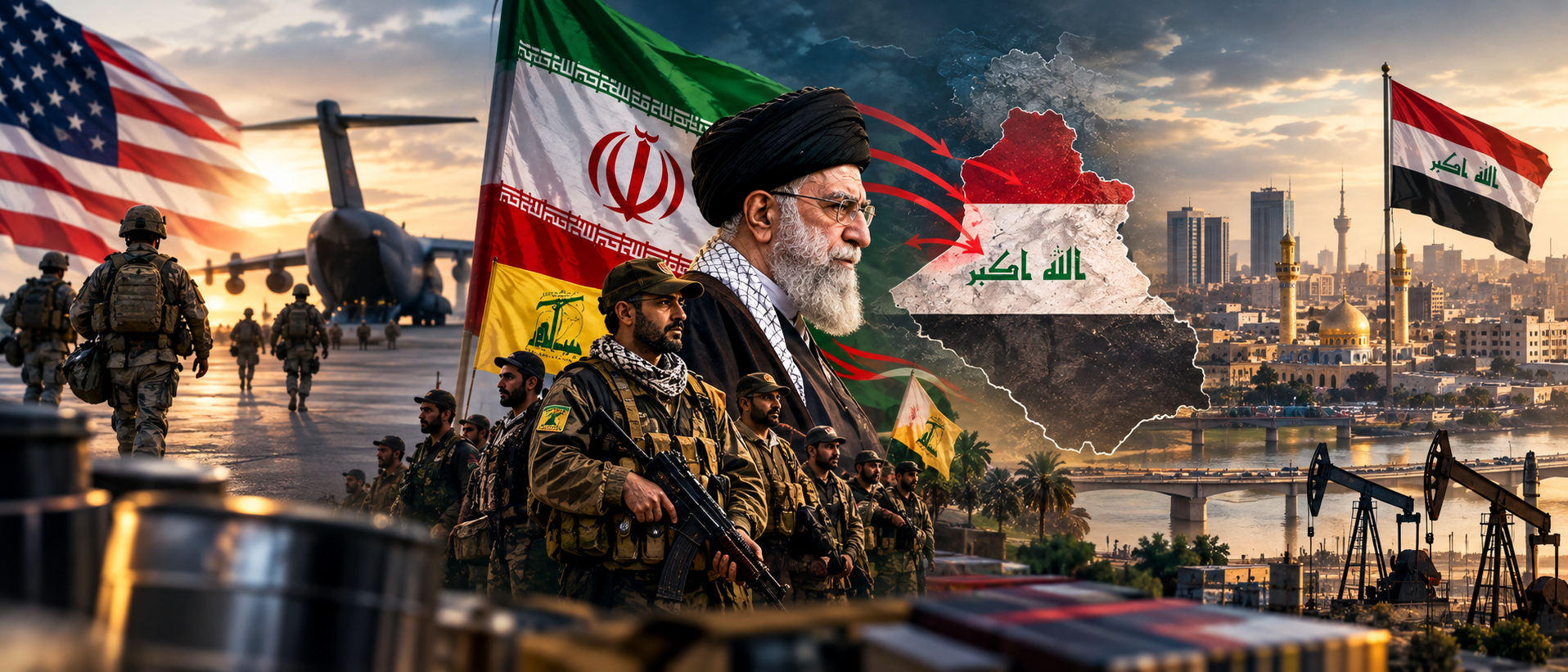
The completion of the U.S. Military withdrawal from Iraq on September 30, 2026 has changed the regional security environment. The United States ended more than two decades of military involvement in Iraq and shifted security responsibility fully toward Iraqi institutions. The change has increased attention on Iran because Tehran maintains deep political, security, economic, religious, and social connections with Iraq. Iran’s Influence does not depend on one organization or one political leader. It operates through several relationships that have developed since the fall of Saddam Hussein in 2003. Understanding these connections helps explain why Iraq remains an important arena in the wider competition between Iran, the United States, and other regional powers.
Iran’s Political and Security Influence in Iraq
Iran developed strong political connections in Iraq after the 2003 U.S. invasion removed Saddam Hussein’s government. Several Iraqi political parties built relationships with Tehran during years of exile, conflict, and political competition. Iran also supported armed groups that later became part of Iraq’s broader security structure.
The Popular Mobilization Forces, known in Arabic as the Hashd al Shaabi, provide an important example. Iraq created the organization in 2014 after Grand Ayatollah Ali al Sistani called for volunteers to help fight Islamic State. Several powerful groups within the organization maintain close relationships with Iran. Some commanders and political leaders have worked with Iran for many years.
Iran’s security connections give Tehran access to influential actors outside Iraq’s traditional political institutions. The Islamic Revolutionary Guard Corps has also maintained relationships with pro Iranian armed groups in Iraq. These connections allow Tehran to support partners who share its regional interests.
The end of the U.S. military presence could increase the importance of these relationships. Reuters reported that Iranian aligned militias view the U.S. withdrawal as a strategic victory, while Iraqi officials emphasize national sovereignty and the need to strengthen state security institutions.
This does not mean Iran controls Iraq. Iraqi politics contains competing interests, and many Iraqi leaders seek relationships with several countries. Iraq also has political movements that oppose foreign interference from both Iran and the United States. The 2019 protest movement showed strong public frustration with corruption, foreign influence, and the role of armed groups in political life.
Iraq’s relationship with Iran also includes religious and cultural connections. Both countries have large Shia Muslim populations, and millions of people travel across their shared border each year. Religious cities such as Najaf and Karbala create important social and cultural links between the two countries.
Economic Ties and Iraq’s Strategic Balance After the U.S. Exit
Economic connections form another major part of Iran’s Influence in Iraq. Iraq has depended on Iranian energy supplies, particularly natural gas and electricity. Trade between the two countries also supports businesses and communities on both sides of the border. These relationships give Tehran economic importance even when political circumstances change.
Energy creates a particularly sensitive connection. Iraq has struggled to meet its domestic electricity needs and has relied on imported Iranian gas and electricity. Reducing this dependence requires major investment in domestic energy production, transmission networks, and alternative suppliers.
Trade also matters. Iraq imports large quantities of goods from Iran, while the shared border creates opportunities for commercial activity. These economic links can strengthen Iran’s position because Iraqi businesses and consumers have practical reasons to maintain cross border trade.
The U.S. withdrawal does not remove Iraq’s ability to work with other regional powers. Baghdad has developed relationships with Saudi Arabia, Türkiye, Jordan, Egypt, and other countries. Iraqi leaders have also attempted to balance relations between competing regional powers. This approach gives Iraq options as it manages relations with Tehran and other international partners.
Security remains the most important question after the U.S. departure. Iraqi forces now carry greater responsibility for protecting the country and preventing Islamic State remnants from rebuilding. Reuters and the Associated Press reported concerns about possible security gaps, particularly because the United States previously provided important military and intelligence capabilities.
Iran may gain greater room to work with Iraqi partners if American military involvement decreases. The extent of that influence will depend on Iraq’s ability to strengthen state institutions, manage armed groups, develop independent energy resources, and maintain relationships with several regional powers.
Iraq also has strong reasons to protect its own decision making. Excessive dependence on any outside power can create domestic tensions. Iraqi political groups have repeatedly shown that they want greater national control over security and foreign policy.
Iran’s Influence in post withdrawal Iraq should therefore remain a subject of careful analysis. Tehran has powerful networks, but Iraq has its own political interests, institutions, religious authorities, economic priorities, and public opinion. The future balance will depend on how successfully Baghdad manages these competing pressures.
Conclusion: Iraq’s New Balance of Power
The U.S. withdrawal creates a new phase for Iraq’s foreign policy and security environment. Iran already holds significant connections through political parties, armed groups, trade, energy, religion, and regional relationships. Iran’s Influence could become more visible if Iraqi institutions struggle to fill security gaps left by the U.S. departure. Iraq still has opportunities to strengthen ties with Arab states, Türkiye, the United States, and other partners. The country’s future direction will depend on its ability to protect national sovereignty while managing powerful foreign relationships. Visit DailyInfoRoom for more informative content about global affairs, politics, technology, health, and current events.












