


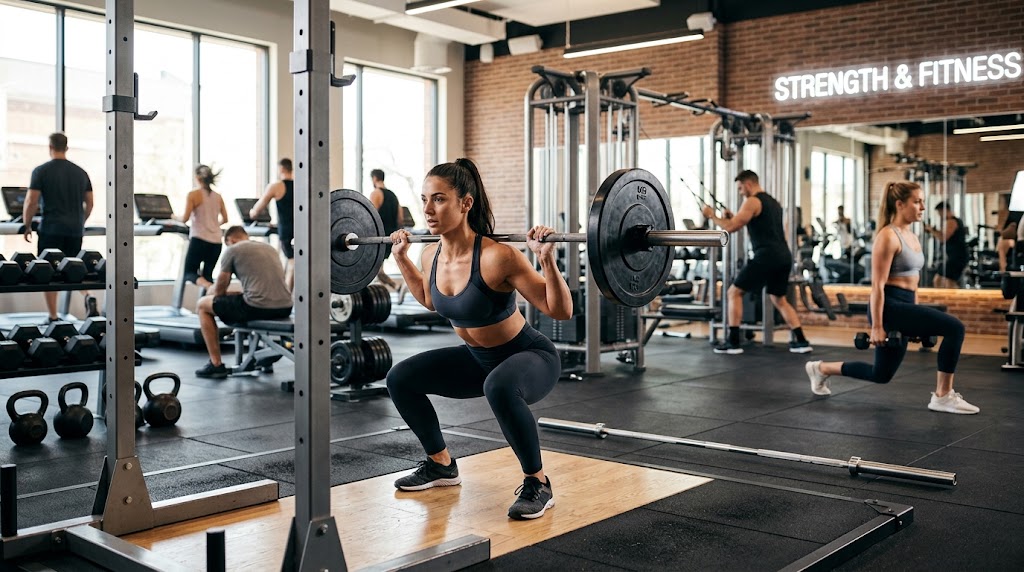
The gym represents the most powerful environment available for building the strength, muscle mass, cardiovascular fitness, and physical resilience that transforms how your body looks, performs, and ages across every decade of your life. Millions of people join gyms every year with genuine motivation and leave within months without achieving the results they committed to pursuing because they lack a structured, evidence-based approach to training that actually delivers measurable outcomes. The gym gives you access to equipment, resistance, and training variety that no home workout can fully replicate, but equipment alone produces nothing without the knowledge to use it intelligently. Understanding which exercises build the most strength, how to structure workouts for consistent progress, and what principles govern effective gym training separates people who transform their bodies from people who simply show up.
The Best Gym Exercises That Build Maximum Strength and Muscle
The gym environment offers hundreds of exercise options, but a specific group of compound movements and targeted exercises consistently produces the greatest strength and muscle development results across every training population that exercise science has studied.
The Squat: The King of Lower Body Strength
The barbell back squat earns its position as the foundational lower body exercise in any serious gym program by recruiting more muscle mass simultaneously than any other single movement. Squats activate the quadriceps, hamstrings, glutes, calves, hip flexors, core stabilizers, and spinal erectors in a coordinated movement pattern that builds functional strength directly applicable to every physical activity outside the gym.
Proper squat technique requires positioning the barbell across the upper back, feet shoulder-width apart with toes pointed slightly outward, and descending until the thighs reach parallel with the floor before driving back to the starting position through the heels. Gym beginners should master bodyweight squat mechanics before adding barbell loading, building the mobility, balance, and movement pattern that loaded squats require for safety and effectiveness at heavier weights.
Progressive overload drives squat strength development. Add 2.5 to 5 kilograms to your squat every week or two as strength improves, maintaining perfect technique throughout the progression rather than sacrificing form for heavier weights that the body cannot yet control safely.
The Deadlift: Total Body Strength Development
The conventional deadlift builds total body strength at a rate that no other gym exercise matches because it recruits the largest muscle groups in the human body including the posterior chain muscles of the hamstrings, glutes, lower back, and upper back alongside the core, forearms, and grip strength that maintaining control of a loaded barbell throughout the movement demands.
Set up with feet hip-width apart, barbell directly over mid-foot, hips hinged back with the chest up and spine neutral before driving through the floor and extending the hips to lift the barbell to a standing position. The gym deadlift rewards technical precision more than any other movement because the loads involved create genuine injury risk when performed with rounded spine, incorrect hip positioning, or uncontrolled descent.
Romanian deadlifts, trap bar deadlifts, and sumo deadlifts all offer gym training variations that address different muscle emphasis patterns and suit different body proportions, making the deadlift family one of the most versatile strength-building options in any gym program.
The Bench Press: Upper Body Pushing Strength
The barbell bench press develops chest, shoulder, and tricep strength through a horizontal pushing movement that gym training programs have used as the primary upper body strength assessment and development exercise across decades of competitive and recreational weightlifting.
Lie on the bench with eyes directly under the bar, grip slightly wider than shoulder-width, feet flat on the floor, and lower the bar with control to the mid-chest before pressing powerfully back to the starting position. The gym bench press rewards consistent weekly practice with progressive strength gains that translate into improved pushing ability across every upper body movement pattern.
Dumbbell bench press variations develop unilateral strength that prevents the dominant side compensation that barbell pressing occasionally masks. Gym training programs that include both barbell and dumbbell pressing variations develop balanced upper body strength that single-implement approaches cannot achieve.
Pull-Ups and Rows: Back Strength and Posture
Gym training programs that neglect pulling movements create strength imbalances that lead to poor posture, shoulder dysfunction, and chronic neck pain from overdeveloped pushing muscles dominating underdeveloped back muscles. Pull-ups and barbell rows address this imbalance by developing the latissimus dorsi, rhomboids, rear deltoids, and biceps that pulling movements target specifically.
Pull-ups represent the gym’s most effective bodyweight exercise for back development, requiring nothing beyond a bar and the ability to lift your own body weight through a full range of motion that activates the entire back musculature. Gym beginners who cannot yet perform full pull-ups benefit from assisted pull-up machines, resistance band assistance, or lat pulldown cables that build the strength needed to progress toward unassisted pull-up performance.
How to Structure Your Gym Workouts for Consistent Progress and Long-Term Results
Knowing which exercises produce the best results addresses only part of what effective gym training requires. Building those exercises into a structured workout program that delivers consistent progressive improvement across weeks and months determines whether gym training transforms your body or simply maintains your current condition.
The Push Pull Legs Training Split
The push pull legs training split organizes gym workouts by movement pattern rather than individual muscle groups, creating training frequency and recovery balance that produces consistent strength and muscle development across every major muscle group throughout the week.
Push days train chest, shoulders, and triceps through pressing and pushing movements including bench press, overhead press, incline dumbbell press, lateral raises, and tricep extensions. Pull days train back and biceps through rowing and pulling movements including deadlifts, pull-ups, cable rows, face pulls, and barbell curls. Leg days train the entire lower body through squat variations, hip hinge movements, leg press, and calf training.
Training each pattern twice weekly with this gym training structure creates sufficient volume and frequency for muscle development while providing the recovery time between sessions that muscle protein synthesis requires to complete before the next training stimulus arrives.
Progressive Overload: The Only Principle That Matters
Progressive overload drives every gym result regardless of which exercises, splits, or rep ranges a training program employs. Your body adapts to training stress by becoming stronger and building muscle only when that stress exceeds what previous training sessions demanded, requiring continuous progression in weight, reps, sets, or training density to sustain the adaptation signal.
Track every gym workout by recording the exercise, weight used, sets performed, and reps completed for each set. Compare each session to the previous equivalent workout and aim to improve by adding reps at the same weight, adding small weight increments at the same rep count, or adding an additional working set to a previously performed exercise combination.
Gym training programs that lack progressive tracking produce plateaus within weeks because the body adapts completely to any consistent stimulus and stops generating new strength or muscle adaptations once it can handle that stimulus comfortably without additional stress.
Rest and Recovery Complete the Gym Training System
Gym training creates the stimulus for adaptation, but muscle growth and strength development occur during recovery periods between sessions rather than during the workouts themselves. Inadequate sleep, poor nutrition, excessive training frequency, and chronic stress all compromise the recovery processes that convert training stimulus into the physical adaptations that gym training aims to produce.
Sleep seven to nine hours nightly to allow the growth hormone release and muscle protein synthesis that peak during deep sleep stages. Consume adequate protein, approximately 1.6 to 2.2 grams per kilogram of body weight daily, to supply the amino acid building blocks that muscle repair and growth require after each gym session. Space gym training sessions to allow 48 to 72 hours of recovery between sessions targeting the same muscle groups before training them again with full intensity.
Warming Up and Cooling Down Protect Long-Term Training
Every gym session should begin with five to ten minutes of general warm-up activity including light cardio and dynamic stretching that raises core body temperature, increases joint lubrication, and prepares the nervous system for the heavier loading that follows. Specific warm-up sets using the movement pattern of the first working exercise at 40 to 60% of working weight prepare the specific muscles and joints involved before full intensity sets begin.
Cooling down with five to ten minutes of light movement and static stretching after gym sessions reduces delayed onset muscle soreness, improves flexibility, and supports the parasympathetic recovery response that transitions the body from training stress back toward the resting state where muscle repair begins most efficiently.
Conclusion:
The gym provides everything a person needs to build genuine strength, impressive muscle, and lasting fitness when approached with the structured knowledge of which exercises work best and how to organize them into a program that delivers consistent progressive results. Squats, deadlifts, bench press, and pull movements form the foundation that every effective gym program builds upon. Progressive overload ensures those exercises continue producing adaptations rather than maintaining comfortable plateaus. Recovery and nutrition complete the system that training sessions initiate. Every person who commits to these principles in the gym and applies them consistently across months and years builds the physical capability and confidence that serious training delivers without exception. For more fitness guides, workout programs, health strategies, and content that produces real physical results, visit DailyInfoRoom where the knowledge that builds stronger bodies finds the readers ready to apply it.












