


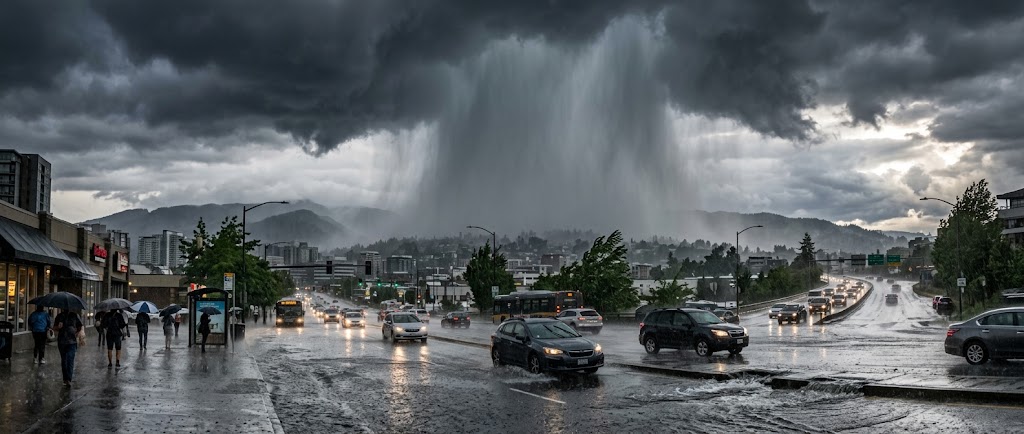
A Cloud Burst represents one of nature’s most sudden and destructive weather phenomena, capable of transforming a calm environment into a catastrophic flood zone within minutes without adequate warning for communities in its path. Unlike ordinary rainfall that accumulates gradually over hours, a Cloud Burst releases extraordinarily intense precipitation over a small geographic area in a very short time span, overwhelming drainage systems, triggering flash floods, and causing landslides that destroy infrastructure, displace families, and claim lives before emergency services can respond effectively. Understanding what causes a Cloud Burst, how meteorologists identify them, and what communities must do to protect themselves gives residents, urban planners, and government agencies the knowledge necessary to reduce the devastating human cost these extreme weather events repeatedly inflict on vulnerable populations worldwide.
The Science Behind Cloud Burst Events and Why They Strike Without Warning
Cloud Burst events challenge meteorologists, emergency planners, and communities precisely because their formation combines multiple atmospheric factors that converge rapidly and produce rainfall intensities that conventional weather forecasting struggles to predict with the precision and timing that effective early warning systems require.
The Meteorological Definition and Rainfall Threshold
Meteorologists define a Cloud Burst as rainfall exceeding 100 millimeters per hour over a localized area, though some definitions use slightly different thresholds depending on regional meteorological standards and geographic context. This rainfall intensity dwarfs typical heavy rainfall events that most weather services consider significant and capable of causing flooding in their own right.
For perspective on what Cloud Burst rainfall intensity means physically, ordinary heavy rainfall produces 10 to 15 millimeters per hour that drainage systems in well-designed urban environments handle without significant flooding. A Cloud Burst delivers seven to ten times that rainfall rate into the same drainage infrastructure that cannot adapt to the sudden volume increase fast enough to prevent catastrophic surface flooding within the first 30 minutes of the event beginning.
Cumulonimbus Clouds and Unstable Atmospheric Conditions
Cloud Burst events develop within cumulonimbus clouds, the towering storm clouds that can reach heights of 12 to 15 kilometers above the earth’s surface and contain enormous quantities of water droplets and ice crystals that strong updrafts keep suspended against gravity within the cloud structure.
The Cloud Burst occurs when the updraft sustaining the suspended water within the cumulonimbus cloud suddenly weakens or collapses, releasing the accumulated water load in an extremely concentrated burst over a small geographic area below the cloud. This collapse can happen with minimal warning and the precipitation reaches the ground far faster than standard rainfall because the intensity of the downward airflow accelerates the water’s descent.
Orographic lift creates particular Cloud Burst vulnerability in mountainous regions where moist air masses force upward by terrain produce rapid condensation and cumulonimbus development on the windward slopes. The Himalayas, the Western Ghats of India, the Alps, and similar mountain ranges experience Cloud Burst events with higher frequency than flat terrain environments precisely because mountain topography drives the atmospheric instability that rapid cloud development and water accumulation requires.
Climate Change and Increasing Cloud Burst Frequency
Climate change intensifies Cloud Burst frequency and severity through the basic thermodynamic relationship between atmospheric temperature and water vapor holding capacity. A warmer atmosphere holds more water vapor than a cooler one, meaning each degree of average temperature increase loads the atmosphere with additional moisture that intense convective systems convert into more extreme precipitation when Cloud Burst conditions develop.
Research from meteorological institutions across Europe, Asia, and North America consistently documents increasing frequency of extreme precipitation events including Cloud Burst occurrences in regions that historically experienced them rarely. The signal of climate-driven intensification appears most clearly in data showing that the most extreme rainfall events become more extreme faster than moderate rainfall events as global temperatures rise.
The Devastating Impact of Cloud Burst Events and How Communities Must Respond
The Cloud Burst impact on communities, infrastructure, and human life extends far beyond the immediate flooding that intense rainfall produces, creating secondary hazards and long-term consequences that the initial event duration never suggests based on how quickly the rainfall itself begins and ends.
Flash Flooding and Its Immediate Danger
Cloud Burst generated flash floods develop within minutes of rainfall onset and move with a speed and force that traps people in low-lying areas, underpasses, canyons, and river valleys before they can reach higher ground safely. The water carries debris, rocks, and soil that amplify its destructive impact far beyond what clear water of equivalent volume would produce, turning flash flood channels into powerful projectile delivery systems that destroy vehicles, structures, and infrastructure in their path.
The Nepal Cloud Burst and flash flood disaster of August 2026 demonstrated exactly this destruction pattern when sudden flash floods struck the Rasuwa district, destroying homes, infrastructure, and public services within hours and leaving over 93,000 people in urgent need of humanitarian assistance. The speed of Cloud Burst flash flood development consistently exceeds the response time that emergency services require to deploy effectively before the water reaches its peak destructive intensity.
Low-lying urban areas face particular Cloud Burst flood vulnerability when combined drainage and sewage systems reach their hydraulic capacity within minutes of extreme rainfall onset and begin releasing untreated sewage mixed with floodwater across streets and into homes that flooding inundates. This contamination creates public health emergencies that outlast the Cloud Burst flooding itself by days or weeks as waterborne disease risks elevate substantially in affected communities.
Landslides and Secondary Geological Hazards
Mountain and hillside communities face Cloud Burst induced landslide risk that often exceeds the direct flooding danger from rainfall itself because the water rapidly saturates slope soils and triggers mass movements of earth, rock, and debris that travel at speeds residents cannot outrun and that bury structures beneath meters of material within seconds of the landslide initiating.
Cloud Burst events in the Indian Himalayan region trigger dozens of landslides annually that kill more people than the direct flooding in many documented disasters. The combination of steep terrain, thin soil layers over impermeable rock, intense vegetation removal through deforestation, and increased Cloud Burst frequency from climate change creates landslide risk levels that continue rising as both the atmospheric conditions and the human land-use changes that amplify landslide susceptibility both worsen simultaneously.
Infrastructure damage from Cloud Burst landslides includes road destruction that isolates mountain communities from emergency services and supply chains for days or weeks following events. The Nepal flash flood disaster demonstrated this isolation effect precisely when rescue teams reported that damaged roads severely hampered their ability to reach the hardest-hit communities during the critical first 72 hours when survival rates for trapped survivors remain highest.
Urban Drainage System Failure
Urban planners design drainage systems to handle rainfall intensities based on historical frequency data that Cloud Burst events by definition exceed dramatically. A Cloud Burst delivers rainfall at rates that exceed the design capacity of drainage infrastructure built to manage the heaviest typical rainfall in an area, meaning even well-maintained modern drainage systems fail to prevent flooding during Cloud Burst events because the rainfall intensity simply surpasses what the physical infrastructure can move away from streets and low-lying areas.
Rapid urbanization compounds Cloud Burst drainage problems by replacing permeable natural surfaces including soil, grassland, and forest that absorb rainfall with impermeable concrete and asphalt that channels all rainfall directly into drainage systems without the natural absorption buffer that vegetated surfaces provide. Cities that experienced manageable flooding from equivalent historical rainfall now experience severe Cloud Burst flooding because urbanization has fundamentally changed the hydrological response to intense precipitation events.
Early Warning Systems and Community Preparedness
Effective Cloud Burst early warning requires dense networks of weather radar, rain gauges, and automated monitoring stations that provide real-time data to meteorological agencies capable of issuing alerts with enough lead time for communities to reach safety before flash flood waters arrive. The fundamental challenge is that Cloud Burst events develop and peak so rapidly that even a 30-minute warning represents a significant achievement given the meteorological limitations in predicting exactly where and when the atmospheric collapse that triggers them will occur.
Community preparedness programs teach residents to recognize warning signs including sudden darkening skies, distant thunder, upstream river noise intensification, and muddy water appearance in normally clear streams that indicate a Cloud Burst may be occurring upstream from their location. Acting on these natural warning signs without waiting for official alerts saves lives in communities where monitoring infrastructure does not yet provide reliable advance warning systems.
Evacuation route planning, elevated building construction in flood-prone areas, reforestation of upstream catchments, and drainage system capacity upgrades all reduce Cloud Burst impact through engineering and planning interventions that communities and governments can implement in advance of future events rather than responding exclusively after disasters have already claimed lives and destroyed property.
Conclusion:
Cloud Burst events demonstrate that nature delivers its most extreme expressions in the briefest and most concentrated forms, transforming ordinary environments into disaster zones faster than human warning systems and emergency responses can fully address. Climate change continues loading the atmosphere with the additional moisture that makes future Cloud Burst events more frequent and more intense than historical records document. Communities in vulnerable mountain regions, river valleys, and rapidly urbanizing areas all need to invest in early warning infrastructure, drainage capacity, land-use planning, and emergency preparedness programs that reduce the human cost before the next Cloud Burst strikes. Understanding the science and the danger represents the essential first step toward building the resilience that saving lives requires. For more important coverage of extreme weather events, climate science, natural disasters, and the environmental stories that affect communities worldwide, visit DailyInfoRoom where the news that matters most finds the readers committed to staying informed.












