

Foods Rich in Potassium represent one of the most important and consistently overlooked categories in everyday nutrition planning. Potassium ranks as the third most abundant mineral in the human body and serves as one of the body’s primary electrolytes, meaning it carries electrical charges that enable virtually every cell in your body to function properly. Your heart beats, your muscles contract, your kidneys filter waste, your nerves transmit signals, and your blood pressure stays regulated through biochemical processes that adequate potassium intake supports directly. Most adults consume only 50 to 75% of the recommended daily intake of 2,600 to 3,400 milligrams, creating a widespread deficiency that contributes to hypertension, muscle weakness, fatigue, and kidney dysfunction that proper Foods Rich in Potassium consumption prevents reliably.
The Most Powerful Foods Rich in Potassium That Science Identifies
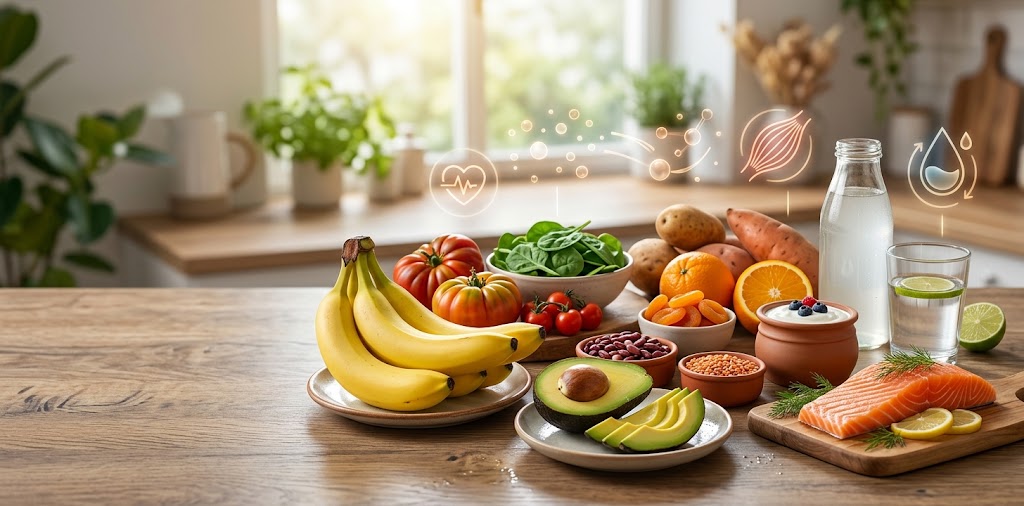
Foods Rich in Potassium exist across nearly every major food category, giving every dietary pattern genuine options for meeting daily requirements through whole food sources that deliver potassium alongside complementary nutrients that amplify its physiological benefits.
Sweet Potatoes Lead the Vegetable Category
Sweet potatoes rank among the most impressive Foods Rich in Potassium available in any grocery store worldwide. A single medium baked sweet potato with skin provides approximately 541 milligrams of potassium alongside exceptional beta-carotene, vitamin C, fiber, and manganese content that makes this vegetable one of the most nutritionally complete single foods in any balanced diet.
The potassium in sweet potatoes works synergistically with their high fiber content by supporting the kidney function that filters excess sodium from the bloodstream, the mechanism through which dietary potassium lowers blood pressure in people who consume too much sodium relative to potassium in their daily diets.
Baking sweet potatoes with skin intact rather than boiling them preserves more potassium in the flesh because boiling leaches water-soluble minerals into the cooking water that most people discard. Roasting, baking, or steaming sweet potatoes as Foods Rich in Potassium maximizes the mineral content available from each serving.
Bananas: The Most Recognized Potassium Source
Bananas hold the most widely recognized position among Foods Rich in Potassium in popular nutrition culture, though their actual potassium concentration places them below many other superior sources. A medium banana provides approximately 422 milligrams of potassium alongside natural sugars, fiber, vitamin B6, and magnesium that support nerve function and energy metabolism.
Their convenience, availability, natural sweetness, and portability make bananas the most practical Foods Rich in Potassium for people who need quick, no-preparation snacking options that deliver meaningful mineral content. Athletes who experience muscle cramping frequently consume bananas before and after exercise specifically because the potassium content helps maintain electrolyte balance that intense physical activity disrupts through sweat losses.
Overripe bananas deliver higher potassium concentration per gram than underripe ones because starch conversion to sugar during ripening concentrates the mineral content in a smaller mass of flesh. Consuming slightly overripe bananas as Foods Rich in Potassium therefore maximizes potassium intake per serving while also making them easier to digest for people with sensitive digestive systems.
Beans and Lentils Deliver Plant-Based Potassium Density
Cooked white beans provide approximately 1,189 milligrams of potassium per cooked cup, making them the most potassium-dense Foods Rich in Potassium available in the legume category and one of the highest potassium concentrations available from any commonly eaten whole food. A single cup of white beans covers between 35 and 46% of adult daily potassium requirements from one ingredient alone.
Black beans, kidney beans, pinto beans, and lentils all deliver potassium concentrations between 600 and 900 milligrams per cooked cup, positioning legumes collectively as some of the most reliable and accessible Foods Rich in Potassium for both plant-based eaters and omnivores who include legumes regularly in their weekly meal rotation.
Lentils specifically provide approximately 731 milligrams of potassium per cooked cup alongside 18 grams of plant protein, 16 grams of fiber, and substantial iron and folate content that makes a single lentil-based meal one of the most nutritionally dense eating opportunities available at the lowest possible cost per nutrient ratio.
Spinach and Leafy Greens Concentrate Mineral Content
Cooked spinach delivers approximately 839 milligrams of potassium per cooked cup, significantly more than raw spinach provides per equivalent volume because cooking collapses the leaf structure and concentrates the mineral content in a much smaller physical serving size. Incorporating cooked spinach as Foods Rich in Potassium into pasta dishes, soups, frittatas, and grain bowls represents one of the most efficient strategies for increasing daily potassium intake without consuming large volumes of food.
Swiss chard, beet greens, and cooked kale all deliver potassium concentrations exceeding 500 milligrams per cooked cup, making dark leafy greens as a category one of the most consistently reliable Foods Rich in Potassium across diverse culinary applications that integrate naturally into most existing cooking styles.
Avocado Provides Potassium With Healthy Fat
A whole avocado delivers approximately 975 milligrams of potassium alongside 15 grams of heart-protective monounsaturated fat, fiber, vitamin K, folate, and vitamin E that make it one of the most nutritionally complete single Foods Rich in Potassium available in any produce section. The combination of potassium and monounsaturated fat in avocado creates a uniquely cardiovascular-protective nutritional profile because both nutrients independently support arterial health through different mechanisms that complement each other.
The fat content in avocado also enhances the absorption of fat-soluble vitamins from other Foods Rich in Potassium consumed in the same meal, making avocado a useful addition to salads and grain bowls that combine multiple potassium sources alongside fat-soluble vitamin-containing vegetables.
How to Build Daily Meals Around Foods Rich in Potassium for Maximum Health Benefits
Understanding which Foods Rich in Potassium deliver the highest concentrations provides the foundation. Building those foods into a practical daily eating pattern that consistently meets potassium requirements converts nutritional knowledge into genuine health outcomes.
Potatoes Deliver More Potassium Than Bananas
A medium baked potato with skin provides approximately 926 milligrams of potassium, more than double what a medium banana delivers and making potatoes among the most potassium-dense Foods Rich in Potassium in the entire produce department. The potato’s reputation as a nutritionally simple carbohydrate source significantly undersells its genuine mineral content when consumed with skin intact and prepared without excessive added fat.
Boiling potatoes causes significant potassium loss into the cooking water, with research estimating that boiling reduces potassium content by 30 to 50% depending on boiling time and whether the potato cooks whole or cut. Choosing baking, roasting, or microwaving as preparation methods for potatoes as Foods Rich in Potassium preserves the maximum mineral content available from each serving.
Tomatoes and Tomato Products Provide Concentrated Potassium
Tomato paste delivers approximately 670 milligrams of potassium per quarter cup and represents one of the most concentrated Foods Rich in Potassium available in any pantry staple that home cooks use in small quantities across dozens of different recipe types. Cooking tomatoes down into paste concentrates all their water-soluble nutrients including potassium into a smaller volume that integrates invisibly into sauces, soups, stews, and braises without adding discernible flavor beyond depth and richness.
Fresh tomatoes provide approximately 292 milligrams of potassium per medium fruit, while a cup of tomato juice delivers around 527 milligrams. Using tomatoes and tomato products consistently across weekly cooking as Foods Rich in Potassium creates a cumulative potassium contribution that adds meaningfully to total daily intake without requiring any significant dietary modification.
Dairy Products Contribute Reliable Potassium
Yogurt and milk both qualify as practical Foods Rich in Potassium for people who consume dairy products regularly. A cup of plain yogurt provides approximately 380 milligrams of potassium, while a cup of whole or low-fat milk delivers around 350 milligrams. The daily dairy servings that most nutritional guidelines recommend would contribute approximately 700 to 1,000 milligrams of potassium from dairy sources alone when consumed consistently.
Greek yogurt concentrates protein significantly compared to regular yogurt but provides comparable potassium content, making it a versatile and protein-rich member of the Foods Rich in Potassium category that works across breakfast bowls, smoothies, dips, and cooking applications that benefit from its thick consistency and mild flavor.
Salmon and Fish Sources Add Animal-Based Potassium
Cooked salmon provides approximately 534 milligrams of potassium per 100-gram serving alongside its celebrated omega-3 fatty acid content, making it a significant member of the Foods Rich in Potassium category within the animal protein section of any balanced diet. Other fish including halibut, tuna, mackerel, and cod all deliver potassium concentrations between 400 and 500 milligrams per serving alongside high-quality complete protein and the B vitamins that support energy metabolism and neurological function.
The potassium in fish works alongside its omega-3 fatty acid content in a particularly heart-protective combination because both nutrients independently reduce cardiovascular disease risk factors including blood pressure, arterial inflammation, and irregular heart rhythm that together account for a large proportion of preventable cardiac events in adult populations.
Dried Fruits Concentrate Potassium Efficiently
Dried apricots deliver approximately 1,162 milligrams of potassium per 100-gram serving, making them one of the most concentrated Foods Rich in Potassium available as a portable snack that stores without refrigeration. Prunes, raisins, dried figs, and dates all deliver potassium concentrations between 600 and 800 milligrams per 100-gram serving because drying removes water from fruit while leaving the mineral content intact in a much smaller physical mass.
The caloric density of dried fruits warrants portion awareness for people managing calorie intake, but their extraordinary potassium concentration per gram makes them among the most potassium-efficient Foods Rich in Potassium available for targeted deficiency correction or consistent daily contribution toward meeting intake goals.
Conclusion:
Foods Rich in Potassium protect your cardiovascular system, regulate blood pressure, maintain muscle function, support kidney health, and enable the nerve signaling that your entire body depends on for proper daily function. Sweet potatoes, white beans, cooked spinach, avocado, baked potatoes, salmon, and yogurt collectively provide enough dietary variety to meet potassium requirements across every meal of every day without requiring dramatic dietary change or expensive supplementation. Building your weekly grocery list around consistent inclusion of these high-potassium whole foods creates cumulative health protection that compounds over months and years into measurably better cardiovascular and metabolic outcomes. Start with one additional Foods Rich in Potassium source each week and build from there. For more practical nutrition guides, mineral health content, evidence-based dietary advice, and wellness strategies that genuinely improve your daily life, visit DailyInfoRoom where the nutritional knowledge your body needs finds the readers committed to acting on it.