


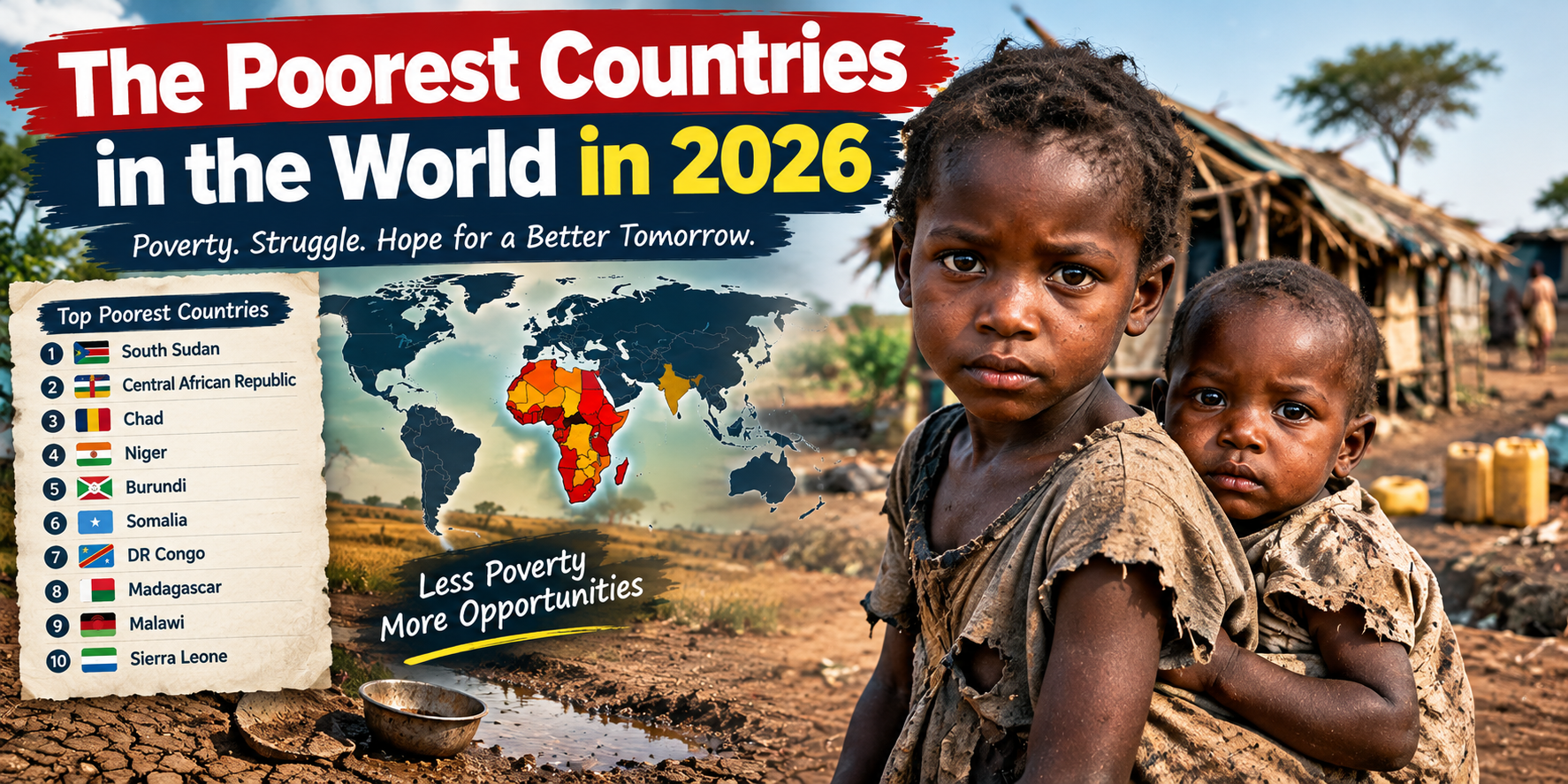
The Poorest Countries in the world in 2026 .Poverty remains one of the biggest challenges facing the world in 2026. Millions of people struggle to access nutritious food, clean drinking water, quality education, healthcare, and secure housing. Some nations face deeper economic difficulties because of conflict, political instability, limited infrastructure, climate-related disasters, and a lack of investment. The poorest countries often depend heavily on agriculture and informal employment, which can leave families vulnerable to rising food prices and economic shocks. Understanding these countries requires more than looking at income figures. It also means examining the challenges that prevent people from improving their living conditions and building a more secure future.
Which Countries Are the Poorest in the World in 2026?
Economists use several measurements to compare national wealth. One common measure is gross domestic product (GDP) per capita, which divides a country’s annual economic output by its population. This figure does not represent the actual income of every citizen, but it helps researchers compare economic output across countries.
Based on available 2026 projections and recent estimates, several countries rank among the world’s poorest by nominal GDP per capita. Their exact positions can change depending on the data source, exchange rates, and reporting year.
1. Afghanistan: Afghanistan faces serious economic challenges linked to political changes, restrictions on women’s participation in economic life, limited employment opportunities, and dependence on international assistance. Many households struggle to secure stable incomes and essential services.
2. Burundi: Burundi has a largely agricultural economy. Many families depend on small farms, while limited industrial development, low productivity, and inadequate infrastructure restrict opportunities for higher incomes.
3. Yemen: Years of conflict have damaged infrastructure, disrupted trade, weakened public services, and displaced millions of people. Many Yemenis face food insecurity and limited access to reliable healthcare and employment.
4. Sudan: Conflict has severely disrupted Sudan’s economy, agriculture, transportation, and trade. Displacement and damage to essential services have increased hardship for many communities.
5. South Sudan: South Sudan depends heavily on oil revenues, leaving its economy vulnerable to production disruptions and price changes. Conflict, flooding, and weak infrastructure also affect farming, employment, and access to basic services.
6. Madagascar: Many people in Madagascar depend on agriculture and natural resources. Cyclones, droughts, limited transport networks, and restricted access to education and healthcare create barriers to economic progress.
7. Mozambique: Mozambique has significant natural resources, yet many communities experience poverty. Rural infrastructure gaps, climate disasters, and insecurity in parts of the country limit economic opportunities.
8. Malawi: Malawi relies heavily on agriculture, particularly small-scale farming. Droughts, floods, rising living costs, and dependence on a few major crops can threaten household incomes and food supplies.
9. Niger: Niger faces challenges associated with rapid population growth, limited access to education, climate pressures, and dependence on rain-fed agriculture. Many rural communities lack reliable infrastructure and employment options.
10. Somalia: Somalia has faced prolonged conflict, recurring droughts, displacement, and weak public infrastructure. Livestock, trade, and remittances support many households, but climate shocks can threaten livelihoods.
These examples show that the poorest countries do not all face identical problems. Some struggle with prolonged conflict, while others face agricultural challenges, climate risks, or limited access to investment. The World Bank,s GDP per capital data provides a useful starting point for comparing national economic output.
Why Do the Poorest Countries Struggle to Develop?
Several connected factors can prevent countries from reducing poverty. Armed conflict damages roads, schools, hospitals, farms, and businesses. It can force families to leave their homes and discourage companies from investing. Governments also lose revenue when businesses close and trade declines.
Limited education creates another major barrier. Children who cannot attend school may struggle to develop the skills needed for higher-paying jobs. A shortage of trained teachers, healthcare workers, engineers, and skilled technicians can slow economic growth for generations.
Agriculture also plays a major role in many low-income economies. Farmers often depend on rainfall and have limited access to modern equipment, irrigation, storage facilities, and affordable credit. Droughts, floods, and changing weather patterns can destroy crops, raise food prices, and reduce family incomes.
Weak infrastructure makes these problems harder to solve. Poor roads increase transportation costs, unreliable electricity limits production, and inadequate internet access restricts learning and business development. Governments may also struggle to fund public services when they collect little tax revenue or carry heavy debt burdens.
Solutions require long-term investment in education, healthcare, clean water, agriculture, transport, electricity, and job creation. Fair governance, stronger public institutions, access to international markets, and opportunities for local businesses can help communities build more resilient economies. International assistance can support these efforts when it reaches people effectively and encourages sustainable development.
Conclusion: A Path Toward a More Prosperous Future
The poorest countries face serious economic challenges, but poverty does not define their people or their potential. Better education, stronger healthcare systems, reliable infrastructure, peaceful conditions, and productive employment can improve living standards over time. GDP per capita rankings offer useful comparisons, but they cannot explain every family’s experience or measure every aspect of well-being. Accurate data and long-term development policies help identify where support matters most. Visit DailyInfoRoom for more informative articles about global economies, current affairs, health, technology, and important issues shaping our world.












