


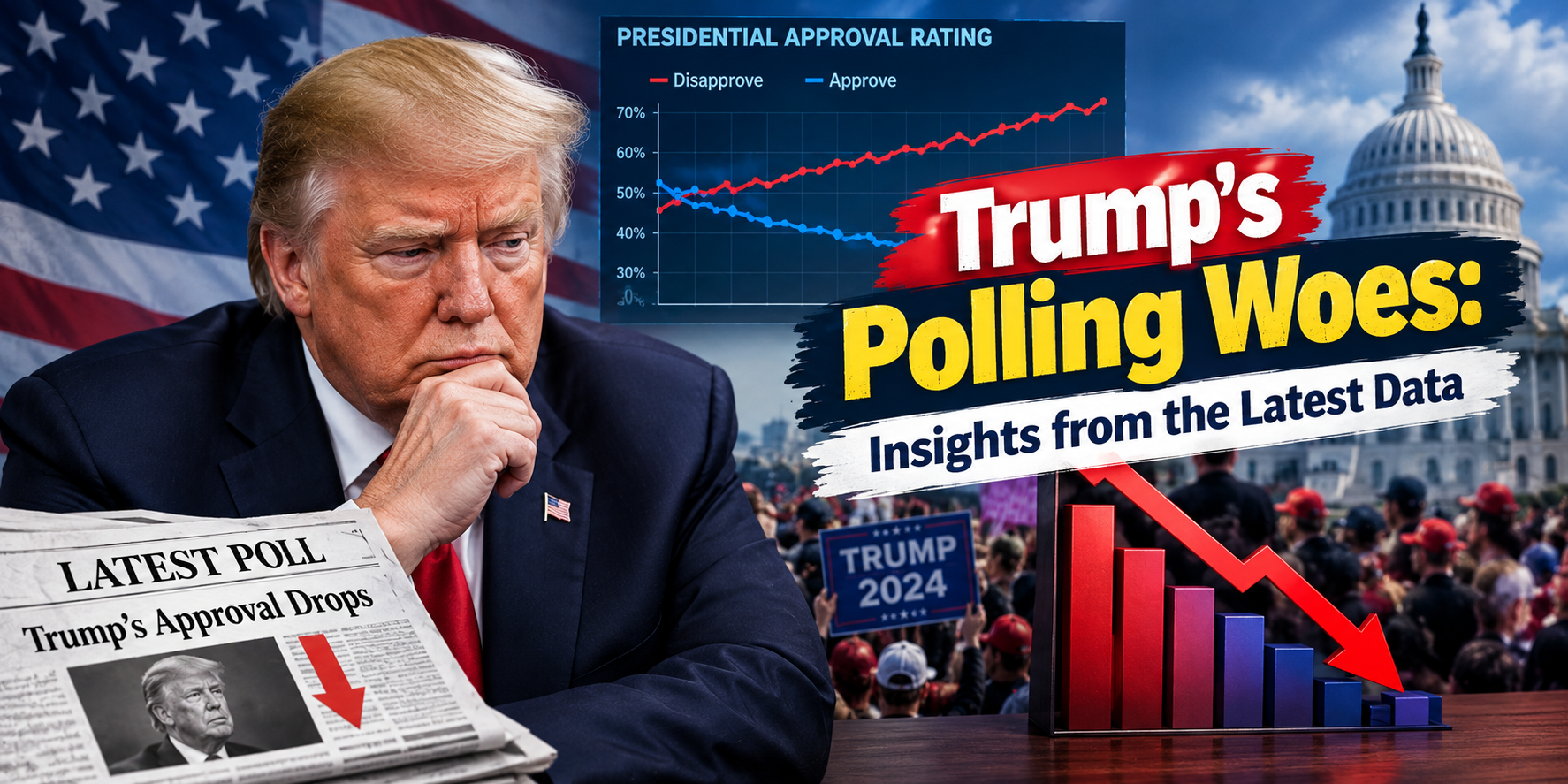
Donald Trump faces growing political pressure as recent polls show weak public approval ahead of the November 2026 midterm elections. His administration’s economic decisions, foreign policy, and handling of household costs have become major issues for American voters. The latest surveys reveal a difficult picture for the president, with more Americans expressing disapproval than approval of his performance. Trump’s Polling Woes have also raised questions about the Republican Party’s chances of maintaining its congressional majorities. Polls cannot predict every election result, but they provide useful insights into public opinion, voter concerns, and the political challenges that Trump and Republican candidates must address.
What the Latest Polling Data Says About Trump
Recent national surveys show a clear gap between Trump’s approval and disapproval ratings. A Reuters/Ipsos poll conducted from October 16 to 19, 2026, found that 31% of Americans approved of his performance, while 66% disapproved. Reuters reported that the approval figure marked the lowest point of either presidential term in that polling series.
A separate national average from Real Clear Polling showed approximately 38.8% approval and 60.4% disapproval through October 23. Different polling averages use different surveys, time periods, and weighting methods, so their figures do not match exactly. The overall trend still points to a difficult approval environment for Trump.
The upcoming midterm elections add urgency to these numbers. Reuters reported that a recent poll placed Democratic candidates ahead of Republicans by 47% to 35% among registered voters in the national congressional ballot. That result suggests a potential advantage for Democrats as they seek to win seats in Congress.
National polling does not guarantee a particular outcome. Congressional races depend on local candidates, turnout, district boundaries, and the distribution of voters across individual states. Republicans may remain competitive in many districts even when national surveys favor Democrats.
The data also shows that Trump’s support varies across polls and voter groups. Some surveys report approval in the low 40s, while others put it closer to 30%. Researchers consider sample size, survey methods, question wording, and the type of people interviewed when they assess these differences. Readers should examine several reputable polls rather than relying on one headline or isolated result.
Why Trump’s Polling Woes Matter Before the Midterms
Economic concerns appear to be an important factor behind Trump’s polling difficulties. Families pay close attention to grocery bills, fuel prices, housing costs, wages, and job opportunities. When people feel that their financial situation has worsened, they may hold the president responsible, even when several domestic and international factors influence prices.
The Reuters/Ipsos survey found that 68% of respondents disapproved of Trump’s economic performance. The poll also found that voters favored Democrats over Republicans on economic stewardship by 40% to 33%. These findings suggest that economic confidence presents a serious challenge for the administration.
Foreign policy has also become part of the debate. Reuters reported that military strikes involving Iran and Israel contributed to concerns about higher gasoline prices and household financial pressure. International conflicts can affect energy markets, government spending, and public confidence. Voters may judge a president not only by military decisions but also by their financial consequences at home.
Trump’s polling difficulties could influence Republican campaign strategies. Candidates may focus on local economic issues, border security, public safety, taxes, and their own records to appeal to undecided voters. Some may emphasize Trump’s policies, while others may highlight local priorities to separate their campaigns from national controversies.
Democrats could use weak approval ratings to argue that voters need a change in congressional leadership. Their success will depend on candidate quality, campaign funding, voter participation, and the issues that matter most in each district. Republicans could still improve their position if economic conditions strengthen, public opinion shifts, or their candidates perform better than national trends suggest.
The coming weeks will provide more evidence about whether these polling patterns persist. Changes in prices, employment, foreign policy, and campaign messaging could influence voter attitudes before Election Day. Polls offer a snapshot of public opinion at a particular moment, not a final verdict on the election.
What Comes Next for Trump and the Republican Party?
Trump’s Polling Woes reveal a challenging political climate as the 2026 midterm elections approach. Recent surveys point to widespread dissatisfaction, particularly over economic performance, while national congressional polling gives Democrats a potential advantage. The final results will depend on local races, voter turnout, and events that unfold before Election Day. Trump and Republican candidates still have opportunities to respond to voters’ concerns, but public confidence remains a central challenge. Visit DailyInfoRoom for more informative coverage of American politics, global affairs, economic trends, and the stories shaping today’s world.












