


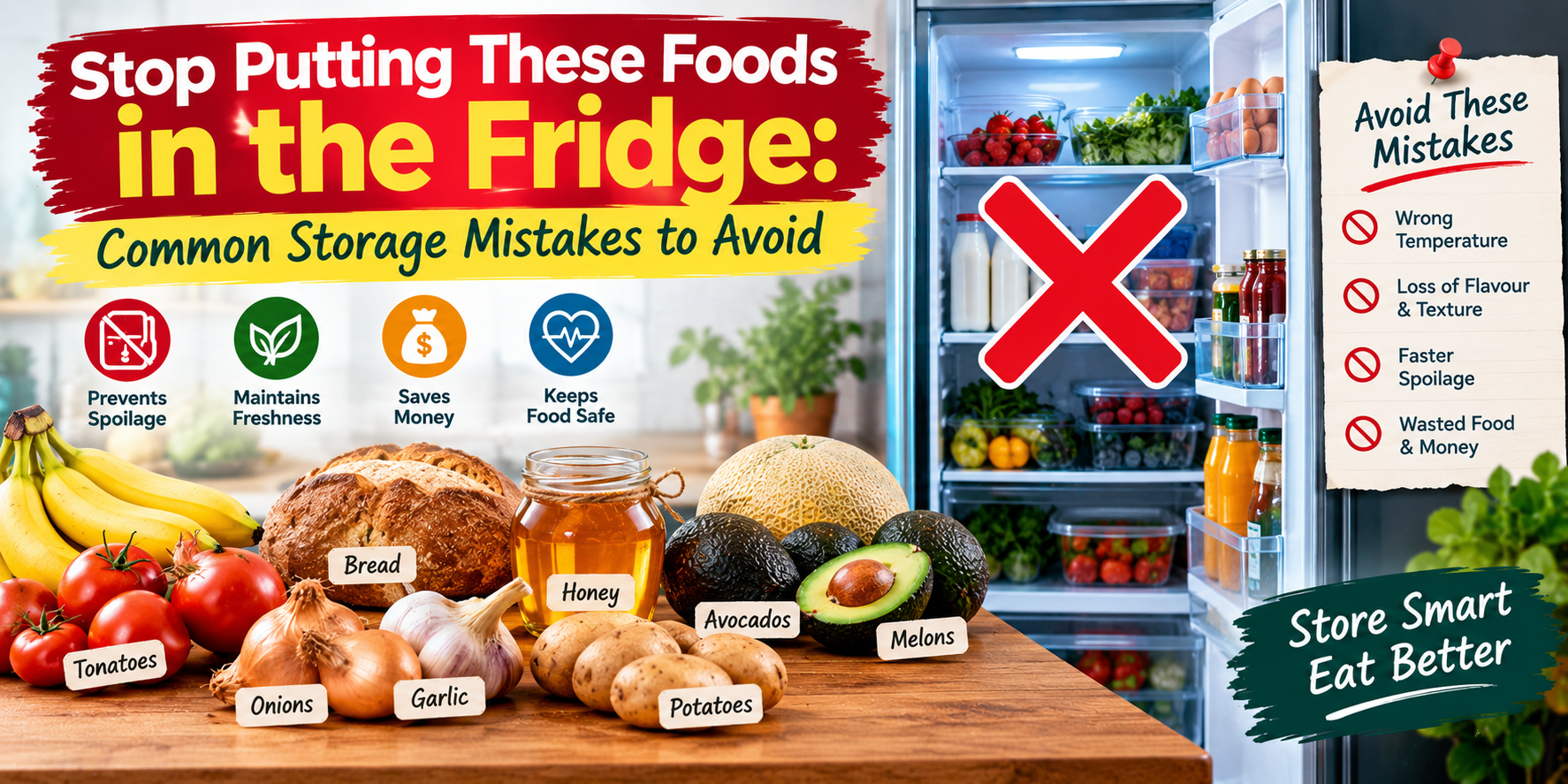
Refrigeration helps keep many foods fresh, but it does not suit every ingredient. Some fruits and vegetables lose their flavor, change texture, or stop ripening properly when temperatures drop too low. Knowing which foods belong on your kitchen counter, in a cool pantry, or inside the refrigerator can help you reduce food waste and enjoy better-tasting meals. Many households make simple storage mistakes because they assume cold temperatures always provide the best protection. Understanding how different foods respond to temperature, moisture, and airflow can improve your kitchen routine. Learn which foods in the fridge may need a different storage method and how to keep your groceries fresh for longer.
Common Foods You Should Not Store in the Fridge
Several everyday foods maintain better flavor, texture, or ripening quality at room temperature. Storage needs can vary with climate, ripeness, and how soon you plan to eat them.
1. Tomatoes
Tomatoes develop their best flavor and aroma when they ripen at room temperature. Cold temperatures can affect their texture and reduce some of the qualities that make ripe tomatoes taste fresh. Keep unripe tomatoes on the counter away from direct sunlight. If your tomatoes are fully ripe and you cannot use them soon, refrigeration can help slow spoilage. Let refrigerated tomatoes return to room temperature before serving for better flavor.
2. Bananas
Bananas ripen naturally at room temperature. Refrigeration can darken their peels and slow ripening. Keep unripe bananas on the counter until they reach your preferred ripeness. You can refrigerate ripe bananas if you need to extend their usable life, even if the peel turns brown. The fruit inside often remains edible.
3. Potatoes
Cold storage can change the starch balance in potatoes and increase their sugar content. This change may affect taste and browning during cooking. Store potatoes in a cool, dark, dry, well-ventilated place. Keep them away from direct sunlight and avoid sealed plastic bags that trap moisture. Do not store raw potatoes beside onions, as some storage conditions can encourage faster spoilage.
4. Onions
Whole, unpeeled onions usually keep best in a cool, dry, well-ventilated area. Refrigerators can expose them to moisture that encourages softening and spoilage. Store whole onions in a breathable basket or mesh bag away from direct sunlight. Once you cut an onion, place the unused portion in a covered container in the refrigerator and use it within a few days.
5. Garlic
Whole garlic bulbs need airflow and a dry environment. Refrigeration can encourage sprouting and may affect texture. Keep intact bulbs in a cool, dark pantry with good ventilation. Store peeled or chopped garlic in the refrigerator and use it promptly. Never keep homemade garlic in oil at room temperature because it can create conditions that allow dangerous botulism toxins to develop.
6. Bread
Refrigeration can make bread stale faster because cold temperatures speed up starch changes. Store bread in a sealed bag or bread box at room temperature if you expect to eat it within a few days. For longer storage, freeze sliced bread and take out only what you need. Freezing helps preserve quality better than refrigerating bread for several days.
7. Whole Melons
Whole, uncut melons can often stay at room temperature until they ripen. A cool countertop away from direct sunlight works well for short-term storage. Cut melon requires refrigeration because its moist flesh can support bacterial growth. Refrigerate cut watermelon, cantaloupe, and other melons promptly in a covered container.
8. Avocados
Unripe avocados need room temperature to ripen properly. Refrigeration slows this process and can delay the soft texture you want for salads, sandwiches, and spreads. Keep firm avocados on the counter and check them daily. Refrigerate ripe avocados if you need extra time before eating them. Store cut avocado in the refrigerator and use it soon.
How to Store Food Safely and Keep It Fresh
Choosing the right storage place can protect flavor and help prevent unnecessary waste. Food safety should guide your decisions, especially when foods spoil quickly or require temperature control.
Understand ripening. Some fruits release ethylene gas, which helps certain produce ripen. Apples and bananas can speed ripening in nearby sensitive fruits and vegetables. Keep produce separate when you want to slow ripening or extend storage time.
Control moisture and airflow. Many whole onions, garlic bulbs, and potatoes need ventilation to reduce moisture buildup. Use breathable containers for these foods. Avoid storing them in damp areas or in direct sunlight.
Refrigerate foods that need cold storage. Do not leave meat, poultry, seafood, dairy products, or other perishable foods at room temperature for extended periods. Keep your refrigerator at or below 4°C (40°F). Refrigerate cut fruits and vegetables promptly. In general, discard perishable foods left at room temperature for more than two hours, or one hour when temperatures exceed 32°C (90°F).
Check food regularly. Remove produce that shows mold, unusual softness, or signs of decay. Follow package instructions for products that require refrigeration after opening. Do not assume that a food remains safe simply because it looks or smells normal.
Adjust storage to your climate. Hot kitchens can speed ripening and spoilage. If your home stays warm, you may need to refrigerate ripe produce sooner than someone living in a cooler environment. Use the counter for short-term ripening and the refrigerator when food safety or longer storage requires it.
Conclusion: Store Your Food Smarter for Better Freshness
Knowing which foods in the fridge need a different storage method can improve flavor, preserve texture, and reduce food waste. Whole onions, garlic, potatoes, bread, and unripe bananas often do better outside the refrigerator, while cut produce and perishable foods need proper refrigeration for safety. Storage choices depend on ripeness, temperature, and how quickly you plan to use each ingredient. Build a simple routine that combines safe food handling with the right storage conditions. Visit DailyInfoRoom for more practical tips on food, nutrition, and everyday living.












