


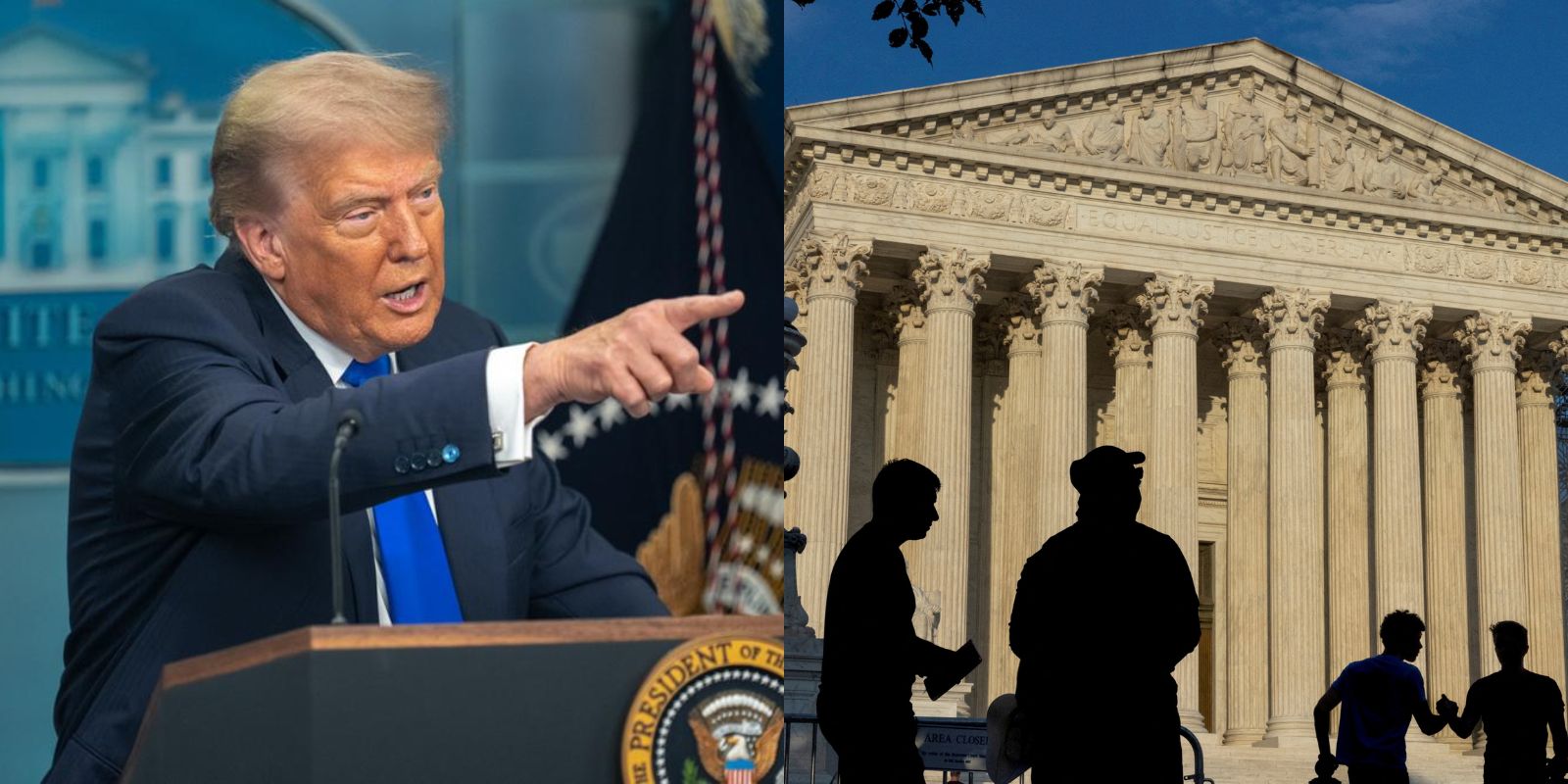
The US Supreme Court vastly expands Trump’s presidential power in a ruling that has reshaped the legal landscape of American democracy. This landmark decision grants broad immunity to former presidents for official acts taken while in office a move that legal scholars, politicians, and everyday citizens are still unpacking. For supporters, it protects the executive branch from politically motivated prosecutions. For critics, it places the president dangerously close to being above the law. Either way, this ruling marks a turning point in how America defines presidential authority. Understanding the legal reasoning behind it and its real political consequences is essential for every informed citizen right now.
Breaking Down the Legal Ruling What the Supreme Court Actually Decided
The Supreme Court’s decision centered on a fundamental question: can a former president face criminal prosecution for actions taken while serving in office?
The Court answered with a firm and historic no, at least when those actions fall within a president’s “official duties.” In a 6-3 ruling split along ideological lines, the conservative majority held that absolute immunity applies to a president’s core constitutional powers, and presumptive immunity applies to all other official acts.
This directly impacts the federal criminal cases against Donald Trump. Prosecutors must now prove that the actions in question were unofficial a legal bar that just got significantly higher to clear.
Justice John Roberts, writing for the majority, argued that without such protection, presidents would make decisions in fear of future prosecution rather than in the best interest of the nation. The Court framed immunity not as a privilege for the individual, but as a structural necessity for the executive branch to function independently.
The dissenting justices pushed back hard. Justice Sonia Sotomayor warned that the ruling effectively places a president above the law, stating that the decision makes the commander-in-chief a king in all but name. Justice Ketanji Brown Jackson echoed those concerns, arguing the ruling creates a “law-free zone” around presidential power.
The US Supreme Court vastly expands Trump’s presidential power by drawing a line that had never been drawn before in American constitutional history. No prior president had ever claimed or received this level of legal protection for in-office conduct.
Legal analysts note that the ruling’s long-term effects stretch well beyond Trump. Every future president now operates with a dramatically expanded shield. That changes the calculation of what any president can do and what consequences, if any, they might face afterward.
The Political Shockwaves How This Ruling Changes the Power Game
The legal ruling landed like a grenade in an already explosive political environment. Democrats immediately condemned the decision as a threat to democratic accountability. Republicans largely celebrated it as a necessary correction against what they called weaponized prosecutions.
For Trump specifically, the timing proved critical. Federal cases tied to the January 6th Capitol events and election interference efforts now face serious delays and legal recalibrations. Prosecutors must revisit evidence, reframe arguments, and determine which alleged actions qualify as “unofficial” a process that could drag on for months or years.
Beyond Trump’s personal legal battles, the ruling reshapes how future presidents approach the limits of their office. Critics argue that a president who knows criminal accountability is nearly impossible will act with far fewer restraints. This concern is not hypothetical it cuts across party lines and applies equally to any future occupant of the White House.
The US Supreme Court vastly expands Trump’s presidential power at a moment when public trust in institutions is already fragile. Polls consistently show declining confidence in the Court, Congress, and the presidency. This ruling adds fresh fuel to that fire, with many Americans questioning whether the justice system applies equally to everyone.
International observers also took note. Allies and rivals alike watched closely, understanding that how America defines executive power shapes its credibility on the global stage. A presidency insulated from legal accountability sends a complicated message about the rule of law one of America’s most exported democratic values.
Domestically, the ruling energized both bases heading into election season. Voter mobilization, fundraising, and political messaging on both sides quickly incorporated the decision into their campaigns.
Conclusion:
The moment the US Supreme Court vastly expands Trump’s presidential power, it does more than settle one legal dispute it rewrites the rules for every president who follows. This ruling will face legal challenges, academic debate, and political battles for decades to come. Americans across the spectrum must stay engaged, informed, and active in shaping how democracy responds to this new reality. The stakes have never been higher. For clear, unbiased analysis on rulings like this and the political developments that follow, make DailyinfoRoom your go-to destination because understanding the world around you starts with reading the right source.












