

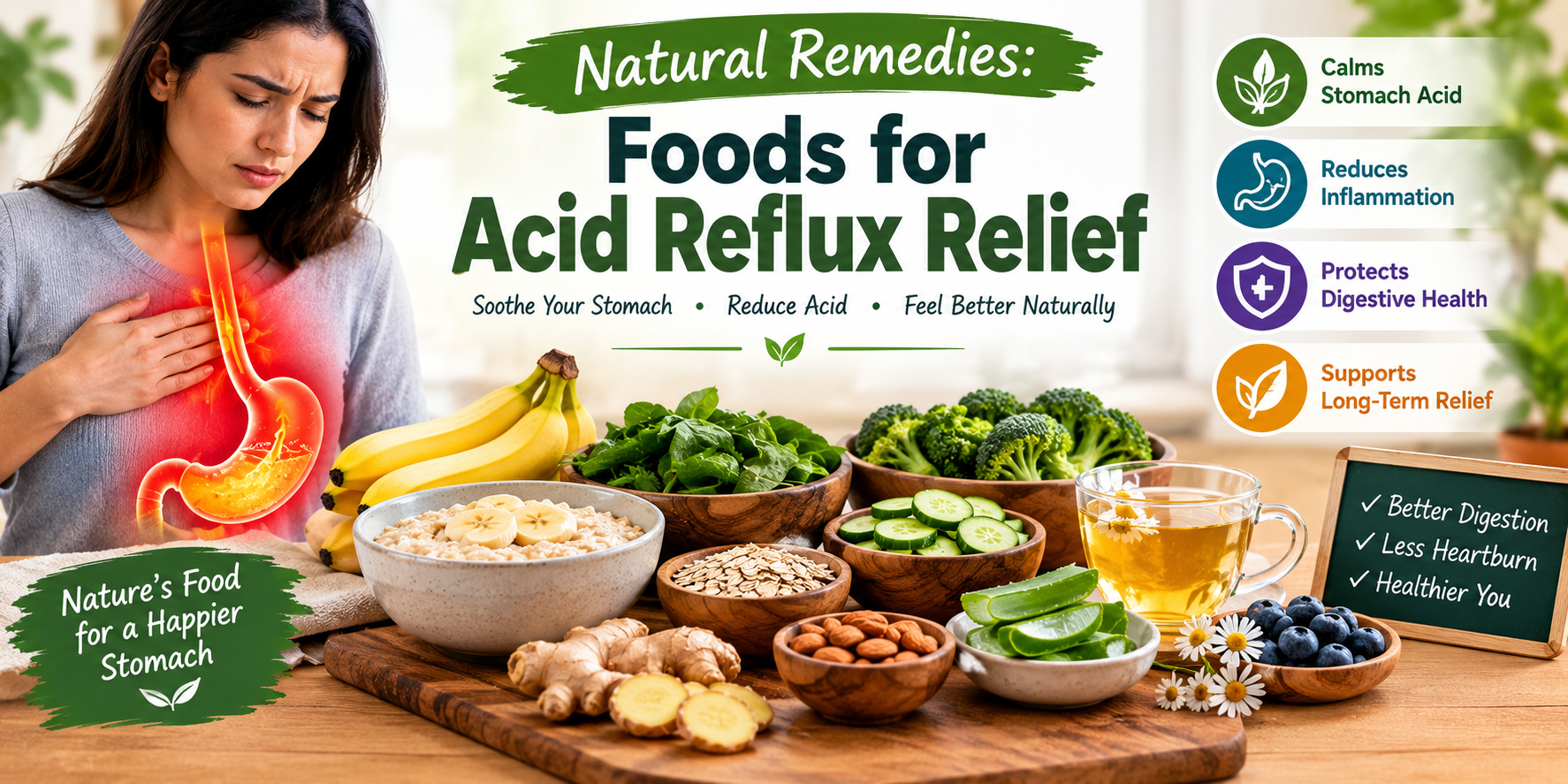
Acid reflux can cause heartburn, a sour taste in the mouth, chest discomfort, and a burning sensation after meals. It happens when stomach contents flow back into the esophagus, the tube that carries food to the stomach. Certain foods can trigger these symptoms, while other food choices may help reduce discomfort. Natural Remedies offer a practical way to manage mild acid reflux through balanced eating habits, suitable food choices, and healthier daily routines. No single food works for everyone, so understanding your triggers matters. Choosing gentle foods, eating smaller meals, and avoiding late-night eating can help you manage symptoms and support better digestive health.
Best Foods That May Help Reduce Acid Reflux
Your food choices can influence how often acid reflux occurs. Some foods contain fiber, provide important nutrients, and generally cause fewer symptoms for many people. Individual reactions differ, so introduce suitable options gradually and observe how your body responds.
1. Oatmeal
Oatmeal provides fiber and makes a filling breakfast. It usually contains little fat when you prepare it with water or low-fat milk that you tolerate well. Choose plain oatmeal and add a small serving of banana for natural sweetness. Avoid large amounts of chocolate, heavy cream, or high-fat toppings if they trigger your symptoms.
2. Bananas
Bananas offer fiber and potassium in a convenient snack. Many people tolerate them well, although no fruit guarantees relief from acid reflux. Try a ripe banana between meals or add slices to oatmeal. Keep portions comfortable and pay attention to your own response.
3. Melons
Cantaloupe and honeydew provide water and nutrients while offering a mild flavor. Some people find these fruits easier to tolerate than acidic choices such as oranges or grapefruit. Eat a moderate portion and check whether the fruit affects your symptoms.
4. Green Vegetables
Broccoli, spinach, green beans, and zucchini can fit into an acid reflux-friendly diet. These vegetables provide vitamins and fiber without the high fat content found in many fried foods. Steam or roast them with a small amount of oil. Limit spicy sauces if they trigger heartburn.
5. Lean Proteins
Skinless chicken, fish, eggs prepared with little added fat, and other lean proteins can help you build balanced meals. High-fat meals may worsen reflux for some people because fat can slow stomach emptying and affect symptoms. Choose grilled, baked, steamed, or poached options instead of deep-fried dishes.
6. Whole Grains
Brown rice, whole-grain bread, and other whole grains provide fiber and help create satisfying meals. Pair them with lean protein and cooked vegetables for a balanced plate. Large meals can still trigger reflux, so choose portions that leave you feeling comfortably full rather than stuffed.
7. Ginger in Small Amounts
Ginger has a long history of use for digestive discomfort, but strong evidence does not show that it reliably treats acid reflux. Some people enjoy a little fresh ginger in food or a mild ginger drink. Avoid concentrated supplements unless a healthcare professional recommends them, and stop using ginger if it worsens your symptoms.
Eating Habits and Foods to Avoid for Better Digestive Comfort
Natural Remedies work best when you combine suitable foods with habits that reduce pressure on your stomach. The timing, size, and fat content of meals can influence reflux symptoms.
Eat smaller meals. Large meals stretch the stomach and may encourage stomach contents to move upward. Try smaller portions throughout the day instead of one or two heavy meals. Eat slowly and stop when you feel comfortably satisfied.
Avoid lying down after eating. Stay upright for at least two to three hours after meals. If nighttime heartburn troubles you, finish dinner earlier and consider raising the head of your bed. Extra pillows alone may not provide the same benefit as elevating the upper body.
Identify your personal triggers. Coffee, chocolate, peppermint, tomatoes, citrus fruits, spicy foods, alcohol, and fatty meals can worsen symptoms in some people. You do not need to eliminate every item automatically. Keep a food diary and record what you eat, when symptoms occur, and which habits seem to affect them.
Drink water throughout the day. Water supports normal hydration and may help you swallow food comfortably. Avoid drinking very large amounts at once if they make your stomach feel overly full. Choose drinks that do not trigger your symptoms.
Manage your weight if needed. Excess body weight can increase pressure on the stomach and contribute to reflux. A balanced diet and regular physical activity may help reduce symptoms for some people.
Natural Remedies can support everyday symptom management, but they cannot replace medical care when reflux persists. Seek medical advice if you experience frequent heartburn, difficulty swallowing, unexplained weight loss, repeated vomiting, or symptoms that do not improve. Severe chest pain, especially with shortness of breath, sweating, or pain spreading to the arm or jaw, requires emergency medical attention.
Conclusion: Build Better Eating Habits for Lasting Acid Reflux Relief
The right food choices can help many people manage mild acid reflux and enjoy greater digestive comfort. Oatmeal, bananas, vegetables, lean proteins, and whole grains make useful options for a balanced eating plan. Smaller meals, avoiding late-night eating, and identifying personal triggers can also make a difference. Natural Remedies may reduce discomfort, but results vary from person to person. Pay attention to your symptoms and seek professional guidance when they continue or become severe. Visit DailyInfoRoom for more informative articles on nutrition, healthy eating, and everyday wellness.