


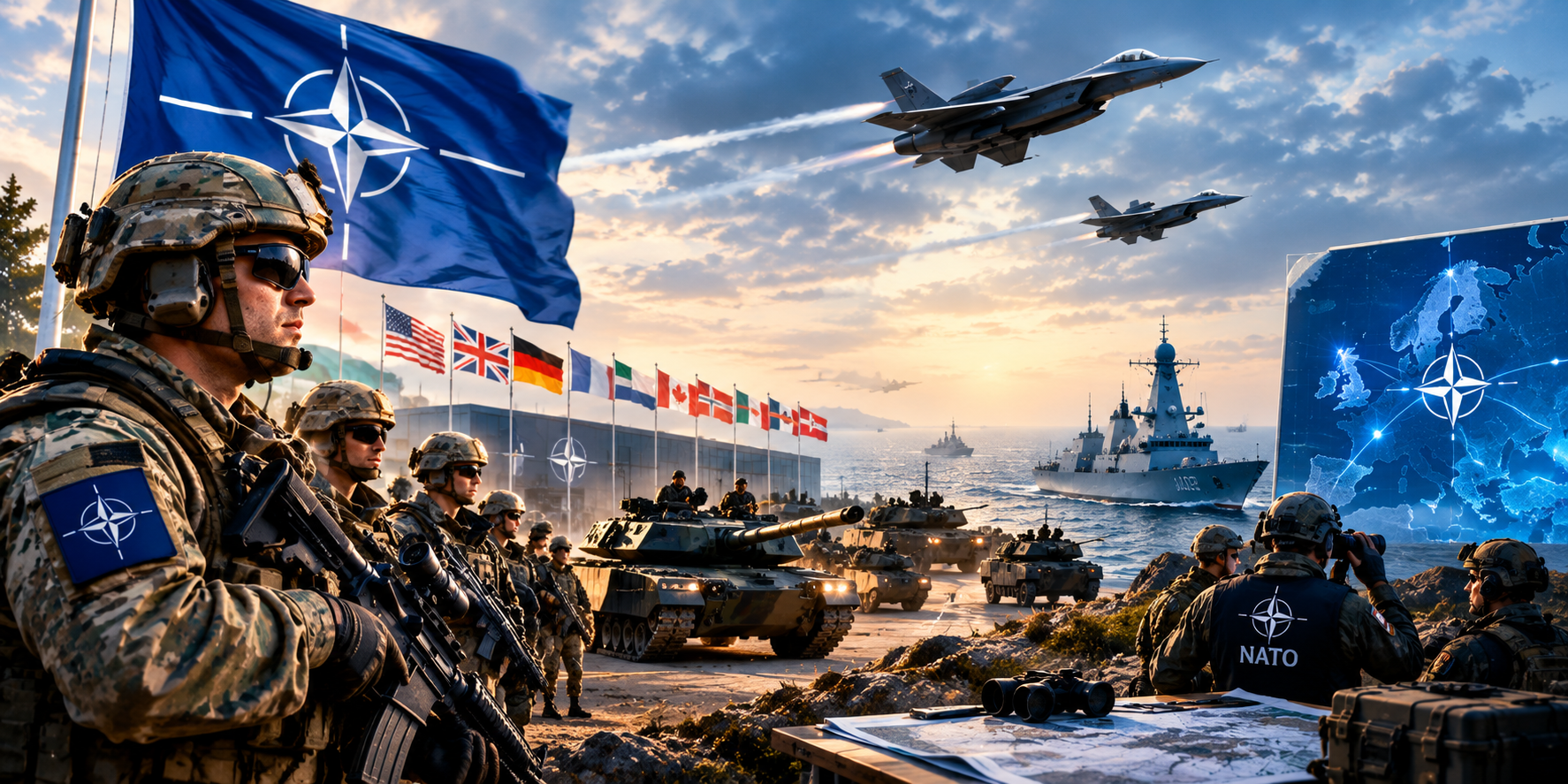
NATO’s role in global security has gained renewed attention as European countries face growing military and political challenges. The alliance brings together 32 countries across Europe and North America, with a shared goal of protecting their members from external threats. In October 2026, NATO’s top military commander, US Air Force General Alexus Grynkewich, said the alliance stood ready to respond if an adversary attacked, while stressing that NATO did not seek war. His remarks highlighted the importance of military preparedness, cooperation, and deterrence. NATO’s Commitment involves more than strong words. It relies on trained personnel, coordinated defense plans, modern equipment, and the ability to respond quickly during a crisis.
How NATO’s Commitment Strengthens Military Readiness
NATO builds its defense strategy around collective security. Article 5 of the North Atlantic Treaty states that an armed attack against one member counts as an attack against all. Each member must assist the ally under attack, but the treaty allows each country to decide what action it considers necessary. That assistance may include military force, intelligence sharing, logistical support, or other measures. Readers can learn more from
The alliance strengthens this principle through joint planning and military cooperation. Member countries contribute troops, aircraft, ships, equipment, and specialist capabilities. These resources help NATO prepare for threats across land, sea, air, cyberspace, and space.
NATO’s Force Model plays a central role in this process. The framework organizes national forces into readiness tiers so commanders can identify which units could respond first and which reinforcements may need more preparation. NATO identifies three readiness levels: forces available within 0–10 days, 10–30 days, and 30–180 days. These timelines help the alliance plan deployments according to the urgency and scale of a crisis.
The Allied Reaction Force adds another rapid-response option. This multinational force brings together land, maritime, air, special operations, cyber, space, and logistical capabilities. Its flexible structure allows NATO to coordinate different types of support when a crisis demands a quick response. NATO explains these arrangements in its
Military exercises also help members prepare for difficult situations. Soldiers from different countries train together, practice communication, test equipment, and coordinate command structures. These activities help identify weaknesses before a real emergency occurs. NATO’s readiness depends on whether its members can work together effectively, not simply on the number of troops they possess.
Why NATO’s Commitment Matters in Today’s Security Environment
NATO faces a complex security environment shaped by Russia’s war against Ukraine, cyber threats, military competition, and concerns about the security of European territory. These challenges have encouraged the alliance to strengthen its eastern flank and improve its ability to move reinforcements quickly.
NATO maintains multinational forces in several eastern European countries. These units demonstrate allied cooperation and help deter potential aggression. The alliance also works to improve air and missile defense, military mobility, intelligence coordination, and command systems. Its explains how these measures support collective security.
NATO’s commitment also depends on investment. Modern defense requires trained personnel, reliable equipment, secure communications, ammunition supplies, transport infrastructure, and sustained military exercises. Members must coordinate their national defense plans with alliance requirements to ensure that forces can respond when needed.
Political unity matters just as much. NATO decisions require consultation among member countries, and national governments must provide the resources and forces they promise. Different countries may disagree about budgets, priorities, or the best response to a particular threat. Consistent communication helps members manage these differences and maintain cooperation during difficult periods.
Readiness does not mean that NATO plans to start a war. The alliance presents deterrence as a way to discourage attacks by showing that members can defend themselves and support one another. A credible response capability may make an adversary less willing to take military risks. Leaders must still manage tensions carefully because military warnings and deployments can increase uncertainty if countries misread one another’s intentions.
The alliance must also prepare for threats that fall short of conventional warfare. Cyberattacks, sabotage, disinformation, and attempts to disrupt critical infrastructure can challenge national security without a direct military invasion. NATO members share information and develop coordinated responses to address these risks.
Conclusion: Preparedness and Unity Define NATO’s Future
NATO’s Commitment rests on collective defense, military readiness, shared planning, and cooperation among its 32 members. Its force structures and joint exercises help the alliance respond to threats at short notice, while Article 5 provides the foundation for mutual assistance after an armed attack. Readiness does not guarantee that every crisis will lead to conflict, and strong communication remains essential to prevent misunderstandings. NATO’s future effectiveness will depend on political unity, sustained investment, and the ability to adapt to emerging security challenges. Visit DailyInfoRoom for more informative articles on international security, world news, and current affairs.












