


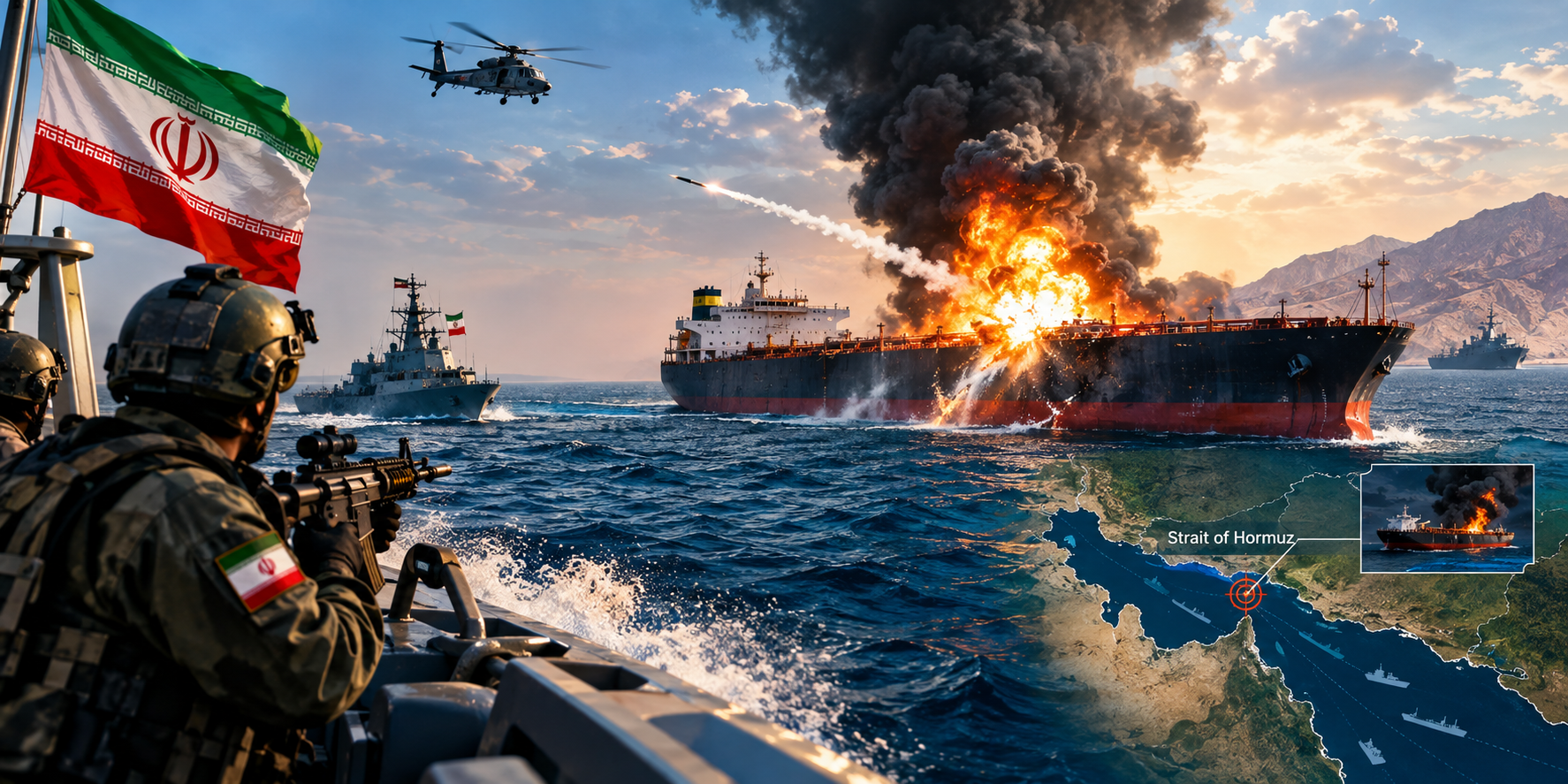
Iran’s Aggressive Move against commercial shipping near the Strait of Hormuz has increased concerns about maritime security, oil supplies, and global energy prices. Recent reports show a sharp rise in attacks on tankers, with several vessels suffering damage during the past week. The incidents have reduced shipping activity through one of the world’s most important energy routes. The Strait of Hormuz connects the Persian Gulf with the Gulf of Oman and supports major oil and gas shipments from Gulf producers. Rising security risks can increase insurance costs, shipping expenses, and energy prices. Governments, shipping companies, and energy markets now face greater uncertainty as tensions continue around this strategic waterway.
Why Iran’s Aggressive Move Has Increased Risks for Tankers
The recent attacks have created serious concerns for commercial vessels operating around the Strait of Hormuz. Maritime security sources reported that tanker attacks reached their highest weekly level since the current Iran war began. Several vessels have faced projectile or drone attacks, while other ships have received threats during transit.
A recent attack also affected the Panamanian flagged tanker On Peace near Oman’s coast. The incident caused a fire and injured crew members. Omani authorities evacuated injured sailors for medical treatment. Indian officials said many of the affected crew members were Indian nationals.
Another tanker came under attack near Qatar on October 8. Maritime authorities reported that the vessel suffered a projectile attack that caused casualties. The incident expanded concerns beyond the immediate waters of the Strait of Hormuz and showed how quickly maritime risks can affect surrounding Gulf routes.
Iran has warned vessels to follow routes that its authorities consider acceptable. Iranian officials have also threatened forceful responses against vessels that use unauthorized routes. These warnings have created additional uncertainty for shipping companies that must balance commercial schedules with crew safety.
The Strait of Hormuz carries a significant share of global energy shipments. Disruptions can affect crude oil, refined fuels, and liquefied natural gas supplies. Oil traders closely monitor tanker movements because even temporary shipping problems can influence prices.
Recent tracking data shows the impact of the attacks. Only seven commodity vessels crossed the strait on one Tuesday, marking the lowest daily number since July. Crude movements through the waterway also dropped to about 10.1 million barrels per day, around 74 percent of prewar levels.
Shipping companies face higher risks when crews and vessels enter the affected area. Insurance costs can rise when maritime security deteriorates. Operators can also face delays, additional security expenses, longer routes, and higher fuel costs.
Impact on Oil Prices, Trade, and Regional Stability
Iran’s Aggressive Move has created pressure across global energy markets. Oil prices have remained elevated as traders assess the possibility of further supply disruptions. Brent crude recently moved above $100 per barrel as tanker attacks increased and shipping flows weakened.
Gulf oil producers have searched for alternative export routes to reduce their dependence on the Strait of Hormuz. Some producers can use pipelines and other maritime routes to move part of their production. These alternatives cannot fully replace the capacity and convenience of the strait.
Energy companies also rely on strategic inventories during periods of supply uncertainty. Large reserve releases can provide temporary support for markets, but they cannot permanently solve transportation problems or refinery shortages. Industry executives have warned that rebuilding depleted global oil and fuel inventories could take years if disruptions continue.
The effects reach beyond oil producers. Airlines can face higher fuel expenses when crude prices rise. Transportation companies can experience increased operating costs. Manufacturers may also face higher energy and logistics expenses. Consumers can eventually feel the impact through fuel prices and the cost of transported goods.
The tanker attacks also create wider concerns for international trade. Commercial shipping depends on predictable routes and safe passage. Repeated attacks can encourage companies to delay voyages or choose longer routes. Longer journeys require more fuel and increase delivery times.
Regional governments face another challenge. Increased maritime incidents can raise the possibility of further military confrontation. Naval forces may increase patrols and escort operations to protect commercial shipping. Greater military activity can reduce some risks while creating additional opportunities for confrontation.
Diplomacy remains important because military escalation can create new disruptions. Recent reports indicate that negotiations between the United States and Iran remain uncertain while attacks around Hormuz continue. The combination of diplomatic tension and maritime incidents keeps energy markets sensitive to every new development.
The situation also affects countries that depend heavily on imported energy. Asian economies receive substantial volumes of Gulf oil and gas. European markets can face higher costs when global fuel supplies tighten. Developing economies may experience additional pressure when energy and transportation costs rise.
Conclusion: What the Hormuz Tanker Crisis Means for Global Energy
Iran’s Aggressive Move against tanker traffic near the Strait of Hormuz has increased maritime security risks and created fresh pressure on global energy markets. Recent attacks have reduced vessel movements and pushed oil prices higher. Gulf producers continue to use alternative routes, while shipping companies face greater insurance, security, and operational costs. The wider economic impact depends on how long the disruption continues and whether diplomatic efforts reduce tensions. Safe navigation remains essential for global energy trade. Follow DailyInfoRoom for more informative coverage of global affairs, energy markets, business, and international developments.












