


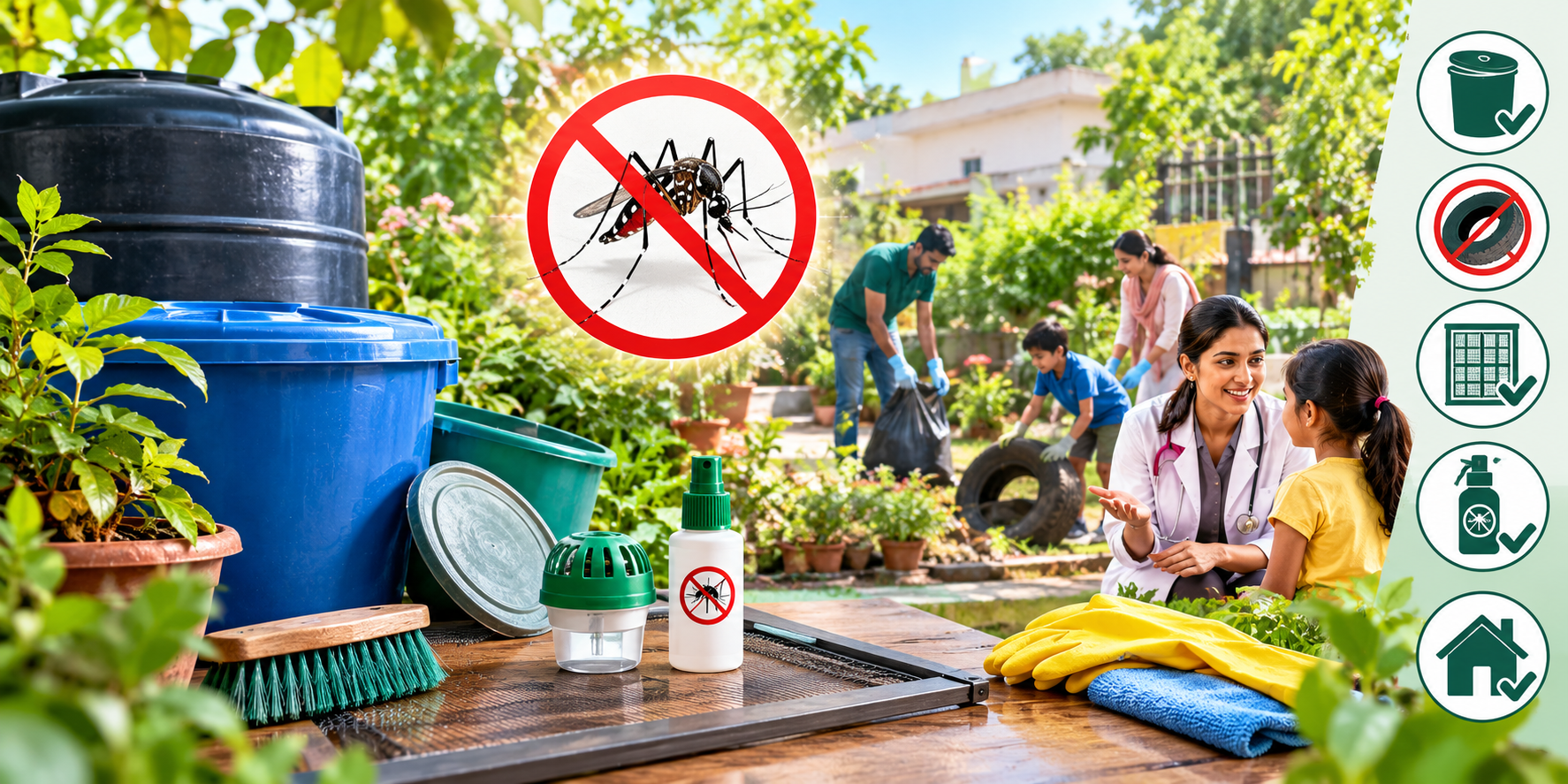
Dengue fever can spread quickly when mosquito populations grow around homes, schools, workplaces, and public spaces. Communities can reduce Dengue Fever Cases by controlling mosquito breeding sites, protecting people from bites, and encouraging early medical care. Aedes mosquitoes spread dengue through their bites and often live close to people. They can breed in small amounts of standing water found in containers, discarded items, flowerpots, tires, and uncovered water storage areas. Community action can reduce these breeding opportunities and lower the risk of transmission. Regular cleaning, proper waste disposal, public awareness, and personal protection can make dengue prevention more effective.
Remove Mosquito Breeding Sites From Homes and Communities
Mosquito control starts with removing places where Aedes mosquitoes can lay their eggs. Communities should inspect homes, streets, schools, parks, construction areas, and public buildings regularly. Small containers can hold enough water for mosquitoes to reproduce.
Families should empty buckets, flowerpot trays, bottles, cans, old tires, and other containers that collect rainwater. People should cover water storage containers tightly and clean them regularly. Community workers can organize weekly inspections to identify standing water before mosquito numbers increase. WHO recommends covering, emptying, and cleaning domestic water storage containers regularly as part of dengue prevention.
Waste management also plays an important role. Communities should remove discarded plastic containers, cans, tires, and other objects that can collect rainwater. Local authorities can improve garbage collection and encourage residents to keep streets, drains, vacant plots, and public areas clean.
Schools can involve students in simple mosquito prevention activities. Teachers can explain how dengue spreads and encourage children to identify potential breeding sites around their homes. Workplaces can also check outdoor areas, roof spaces, storage rooms, and drainage points.
Mosquito control should continue throughout the year. Waiting until Dengue Fever Cases rise can allow mosquito populations to grow quickly. Regular community inspections can identify problems earlier and support stronger prevention.
Personal protection also reduces exposure. People can use mosquito repellents according to product instructions and wear clothing that covers the arms and legs. Window screens, air conditioning, mosquito nets, and other barriers can reduce mosquito contact. Aedes mosquitoes often bite during the daytime, so people should not assume that nighttime protection alone provides enough safety.
Improve Awareness, Early Care, and Community Response
Public awareness can help communities control Dengue Fever Cases more effectively. Residents should know the common symptoms and understand when they need medical attention. Dengue commonly causes fever, headache, pain behind the eyes, muscle and joint pain, nausea, vomiting, and rash. Symptoms can resemble other illnesses, so people with suspected dengue should contact a healthcare professional for appropriate evaluation.
Communities should share reliable health information through schools, local clinics, community centers, social media, and neighborhood groups. Clear messages can encourage people to remove standing water, use mosquito protection, and seek medical care when symptoms appear.
Early recognition matters because dengue can become severe within a short period. Warning signs can appear after the fever starts to improve. Severe abdominal pain, repeated vomiting, bleeding from the nose or gums, vomiting blood, blood in the stool, extreme tiredness, or restlessness require immediate medical attention.
People with suspected or confirmed dengue should also prevent additional mosquito bites. An infected person can pass the virus to mosquitoes that bite them, allowing those mosquitoes to spread dengue to other people. Using mosquito protection during illness can help reduce this transmission pathway.
Healthcare facilities and local authorities can strengthen surveillance by monitoring reported Dengue Fever Cases and identifying areas with increasing transmission. Rapid communication can help communities respond before outbreaks become larger.
Residents should avoid relying on unverified home remedies or claims that promise to cure dengue. There is no specific antiviral treatment for dengue. Healthcare professionals can guide patients on supportive care, hydration, fever management, and monitoring for warning signs. WHO and CDC advise against aspirin and ibuprofen in dengue because these medicines can increase bleeding risk.
Community participation remains one of the strongest tools against dengue. One clean household can make a difference, but coordinated action across an entire neighborhood can create a much larger impact. Families, schools, businesses, healthcare workers, and local authorities all have a role in reducing mosquito breeding and protecting vulnerable people.
Conclusion: Building Stronger Communities Against Dengue
Communities can reduce Dengue Fever Cases through consistent mosquito control, personal protection, public awareness, and early medical care. Removing standing water, covering water containers, improving waste management, and protecting people from mosquito bites can reduce opportunities for dengue transmission. Residents should also recognize warning signs and seek urgent medical attention when severe symptoms appear. Dengue prevention requires regular action rather than temporary cleanup during outbreaks. Strong cooperation between households, schools, healthcare providers, and local authorities can create safer communities. Visit
DailyInfoRoom for more informative health, wellness, lifestyle, and prevention content.












