


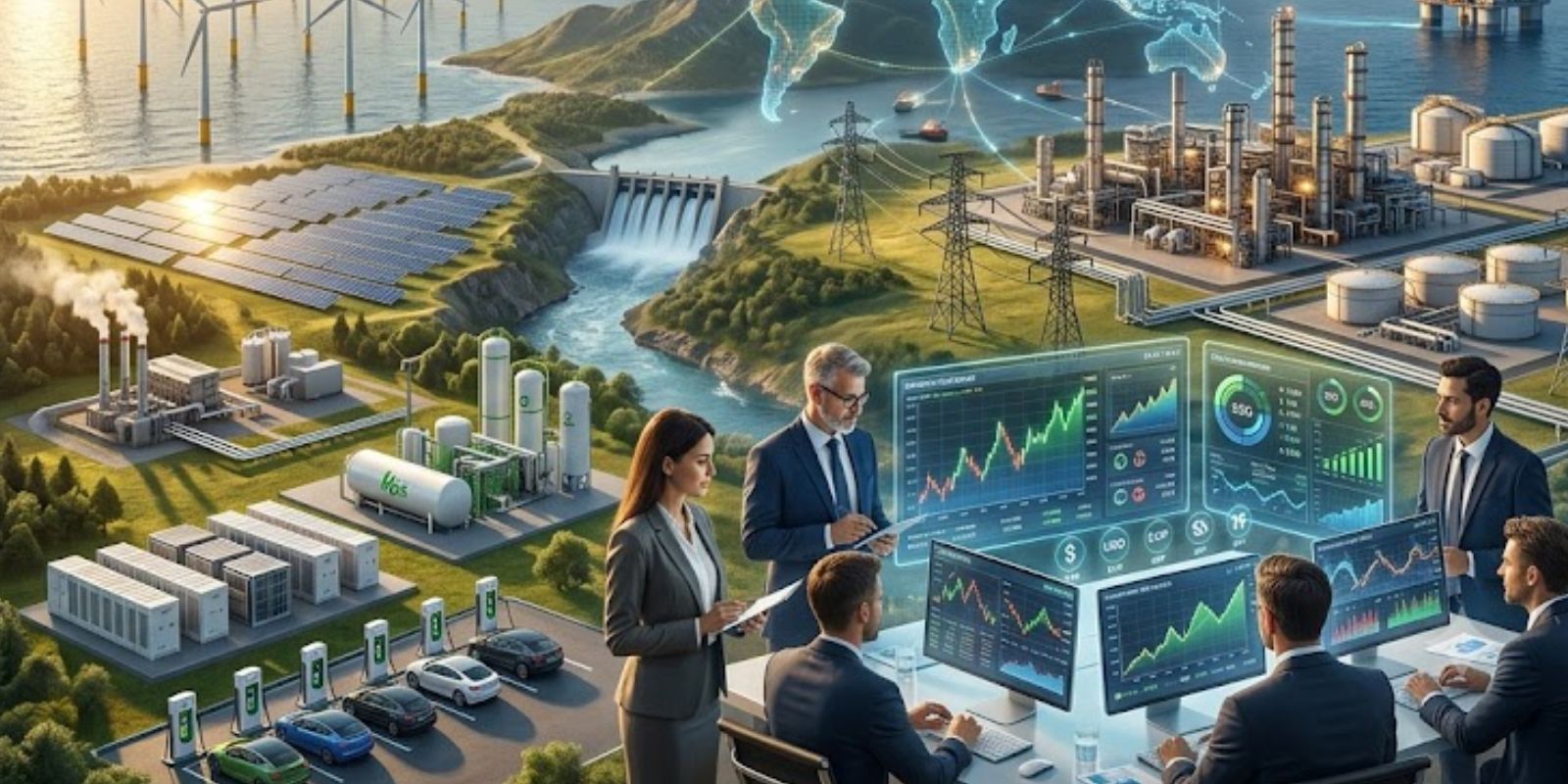
Global Energy Investments now define the economic future of nations, corporations, and individual investors navigating one of the most rapidly transforming sectors in modern history. The energy landscape has shifted dramatically over the past decade. Renewable energy capacity additions now outpace fossil fuel development in most major markets. Battery storage technology costs keep falling. Hydrogen infrastructure investment accelerates across Europe and Asia. At the same time, oil and gas demand continues growing in developing economies that need affordable energy to power industrial expansion. This collision of old and new energy systems creates a complex investment environment full of genuine opportunity, significant risk, and market dynamics that reward careful analysis and informed decision-making above all else.
Where Global Energy Investments Are Flowing and Why These Sectors Attract Capital
Global Energy Investments reached record levels in recent years, with the International Energy Agency reporting that clean energy investment surpassed fossil fuel investment for the first time in history. Understanding where capital flows and why each sector attracts it gives investors the clearest possible picture of where value creation concentrates in the current market.
Renewable Energy Leads the Investment Race
Solar and wind energy attract the largest share of Global Energy Investments today by a significant margin. The economics now strongly favor renewable development in most parts of the world. Solar photovoltaic technology costs have fallen over 90% in the past decade, making utility-scale solar the cheapest source of new electricity generation in history across dozens of markets.
Wind energy follows a similar cost trajectory. Onshore wind farms generate power at prices competitive with any other generation source in resource-rich regions. Offshore wind opens vast new generation potential in coastal nations willing to invest in the more expensive but higher-capacity offshore installations that Europe pioneered and that the United States and Asia now pursue aggressively.
Institutional investors including pension funds, sovereign wealth funds, and insurance companies have increased their renewable energy portfolio allocations substantially. These investors value the long-term contracted cash flows that power purchase agreements create, the inflation-linked revenue structures that many renewable contracts include, and the growing regulatory pressure from stakeholders demanding credible sustainability commitments backed by real asset ownership.
Battery Storage and Grid Infrastructure
Battery storage technology represents one of the fastest-growing segments within Global Energy Investments. Lithium-ion battery costs continue falling as manufacturing scale increases and chemistry improvements boost energy density and cycle life. Grid-scale battery installations solve the intermittency problem that renewable generation creates by storing excess power during high-production periods and releasing it during peak demand windows.
Grid infrastructure investment accompanies renewable growth because existing transmission networks in most countries were built to distribute power from centralized fossil fuel plants, not to aggregate power from distributed renewable sources spread across wide geographic areas. Modernizing and expanding grid infrastructure requires enormous capital commitments from utilities, governments, and private infrastructure funds that see long-term regulated returns as attractive anchor positions in diversified energy portfolios.
Hydrogen Economy Development
Green hydrogen produced using renewable electricity represents a major emerging frontier in Global Energy Investments. Governments across Europe, Japan, South Korea, Australia, and the Middle East have committed substantial public funding to hydrogen infrastructure development, including electrolyzers, pipelines, storage facilities, and end-use applications in heavy industry and transportation.
Private capital follows public funding into hydrogen development, attracted by the scale of the market opportunity and the government support that reduces early-stage technology risk. Industrial hydrogen users including steel producers, chemical manufacturers, and shipping companies actively invest in hydrogen supply agreements and infrastructure to meet their own decarbonization commitments on timelines that regulators and customers increasingly enforce.
Oil and Gas: Still Attracting Selective Capital
Despite the renewable energy surge, Global Energy Investments in oil and gas continue at significant levels, particularly in liquefied natural gas infrastructure. Developing economies in Southeast Asia, South Asia, and Africa need reliable affordable energy to power economic development. Natural gas serves as a transition fuel in many of these markets, bridging the gap between high-emission coal dependence and eventual renewable dominance.
LNG export terminal investment in the United States, Qatar, Australia, and East Africa responds to this demand signal. Energy security concerns following geopolitical disruptions to gas supply across Europe accelerated new LNG investment commitments as importing nations sought to diversify away from single-source dependency toward global LNG market access.
Risks Every Investor Must Understand Before Committing to Global Energy Investments
Global Energy Investments carry specific risk categories that differ meaningfully from other asset classes. Investors who understand these risks position themselves to make better decisions and build more resilient portfolios than those who focus exclusively on the opportunity side of the equation.
Policy and Regulatory Risk
Energy investment returns depend significantly on the stability and predictability of government policy frameworks. Renewable energy economics in many markets rely on tax credits, feed-in tariffs, renewable portfolio standards, and carbon pricing mechanisms that governments can modify, reduce, or eliminate based on political changes.
The United States Inflation Reduction Act created massive incentives for domestic clean energy investment, attracting hundreds of billions of dollars in private capital commitments. Changes to that legislative framework carry direct financial consequences for investors who built their return models around specific incentive structures. Every major market where Global Energy Investments concentrate carries comparable policy risk that investors must assess alongside the fundamental economics.
Carbon pricing regimes create both risk and opportunity across energy investment portfolios. Rising carbon prices improve the economics of low-emission energy assets while pressuring returns from high-emission assets. Carbon market volatility, political challenges to carbon pricing expansion, and cross-border carbon adjustment mechanisms all create regulatory complexity that sophisticated investors track closely and price into their return expectations.
Technology and Execution Risk
New energy technologies carry technology risk that established industries do not. Battery storage chemistry improvements can make existing installations less competitive before their useful life ends. Hydrogen electrolyzer technology continues evolving rapidly, and early-mover investors face the risk that their technology choices get superseded by better alternatives before their capital recovers.
Large-scale energy infrastructure projects carry execution risk that investors consistently underestimate. Offshore wind installations face weather delays, supply chain constraints, and installation vessel availability challenges that push costs above budget and timelines beyond projections. Grid infrastructure projects navigate complex permitting processes, landowner negotiations, and regulatory approvals that extend development timelines and increase carrying costs.
Commodity Price Volatility
Oil and gas Global Energy Investments face commodity price cycles that create returns volatility far exceeding what most other asset classes experience. Oil price collapses like those seen in 2014 and 2020 destroy returns from exploration and production investments that looked attractive when oil traded at higher prices. Gas price spikes that followed Russia’s invasion of Ukraine created extraordinary windfall profits for some investors while devastating others who had locked in long-term supply contracts at lower prices.
Renewable energy investors face different commodity exposure through equipment costs tied to materials like polysilicon for solar panels, rare earth elements for wind turbine magnets, and lithium and cobalt for battery systems. Supply chain disruptions, trade policy changes, and geopolitical tensions affecting critical mineral supply chains create cost volatility that project developers must manage actively throughout the investment lifecycle.
Geopolitical Risk Across Energy Supply Chains
Critical mineral supply chains for clean energy technology concentrate geographically in ways that create geopolitical exposure for Global Energy Investments. China controls a dominant share of rare earth element processing, battery cell manufacturing, and solar panel production. Investors in clean energy supply chains outside China face competitive pressure from Chinese manufacturers benefiting from lower costs and government support.
Investors building clean energy supply chains in Western markets benefit from government incentives designed to reduce Chinese dependency but face higher cost structures that require sustained policy support to remain competitive. Any deterioration in US-China trade relations, expansion of technology export controls, or escalation of tariff regimes directly affects the return profiles of clean energy manufacturing investments on both sides of the supply chain divide.
Market Saturation and Competition
Popular investment themes in Global Energy Investments attract excessive capital that compresses returns as competition for projects intensifies. Solar development land in prime resource locations now commands premium prices that reduce project returns to levels that make rigorous return discipline essential. Investors who chased early renewable returns find themselves paying asset prices that price in optimistic assumptions about power prices, cost trajectories, and policy continuity.
Sophisticated Global Energy Investments managers respond to market saturation in established categories by moving earlier in the development cycle, into less competitive geographies, or into adjacent technology categories where return compression has not yet occurred. This strategy requires deeper technical expertise and higher risk tolerance but consistently generates better returns than competing for the same mature assets that attract capital from every direction simultaneously.
Conclusion:
Global Energy Investments present some of the most compelling opportunities available to investors willing to understand the sector’s complexity and manage its distinctive risks with discipline and expertise. The energy transition creates genuine long-term value for capital that supports renewable infrastructure, grid modernization, storage technology, and emerging clean fuel development. At the same time, selective oil and gas investment continues generating returns for investors who apply rigorous project selection and commodity risk management. Success in this sector rewards knowledge, patience, and continuous learning above speculation and trend-chasing. For expert analysis on energy markets, investment strategies, economic trends, and global developments that shape financial opportunities, visit DailyInfoRoom where informed investors find the insights that drive smarter decisions every day.












