


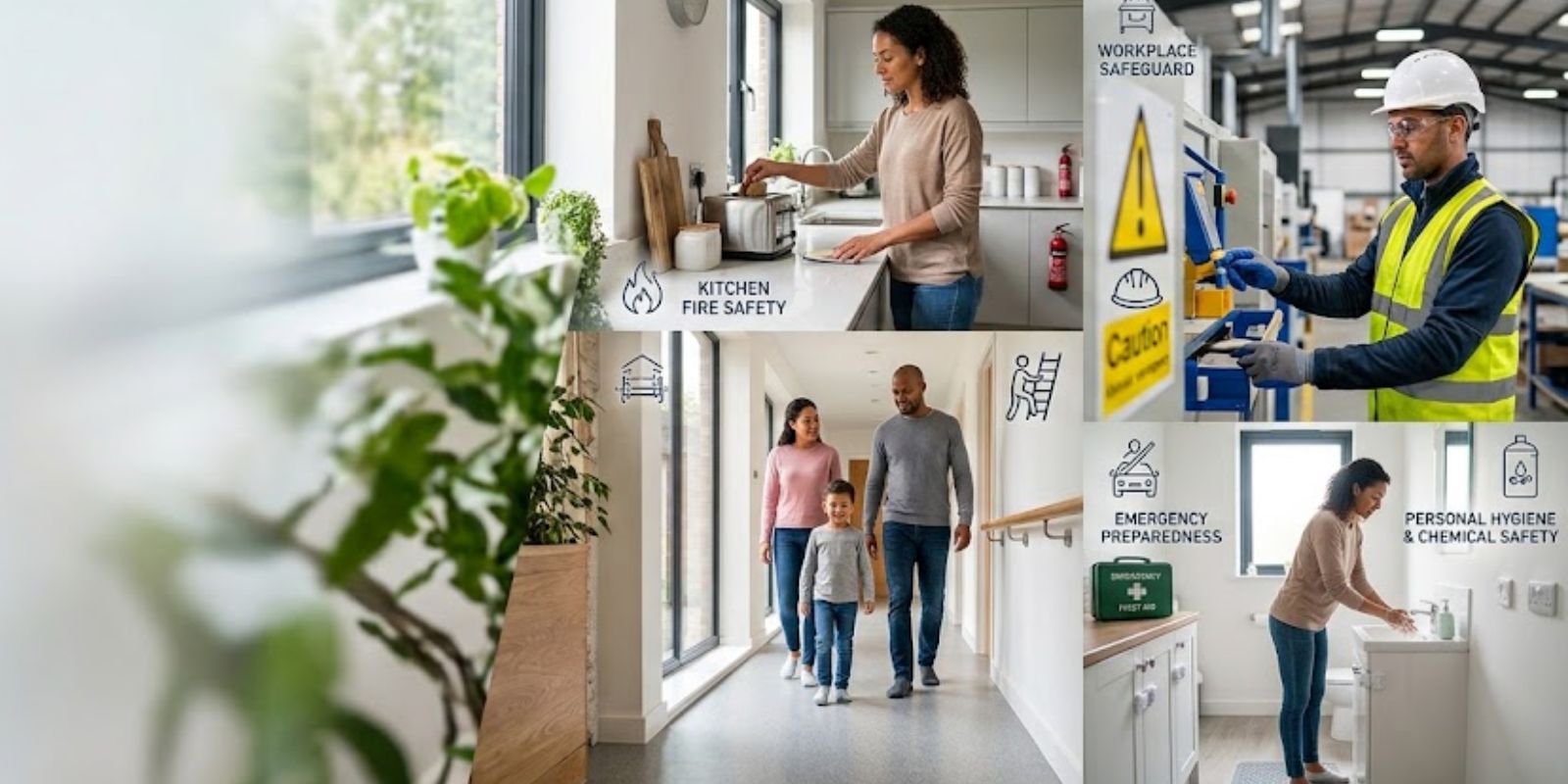
Common Accidents kill and injure millions of people every year in settings that most consider completely safe: homes, workplaces, schools, and roads that families navigate daily without a second thought about the dangers hiding in plain sight. The World Health Organization confirms that unintentional injuries represent one of the leading causes of death and disability globally across every age group and income level. Most people assume accidents happen to other people through bad luck or carelessness beyond their control. Research consistently proves the opposite. The vast majority of Common Accidents follow predictable patterns, occur in identifiable high-risk situations, and respond directly to simple preventive measures that anyone can implement immediately without special training, expensive equipment, or professional assistance.
The Most Common Accidents at Home and How to Prevent Every Single One
The home creates a false sense of security that allows Common Accidents to occur at higher rates than most public environments. Familiarity breeds inattention, and inattention creates the conditions where preventable injuries happen to people who believed they were completely safe.
Falls Cause More Injuries Than Any Other Home Accident
Falls rank as the single most widespread category of Common Accidents in domestic environments, accounting for millions of emergency room visits annually across every country with reliable injury surveillance data. Wet bathroom floors, loose rugs, unstable step stools, poor lighting in stairwells, and cluttered walkways all create fall hazards that most households contain without recognizing their danger.
Install grab bars in bathrooms beside the toilet and inside the shower or bathtub. Secure all loose rugs with non-slip backing or remove them entirely from high-traffic areas. Replace burned-out bulbs in stairways and hallways immediately rather than tolerating temporary darkness. Keep floors clear of electrical cords, shoes, toys, and other objects that create tripping hazards.
Older adults face the highest fall risk because balance, muscle strength, and reaction time all decline with age. Adults over 65 who fall and suffer hip fractures face significantly elevated mortality risk in the year following injury. Installing simple grab bars and improving lighting throughout the home costs a fraction of a single emergency room visit and prevents Common Accidents that change lives permanently.
Kitchen Burns and Scalds Happen More Often Than People Realize
Kitchen injuries represent one of the most frequent categories of Common Accidents that people treat as inevitable rather than preventable. Hot liquids, steam from cooking vessels, heated cooking surfaces, and splashing oil all create burn hazards that proper technique and basic precautions eliminate almost entirely.
Keep pot handles turned inward on the stove so children cannot grab them from below. Use oven mitts that cover the wrist rather than small pot holders that leave skin exposed during transfers. Allow cooking equipment to cool completely before cleaning it with bare hands. Keep children away from the cooking area through physical barriers during active meal preparation.
Test bathwater temperature before placing children or elderly family members into the bath. Hot water heater settings above 49 degrees Celsius create scald risk that a simple thermostat adjustment eliminates permanently. These basic measures address Common Accidents that happen quickly and cause injuries that heal slowly and painfully over weeks.
Poisoning Remains a Serious Home Safety Threat
Medication errors, household chemical exposure, and carbon monoxide poisoning all represent Common Accidents that proper storage, labeling, and detection systems prevent. Medications stored in accessible locations poison children who mistake colorful pills for candy. Cleaning chemicals stored without childproof locks create ingestion risks for young children and inhalation risks for everyone in the household.
Store all medications in locked cabinets positioned beyond children’s reach. Keep household chemicals in their original labeled containers rather than transferring them to unmarked bottles. Install carbon monoxide detectors on every level of your home, particularly near sleeping areas, and test them monthly. Carbon monoxide kills silently without odor or visible warning, making detection devices the only reliable protection against this particular category of deadly Common Accidents.
Common Accidents on Roads and in Workplaces and How Smart Habits Eliminate Risk
Common Accidents extend beyond home environments into the roads people drive and the workplaces where most adults spend the majority of their waking hours. Prevention strategies in these environments require both individual habit changes and collective safety culture commitments.
Distracted Driving Creates the Most Preventable Road Accidents
Distracted driving causes a massive proportion of road-based Common Accidents that kill and injure people who bear no responsibility for the collision that ends or changes their lives. Using a mobile phone while driving reduces reaction time to the equivalent of legal blood alcohol impairment. Reading a text message at highway speed covers the length of a football field without the driver looking at the road once.
Put your phone in the glove compartment before starting the vehicle and leave it there until you reach your destination and turn off the engine. If you genuinely need to make a call or check a message, pull completely off the road into a parking area before touching your phone. This single behavior change eliminates one of the most common causes of road-based Common Accidents without requiring any technology, legislation, or infrastructure investment.
Speeding Amplifies Every Other Road Risk Factor
Speed does not cause Common Accidents in isolation but amplifies the severity of every other risk factor present in any driving situation. A distracted driver traveling at 30 kilometers per hour has time to recognize and react to a hazard that appears ahead. The same distracted driver at 80 kilometers per hour covers the hazard response distance before the brain registers the danger.
Respect posted speed limits as the engineering knowledge they represent rather than the arbitrary restrictions many drivers treat them as. Speed limits reflect road geometry, pedestrian activity, intersection frequency, and stopping distance calculations that traffic engineers produce through systematic safety analysis. Driving within those limits preserves the reaction time and stopping distance margin that separate close calls from Common Accidents with fatal outcomes.
Workplace Falls From Heights Require Constant Vigilance
Falls from heights represent the leading cause of work-related fatalities across construction, maintenance, and industrial sectors worldwide. Common Accidents in workplace environments frequently result from shortcuts that save seconds and cost lives: skipping harness connections on elevated platforms, using makeshift ladders rather than appropriate equipment, working on wet or uneven elevated surfaces without appropriate footwear.
Use proper ladders rated for the load they carry and position them at the correct angle against a stable surface. Never stand on the top two rungs of a stepladder. Wear slip-resistant footwear appropriate for the work surface conditions. Connect fall arrest equipment before stepping onto any elevated platform and check the connection before moving across the surface.
Lifting Injuries Cause Chronic Pain and Career-Ending Disability
Improper lifting technique causes a significant proportion of workplace Common Accidents that create chronic back injuries, herniated discs, and muscle damage that workers manage painfully for years or permanently. Most people know the basic advice to lift with the legs rather than the back but abandon this technique when the load feels manageable and haste overrides caution.
Bend your knees and keep your back straight during every lift regardless of the load’s weight. Hold objects close to your body’s center of gravity rather than extending your arms away from your torso. Get help or use mechanical assistance for any load that feels too heavy for single-person lifting. These techniques prevent Common Accidents that doctors cannot fully repair once the initial injury occurs.
Electrical Hazards Deserve Respect in Every Environment
Electrical Common Accidents cause electrocution deaths, severe burns, and house fires that proper precautions prevent completely. Overloaded electrical outlets, damaged extension cords, and appliances used near water all create electrical hazards that familiarity causes people to ignore.
Never plug multiple high-wattage appliances into a single outlet or power strip. Replace cracked or frayed electrical cords immediately rather than using tape as a temporary fix that creates ongoing fire and electrocution risk. Keep all electrical appliances and extension cords away from water sources in kitchens, bathrooms, and outdoor settings. These simple practices address Common Accidents that kill people in homes and workplaces that otherwise appear perfectly safe.
Conclusion:
Common Accidents are preventable. That single fact carries more practical importance than any statistic about injury rates or economic costs because it means that every person reading this holds genuine power to reduce their own risk and protect the people they love. Securing loose rugs, storing chemicals properly, putting phones away while driving, using correct lifting technique, and respecting speed limits all cost nothing beyond attention and intention. Safety habits built through consistent practice become automatic behaviors that protect you in the moments when conscious thought has no time to intervene. Start with one improvement this week and build from there. For more practical safety guides, health tips, and content that protects and improves your daily life, visit DailyInfoRoom where the knowledge that keeps people safe finds the readers committed to using it












