


For decades, the United States has served as a favorite travel destination for Canadians. Its shopping malls, sunny beaches, national parks, entertainment venues, and major cities have attracted millions of visitors from across thWhy Canadians Are Avoiding the US More Than Ever
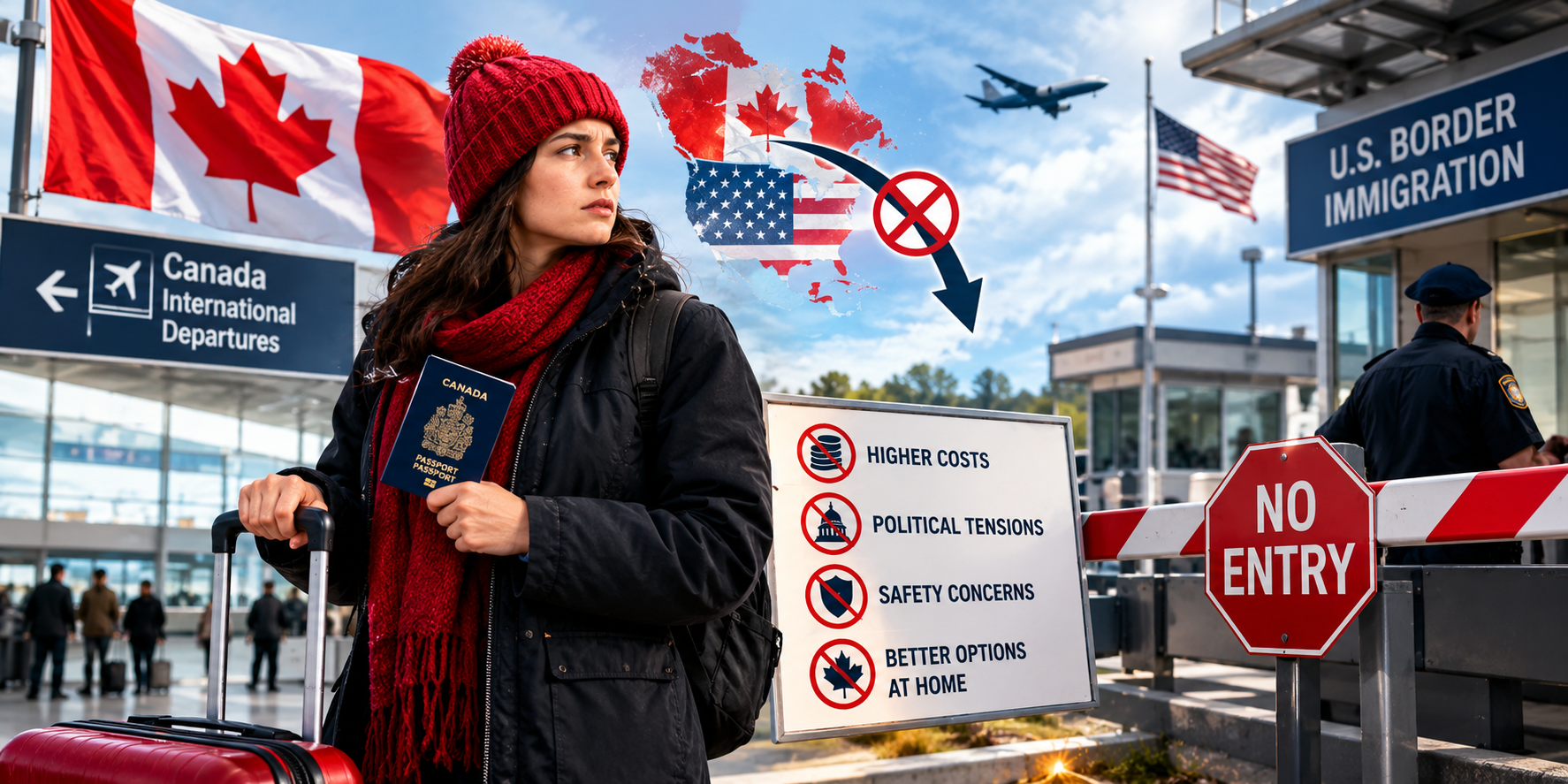
e border. Recent travel statistics show a significant change in this long-standing relationship. More Canadians now choose domestic vacations or international destinations instead of traveling south. Statistics Canada reported that Canadian visits to the United States fell from 30.2 million in 2024 to 23.1 million in 2025, a decline of 23.5%. <Cite refs={[“turn828493search2″,”turn828493search6”]}/> Political tensions, trade disputes, travel preferences, and changing spending habits help explain why this shift continues to attract attention.
Why Canadians Are Avoiding the United States
Political tensions have become an important factor in Canadian travel decisions. Disagreements over tariffs, trade policies, and statements from American political leaders have affected public opinion in Canada. Some Canadians see their travel choices as a way to express dissatisfaction with US policies. Others simply prefer to spend their money in places that better match their personal values.
Trade disputes have also placed the relationship between the two countries under greater pressure. The United States and Canada share close economic ties, with businesses and workers on both sides depending on cross-border trade. Tariff announcements and political disagreements have created uncertainty for many consumers. A February 2026 Research Co. survey found that 55% of Canadians had avoided buying US-origin products when alternatives existed. <Cite refs={[“turn828493search10”]}/> This finding reflects a broader willingness among some Canadians to reconsider their spending choices.
Travel data supports the idea that the shift extends beyond public discussion. Statistics Canada recorded 23.1 million Canadian trips that included a visit to the United States in 2025, down 23.5% from 2024. Visits to overseas destinations moved in the opposite direction, rising 10.2% to 14.3 million. Canadian domestic visits also increased during the year. <Cite refs={[“turn828493search6″,”turn828493search2”]}/>
Cost remains another practical consideration. Canadians must account for accommodation, transportation, meals, entertainment, exchange rates, and other travel expenses when planning a vacation. A trip to a nearby US city may still offer good value for some families, but other travelers may find a Canadian destination or an overseas package more appealing.
Travel decisions vary from person to person. Some Canadians continue to visit American relatives, attend business meetings, or enjoy familiar vacation destinations. Others have changed their plans because of political concerns, financial priorities, or a desire to explore somewhere new. The decline in travel does not mean that every Canadian wants to avoid the United States or dislikes American people.
Where Canadians Are Traveling Instead
Many Canadians have turned their attention toward destinations within their own country. Canada offers a wide range of travel experiences, from coastal scenery and mountain resorts to historic towns, national parks, and major cities. Domestic vacations also allow travelers to support local hotels, restaurants, tour operators, and small businesses.
Statistics Canada reported that Canadian residents made approximately 342 million domestic visits in 2025, up 1.5% from 2024. Domestic tourism spending reached $81.3 billion, an increase of 8.7% compared with the previous year. <Cite refs={[“turn828493search6”]}/> These figures show the importance of domestic tourism as Canadians explore more opportunities closer to home.
Overseas travel has also gained momentum. European cities, Asian destinations, and tropical vacation spots can appeal to travelers who want different cultural experiences, food, scenery, and activities. Statistics Canada recorded a 10.2% increase in Canadian visits to overseas countries in 2025. Spending on those trips rose 17.5% compared with 2024. <Cite refs={[“turn828493search6”]}/>
Travelers may compare destinations based on flight prices, accommodation, weather, safety information, visa requirements, and available activities. Some choose overseas destinations because they want a longer vacation or a different experience. Others prefer local road trips that require less planning and keep more spending within their communities.
The shift creates challenges for American tourism businesses that rely on Canadian visitors. Hotels, restaurants, shopping centers, ski resorts, and attractions near the Canadian border may feel the effects when fewer Canadians cross into the United States. Businesses that depend on seasonal Canadian tourism may need to adjust their marketing and attract visitors from other regions.
The long-term impact will depend on future travel costs, political developments, consumer confidence, and changing preferences. Travel patterns can recover when circumstances improve, and some Canadians may return to familiar American destinations. Current figures show a major change in travel behavior, but they do not establish that the decline will continue at the same rate indefinitely.
Conclusion: A Changing Relationship Between Canada and the US
The trend of Canadians avoiding the US reflects a combination of political concerns, trade tensions, financial decisions, and changing travel interests. Official statistics show fewer Canadian visits to the United States in 2025, alongside growth in domestic and overseas travel. The shift affects tourism businesses while creating opportunities for destinations in Canada and other countries. Future travel choices will depend on individual priorities and changing conditions. Visit DailyInfoRoom for more informative articles on world news, travel trends, business, and current affairs.