


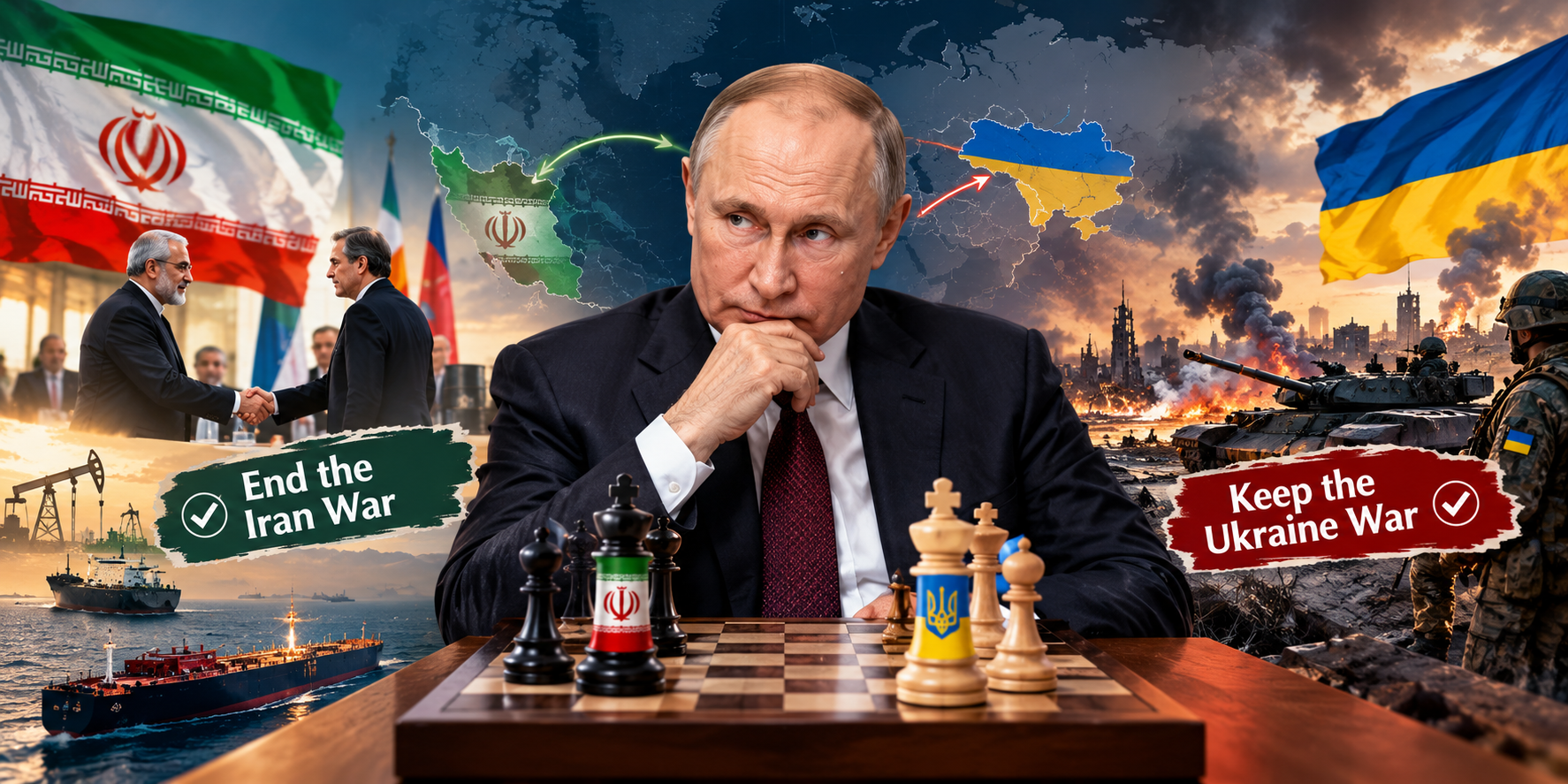
The key to this topic is the difference between Vladimir Putin’s public offer to help end the Iran war and Russia’s continued military campaign in Ukraine. Recent reporting confirms that Putin has offered assistance with Iran-US peace efforts, even though Russia is not an official mediator in those negotiations.
Vladimir Putin faces a complicated geopolitical situation as the Iran war continues alongside Russia’s invasion of Ukraine. The Russian president has offered to help end the conflict between Iran and the United States while Russian forces continue their military campaign in Ukraine. This contrast raises an important question: why would Moscow support peace in one conflict while continuing another? Russia’s interests in the Middle East differ from its objectives in Ukraine. Energy prices, relations with Iran, international influence, military resources, and sanctions all shape the Kremlin’s calculations. Understanding these factors helps explain why Putin’s diplomatic language about Iran does not necessarily signal a willingness to end the war in Ukraine.
Why Putin Wants to Help Solve Iran War
Putin’s offer to help Solve Iran War gives Russia an opportunity to strengthen its international position. On October 8, 2026, Putin told Iranian President Masoud Pezeshkian that Russia would do everything within its power to help settle the conflict. Putin praised Iran’s efforts to seek a resolution, although Russia does not participate in the official US-Iran mediation process. Qatar and Pakistan have taken leading roles in those negotiations.
Russia has several reasons to support a diplomatic solution. A prolonged Middle East conflict can destabilize energy markets, threaten regional trade, and create uncertainty for countries that maintain economic ties with Moscow. Russia also wants to preserve its relationship with Iran, a partner that has expanded military and economic cooperation with the Kremlin since Russia launched its full-scale invasion of Ukraine in 2022.
Iran has supplied Russia with Shahed drone technology, which Russian forces have adapted for use against Ukrainian targets. The two countries have also expanded cooperation in trade and other areas. Their partnership gives both governments opportunities to reduce their dependence on Western markets and institutions.
Putin can use diplomatic engagement with Tehran to present Russia as an influential international power. A successful contribution to peace talks could improve Moscow’s standing with countries that want the conflict to end. It could also give Russia a stronger voice in discussions about Gulf security, energy transportation, and regional stability.
Economic interests also matter. Russia exports large quantities of oil and other commodities. Changes in global energy prices can affect government revenue and the resources available to support military operations. The Iran war has contributed to higher energy prices and has created new opportunities for Russian oil revenue.
A longer conflict may offer Moscow certain financial advantages, but it also carries risks. Regional instability can disrupt trade, damage relationships, and create unpredictable military consequences. Putin’s offer to help end the war may reflect an attempt to protect Russia’s interests while keeping diplomatic channels open. His public statements do not prove that Moscow can secure a settlement or that Russia controls the negotiations.
Why Putin Continues the War in Ukraine
Russia’s objectives in Ukraine differ sharply from its interests in Iran. Putin launched the full-scale invasion in February 2022, and the Kremlin continues to pursue its military and political goals despite international sanctions, battlefield losses, and economic pressure.
The Russian government has repeatedly called for a long-term settlement on terms that protect its strategic interests. On October 8, Kremlin spokesperson Dmitry Peskov described the Ukraine conflict as a stalemate and stressed the need for a comprehensive settlement rather than a temporary ceasefire.
A major obstacle to peace remains the disagreement over territory, security guarantees, and Ukraine’s future relationship with Western countries. Kyiv wants to protect its sovereignty and prevent another invasion. Moscow seeks concessions that Ukraine and its partners have resisted. These competing demands make negotiations difficult.
Domestic politics also shape Putin’s decisions. Ending the war without achieving the Kremlin’s stated objectives could create political challenges for the Russian leadership. Continuing the campaign allows Moscow to maintain pressure on Ukraine while seeking more favorable terms through military action and diplomacy.
The conflict also affects Russia’s position in Europe. Moscow opposes NATO’s growing support for Ukraine and views Western military assistance as a major obstacle to its objectives. Russian officials have called for security arrangements that address their concerns, while Ukraine and its allies argue that Russia must respect Ukrainian sovereignty.
The Iran war may also influence the balance of international resources. Higher oil prices can improve Russian export earnings, while demands for weapons and air defense systems in the Middle East may compete with Ukraine’s requirements. Analysts at the have examined how the Iran conflict affects military supplies, energy revenue, and diplomatic attention surrounding Ukraine.
These potential advantages do not guarantee that Russia will benefit overall. A longer war brings financial costs, military casualties, sanctions, and uncertainty. Ukraine continues to resist Russian forces, and Western governments remain involved in discussions about military support and possible peace terms.
Putin’s willingness to help Solve Iran War should not be confused with a commitment to end the Ukraine war on Ukraine’s terms. Each conflict involves different goals, risks, and negotiating positions. Moscow may support peace in the Middle East when it sees an opportunity to protect its interests, while continuing to fight in Ukraine because the Kremlin has not accepted a settlement that meets its demands.
Conclusion: Putin’s Two Wars and Russia’s Strategic Interests
Putin’s offer to help Solve Iran War reflects Russia’s interest in diplomatic influence, stronger ties with Tehran, and greater involvement in Middle Eastern affairs. His continued campaign in Ukraine reflects a separate set of military and political objectives that remain unresolved. Energy markets, international partnerships, sanctions, and competition with Western countries connect the two conflicts, but they do not make them identical. Any lasting settlement depends on the parties’ willingness to negotiate acceptable terms. Visit DailyInfoRoom for more informative coverage of global affairs, geopolitics, business, and international developments.












