


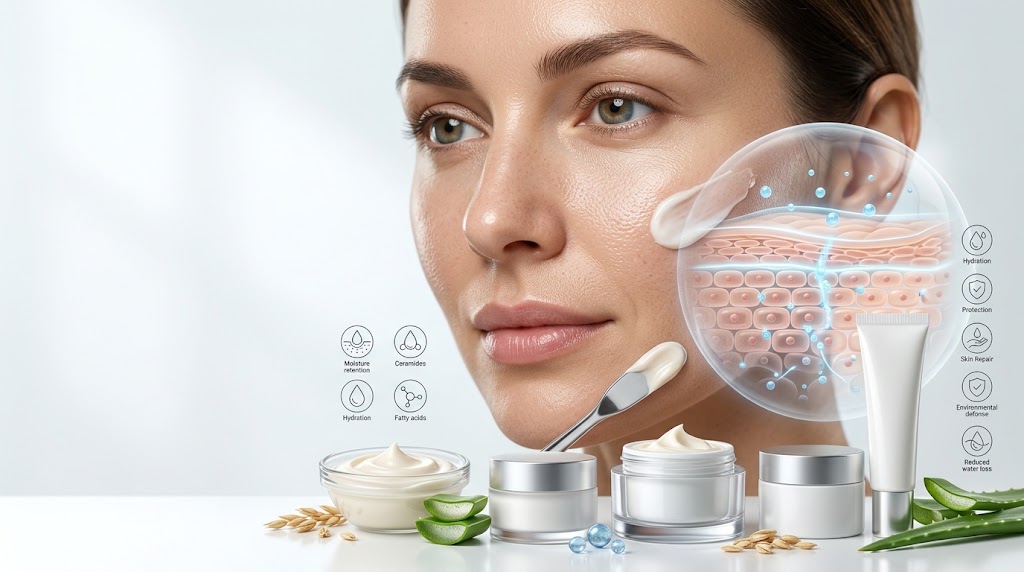
Skin Barrier Creams have become one of the most discussed and scientifically validated categories in modern skincare, and for excellent reasons that go far beyond marketing language and trend cycles. Your skin barrier, technically called the stratum corneum, performs one of the most essential functions in your entire body: it keeps moisture locked inside your skin while blocking the entry of environmental pollutants, bacteria, allergens, and irritants that cause inflammation and disease. When that barrier weakens or breaks down, every skin condition becomes harder to manage and every environmental insult causes more damage. Skin Barrier Creams repair, reinforce, and maintain this critical protective layer using ingredients that dermatologists and cosmetic scientists have studied extensively across decades of clinical research.
How Skin Barrier Creams Work and Why Your Skin Needs Them
Understanding what Skin Barrier Creams actually do requires a clear picture of what the skin barrier itself consists of and what happens to your skin when that barrier deteriorates below its optimal functional state.
The Biology Behind the Barrier
Your skin barrier resembles a brick wall in its fundamental structure. Flattened dead skin cells called corneocytes act as the bricks, held together by a mortar of lipids including ceramides, cholesterol, and fatty acids that prevent water from escaping the skin and block external substances from penetrating into living tissue below.
When this lipid mortar depletes through aging, over-cleansing, environmental exposure, genetic conditions like eczema, or harsh skincare ingredient use, gaps develop between the cellular bricks. Water escapes through those gaps in a process called transepidermal water loss, leaving skin dehydrated, tight, and reactive. External irritants penetrate through the same gaps, triggering inflammatory responses that manifest as redness, sensitivity, breakouts, and chronic skin conditions.
Skin Barrier Creams work by replenishing the depleted lipid components that hold the skin barrier structure together. They supply the ceramides, cholesterol, fatty acids, and occlusive ingredients that seal the gaps and restore the waterproof integrity that healthy skin maintains naturally.
Ceramides: The Most Critical Barrier Ingredient
Ceramides form approximately 50% of the lipid content in a healthy skin barrier, making them the single most important ingredient to look for in any effective Skin Barrier Creams formulation. These waxy lipid molecules hold adjacent skin cells together and control what passes through the barrier in both directions.
Your skin produces ceramides naturally throughout your life, but production declines with age and depletes further through environmental stress, harsh cleansers, over-exfoliation, and exposure to extreme temperatures. Skin Barrier Creams containing ceramides directly replenish this depleted supply rather than simply sitting on the surface of the skin.
Research published in multiple dermatology journals confirms that ceramide-containing Skin Barrier Creams improve skin hydration, reduce transepidermal water loss, decrease redness and sensitivity, and improve outcomes in eczema patients when used consistently. The ingredient works through replacement of the exact molecules that the barrier loses through damage and aging rather than through surface-level hydration alone.
Cholesterol and Fatty Acids Complete the Barrier Equation
Effective Skin Barrier Creams supply ceramides alongside cholesterol and fatty acids in ratios that approximate the natural composition of healthy skin lipids. Research from dermatologist Peter Elias, whose work established the modern understanding of skin barrier biology, confirms that applying these three lipid types in balanced ratios produces significantly better barrier repair outcomes than applying any single lipid component alone.
Cholesterol supports barrier repair speed and membrane fluidity. Fatty acids including linoleic acid and palmitic acid provide the building blocks that skin cells use to synthesize their own ceramides internally when supplied through topical application. Skin Barrier Creams that combine all three lipid categories in their formulations deliver the complete biological toolkit that barrier repair requires at the cellular level.
Who Benefits Most From Skin Barrier Creams
People with eczema, psoriasis, rosacea, and contact dermatitis all experience barrier dysfunction as a core feature of their conditions rather than simply a secondary effect. Skin Barrier Creams represent a primary therapeutic intervention for these populations rather than a cosmetic enhancement.
People with naturally dry or sensitive skin benefit significantly from daily Skin Barrier Creams use because their skin produces fewer natural lipids and loses moisture faster than normal skin types. People living in cold, dry climates experience seasonal barrier deterioration that targeted barrier creams address more effectively than standard moisturizers. People who use retinoids, acids, or other active ingredients that temporarily disrupt the barrier use Skin Barrier Creams to manage that disruption without abandoning effective anti-aging or acne treatments.
Choosing and Using Skin Barrier Creams for Maximum Results
Understanding the science of Skin Barrier Creams gives you the knowledge to choose products effectively and apply them in ways that genuinely deliver the barrier repair and protection that good formulations make possible.
Reading Ingredient Labels With Confidence
The most effective Skin Barrier Creams list ceramides, cholesterol, and fatty acids among their primary active ingredients rather than burying them at the bottom of a long ingredient list where their concentration may be too low to produce meaningful biological effects.
Look specifically for ceramide NP, ceramide AP, ceramide EOP, ceramide NS, and ceramide EOS on ingredient labels. These designations refer to different ceramide types that naturally occur in human skin, and formulations containing multiple ceramide types produce more comprehensive barrier repair than single-ceramide products.
Hyaluronic acid works alongside ceramides in Skin Barrier Creams by attracting and holding water molecules within the skin tissue that ceramides then seal inside. Niacinamide supports ceramide synthesis within skin cells by activating the enzymatic pathways that produce ceramides internally, making it a valuable complementary ingredient in any Skin Barrier Creams formula aimed at long-term barrier strengthening rather than simply surface-level repair.
Occlusives Seal What Ceramides Repair
Occlusive ingredients form a physical film on the skin surface that prevents water from evaporating through the repaired barrier while the barrier lipids continue integrating into the skin structure below. Skin Barrier Creams containing petrolatum, beeswax, dimethicone, or shea butter provide this occlusive function alongside the active repair ingredients that address barrier structure directly.
Petrolatum represents the gold standard occlusive ingredient in clinical dermatology, reducing transepidermal water loss by up to 99% when applied in sufficient quantities. Skin Barrier Creams that include petrolatum alongside ceramides deliver both structural repair through ceramide replacement and immediate moisture protection through occlusive sealing in a single application.
People with acne-prone skin often avoid occlusive-containing products based on concerns about pore-clogging, but non-comedogenic Skin Barrier Creams formulated with lighter occlusives like dimethicone deliver the sealing benefit without the pore-blocking risk that heavier waxes and oils create on acne-prone skin types.
Application Timing Maximizes Effectiveness
Apply Skin Barrier Creams immediately after cleansing while skin remains slightly damp to seal in the moisture that water provides before evaporation removes it. The optimal window for Skin Barrier Creams application falls within three minutes of cleansing when water content in the outer skin layers remains elevated and ready to be sealed in by the cream’s occlusive components.
Apply Skin Barrier Creams as the final step in your skincare routine after all water-based serums and active treatments have absorbed into the skin. Applying barrier creams over active ingredients seals those ingredients against the skin surface, increasing their contact time and potentially their effectiveness while providing the barrier protection that active ingredients often temporarily compromise.
Nighttime application of Skin Barrier Creams particularly benefits barrier repair because skin cell renewal and lipid synthesis both peak during sleep hours when the body directs repair resources toward maintenance rather than defense against daytime environmental stressors. Applying Skin Barrier Creams before sleep gives the repair process both the materials it needs through the cream’s ingredients and the optimal biological timing that nighttime cell activity provides.
Patch Testing Protects Sensitive Skin
People with reactive or compromised skin barriers should patch test any new Skin Barrier Creams formulation before applying it across the full face. Apply a small amount to the inner wrist or behind the ear, leave for 24 hours, and assess for any redness, itching, or irritation before proceeding with full application.
Fragrance represents the ingredient category most likely to trigger reactions in people with compromised barriers seeking Skin Barrier Creams for therapeutic purposes. Choose fragrance-free formulations for damaged or reactive skin rather than products with added fragrance that may trigger contact dermatitis through an already-compromised barrier.
Building a Consistent Barrier Repair Routine
Consistent daily use of Skin Barrier Creams produces cumulative improvement that single applications or sporadic use never achieves. Research confirms that ceramide-containing formulations demonstrate measurably improved skin barrier function after four to eight weeks of twice-daily application, with improvement continuing beyond that point during sustained consistent use.
Pair Skin Barrier Creams with a gentle non-stripping cleanser that removes surface impurities without dissolving the lipids that the barrier cream works to replenish. Cleansers with a pH between 4.5 and 5.5 support barrier health rather than disrupting it through alkalinity that standard bar soaps typically deliver. Building a complete gentle skincare routine around Skin Barrier Creams creates the conditions where barrier repair can proceed without constant disruption from incompatible adjacent products undermining the progress.
Conclusion:
Skin Barrier Creams deliver genuine, scientifically validated benefits that go far beyond surface-level moisturization to address the root biological dysfunction that underlies most chronic skin concerns. Ceramides, cholesterol, and fatty acids in balanced ratios repair the lipid mortar that holds your skin barrier together and restores the moisture-sealing, irritant-blocking protection that healthy skin maintains effortlessly. Choosing formulations with the right active ingredients, applying them at the right time in your routine, and using them consistently across weeks and months produces cumulative improvement that transforms reactive, dehydrated, and sensitive skin into something genuinely resilient. Your skin barrier protects everything beneath it. Skin Barrier Creams protect your barrier. For more expert skincare guides, dermatology-backed product advice, and health content that delivers real results, visit DailyInfoRoom where the knowledge your skin needs finds the readers ready to use it.












