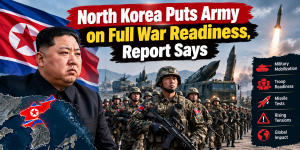


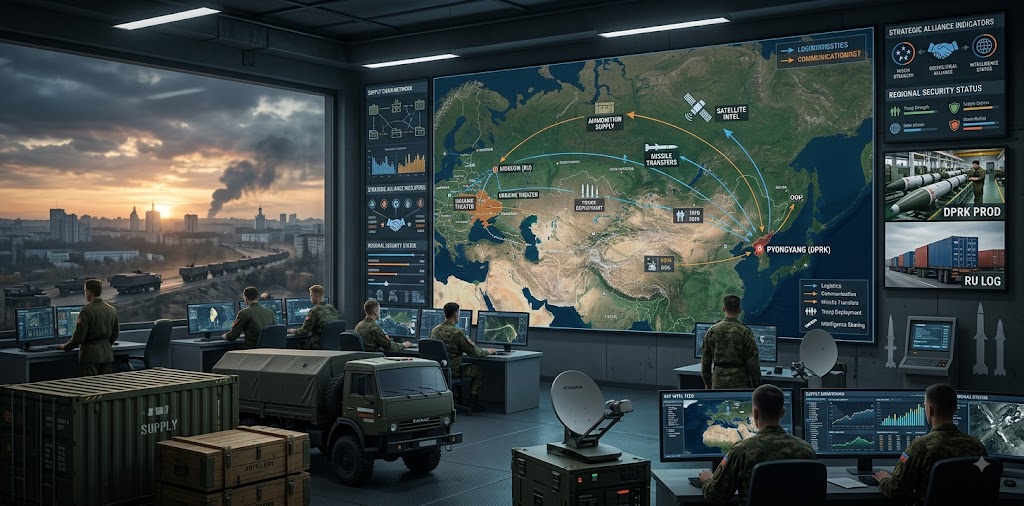
North Korean Military involvement in Russia’s war against Ukraine has transformed a bilateral conflict into a multilateral security crisis that now demands the attention of governments, military analysts, and international institutions across every continent. What began as weapons shipments has evolved into direct troop deployment, artillery support, ballistic missile transfers, and a deepening strategic partnership between Pyongyang and Moscow that neither country attempted to conceal. Ukraine’s military intelligence agency confirmed that North Korea delivered 4 million artillery shells since mid-2023, excluding mortar rounds, and supplied 148 KN-23 and KN-24 ballistic missiles by the start of 2025. These numbers represent a material contribution to Russia’s war capacity that has prolonged the conflict and complicated Ukraine’s ability to degrade Russian offensive capability through attrition.
The Scale and Scope of North Korean Military Deployment in the Ukraine Conflict
The North Korean Military contribution to Russia’s war effort has grown steadily from arms supplies into direct combat deployment that multiple intelligence agencies across allied nations have confirmed through independent assessment and satellite monitoring.
Troop Deployment at Combat Scale
About 10,000 North Korean combat troops and 1,000 engineer troops are stationed in Russia’s Kursk Oblast as of early 2026, according to South Korea’s National Intelligence Service. These soldiers fight under Russian command in a front-line region that borders Ukraine’s Sumy Oblast and serves as one of the most actively contested sectors of the broader conflict zone.
Under Russian command, North Korean soldiers fire barrel artillery and multiple launch rocket systems, conduct aerial and artillery reconnaissance, and adjust strikes, according to Ukraine’s military intelligence agency. This operational profile places North Korean Military personnel in direct combat roles rather than advisory or logistical positions that would carry lower geopolitical significance.
Ukrainian President Volodymyr Zelenskyy stated that Russia is preparing to receive about 30,000 new North Korean troops in what would represent a dramatic escalation of Pyongyang’s direct military contribution to Russia’s war capacity. North Korea has provided vital support for Russia in the war in Ukraine, including through military personnel, artillery ammunition, and ballistic missiles.
Casualties and Combat Experience
North Korea’s losses in Kursk Oblast totaled about 6,000 troops killed or injured, according to South Korea’s National Intelligence Service. This casualty figure represents significant human cost that Pyongyang absorbs in exchange for benefits that its leadership clearly values more than the lives of the soldiers deployed.
Despite suffering 6,000 casualties, the North Korean Military has achieved the results of acquiring modern combat tactics and data on the battlefield, as well as upgrading its weapons systems with technical assistance from Russia. The combat experience that surviving North Korean soldiers gain in Ukraine represents a capability transfer that military analysts identify as one of Pyongyang’s primary motivations for sustaining the deployment despite significant losses.
Since North Korean troops became involved in Russia’s invasion of Ukraine, approximately 3,000 trained and experienced soldiers have returned to North Korea, with most of them becoming military instructors and passing on skills gained in modern warfare to the North Korean army. This knowledge transfer multiplies the battlefield value of each deployed soldier far beyond their individual combat contribution during service in Russia.
The Strategic Partnership Binding Moscow and Pyongyang
Russian President Vladimir Putin and North Korean leader Kim signed a comprehensive strategic partnership treaty during Putin’s June 2024 visit to Pyongyang. The pact includes a mutual assistance provision if either country faces external aggression. This treaty formalized a relationship that both governments now describe in terms that go far beyond transactional arms dealing into genuine strategic alliance with binding mutual defense commitments.
North Korean leader Kim Jong Un affirmed Pyongyang’s readiness to unconditionally support all Moscow’s actions in its conflict with Ukraine during strategic talks with Russia’s top diplomat. That unconditional commitment represents a significant diplomatic development in a conflict where Russia has struggled to attract open allied support from nations concerned about Western sanctions exposure
What North Korean Military Involvement Means for Global Security and the Conflict’s Future
The North Korean Military presence in the Ukraine conflict creates security implications that extend far beyond the immediate battlefield and affect alliance relationships, arms control frameworks, and regional security dynamics across multiple continents simultaneously.
Technology Transfer as Pyongyang’s Strategic Prize
South Korea’s defense ministry suggested that North Korea may be receiving Russian technological assistance for advanced weapons like nuclear-powered submarines and intercontinental ballistic missiles in exchange for its troop deployment and weapons supplies. This technology transfer dimension transforms the North Korean Military involvement from a simple manpower and ammunition transaction into a capability exchange that affects the long-term military balance across the Indo-Pacific region.
key objective of North Korea’s participation in the war is mastering unmanned technologies and gaining hands-on experience in modern, high-intensity warfare. The acquisition of combat experience with drones has become one of Pyongyang’s primary goals in supporting Russia’s invasion. Drone warfare proficiency represents a capability gap that North Korean Military planners have identified as critical to future conflict scenarios on the Korean Peninsula, making the Ukraine conflict a laboratory for learning that Pyongyang’s military leadership values strategically
Artillery Shells and the War of Attrition
South Korea’s defense ministry intelligence arm reported to parliament that North Korea continued to supply artillery ammunition to Russia and shipped about 12 million rounds in total. This ammunition volume represents a genuinely significant contribution to Russia’s ability to sustain high-tempo artillery operations that have defined the conflict’s grinding character across eastern Ukraine.
Artillery shell shortages constrained Russian offensive operations at multiple points throughout the conflict before North Korean Military supply chains began delivering at scale. Pyongyang’s industrial capacity to produce large quantities of Soviet-compatible artillery ammunition at speed and relatively low cost fills a gap that Russia’s own production capacity struggled to meet against the consumption rates that modern high-intensity warfare demands.
International Response and Sanctions
Washington imposed additional sanctions in December 2024 on North Korean and Russian entities connected to Pyongyang’s military and financial support for Moscow. South Korea also blacklisted individuals and entities linked to illicit military cooperation between the two countries. These measures represent the primary tool that Western governments employ against the Russia-North Korea military partnership, though analysts question whether sanctions effectively deter a government already operating under comprehensive international restrictions since 2006.
NATO’s Secretary General said he could not confirm information about the participation of North Korean troops in military operations in Ukraine, although this was a cause for concern. NATO condemned the increasing military cooperation between Russia and North Korea. The alliance’s condemnation reflects genuine alarm about the precedent that North Korean Military deployment in Europe creates for future conflicts where states excluded from Western security structures provide direct combat support to revisionist powers.
The Buryat Battalion and Escalation Signals
The formation of the Buryat Battalion, reportedly consisting of approximately 3,000 North Korean fighters, marks a significant escalation in the level of direct military support from Pyongyang to Moscow. This development led Ukrainian President Volodymyr Zelenskyy to declare that Ukraine is now effectively at war with two nations.
Zelenskyy’s declaration captures a political and operational reality that the international community has been slow to fully acknowledge. Ukrainian forces engaging North Korean Military personnel in Kursk Oblast are fighting soldiers from a nuclear-armed state whose government pledged unconditional support to Russia regardless of how the conflict develops. That reality changes the conflict’s character in ways that affect alliance support calculations, weapons supply decisions, and diplomatic off-ramp possibilities simultaneously.
Kim Jong Un’s Political Calculation
Kim said in May 2025 that participation in the war was justified as an exercise of North Korea’s sovereign rights in defense of a brother nation. Analysts say Pyongyang stands to gain hard currency, oil and other economic support, as well as access to Russian military technology and battlefield experience for its forces and weapons.
Kim Jong Un frames the North Korean Military deployment through ideological language while pursuing concrete strategic benefits that strengthen his government’s military capacity, reduce its economic isolation, and deepen the great power patronage relationship with Russia that provides Pyongyang with diplomatic cover against Western pressure. The calculation appears rational from Pyongyang’s perspective regardless of how the wider international community judges the decision.
Conclusion:
North Korean Military involvement in the Ukraine conflict has graduated from weapons transfers into direct combat deployment, artillery supply at industrial scale, and a formal strategic partnership that both Moscow and Pyongyang describe as an enduring alliance rather than a temporary transaction. The battlefield implications affect Ukraine’s ability to degrade Russian offensive capacity. The technology transfer implications affect security across the Indo-Pacific. The precedent implications affect every future conflict where excluded powers seek capable military partners willing to challenge Western-led international order. Understanding this development fully requires following the story as it continues evolving. For sharp, accurate, and comprehensive coverage of global military affairs, geopolitical developments, and conflict analysis that keeps you genuinely informed, visit DailyInfoRoom where serious world events find the clear and reliable reporting they deserve.