


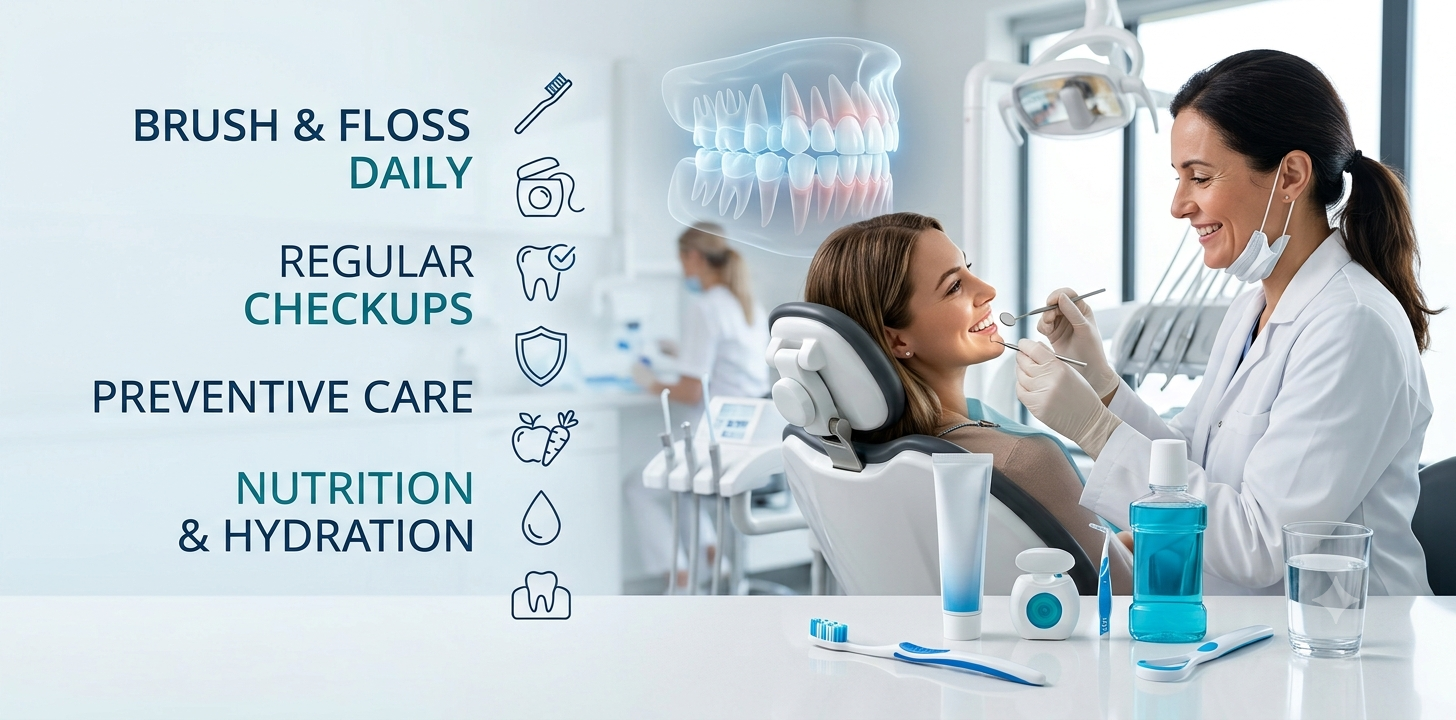
Dental Care represents one of the most consistently undervalued dimensions of overall health despite decades of research confirming that oral health connects directly to heart disease, diabetes, respiratory conditions, and pregnancy complications in ways that most people never discuss with their dentists or physicians. Your mouth serves as the entry point for everything that enters your body and as a visible indicator of what happens internally across multiple organ systems simultaneously. Poor Dental Care allows bacteria to accumulate, gum disease to develop, and inflammatory processes to begin that extend far beyond the mouth into the cardiovascular and immune systems. Building a genuine Dental Care practice that protects teeth and gums from childhood through old age requires understanding what actually works and why consistency delivers outcomes that occasional effort never achieves.
The Core Dental Care Practices That Protect Teeth and Gums Every Single Day
Effective Dental Care begins with the daily habits that most people learn in childhood but frequently perform incorrectly or incompletely throughout their adult lives, reducing their protective value significantly below what proper technique delivers.
Brushing Technique Matters as Much as Frequency
Most people brush their teeth twice daily and believe that frequency alone provides adequate Dental Care protection. Research consistently confirms that technique determines brushing effectiveness more powerfully than frequency. Brushing too hard with a back-and-forth scrubbing motion erodes tooth enamel and pushes gum tissue away from tooth roots over time, creating sensitivity and recession that no Dental Care intervention fully reverses once established.
Hold your toothbrush at a 45-degree angle to the gum line and use small circular motions that clean the junction between tooth and gum where plaque accumulates most destructively. Spend at least two full minutes brushing all tooth surfaces including the outer faces, inner faces, and chewing surfaces that receive the most food contact during eating. Soft-bristled toothbrushes deliver adequate cleaning without the enamel and gum damage that medium and hard bristles cause through daily mechanical contact.
Electric toothbrushes consistently outperform manual brushing in clinical studies measuring plaque removal and gum health outcomes. The oscillating or sonic motion that electric toothbrush heads produce removes plaque more thoroughly than manual circular motion for most users, making electric toothbrush adoption one of the highest-impact Dental Care upgrades available at a modest cost.
Flossing Reaches Where Brushing Cannot
Toothbrush bristles clean the exposed outer surfaces of teeth effectively but cannot penetrate the tight spaces between adjacent teeth where approximately 35% of each tooth surface sits hidden from brush contact. Dental Care that excludes daily flossing leaves these interproximal surfaces covered in undisturbed plaque biofilm that hardens into tartar within 48 hours of initial formation.
Tartar that forms between teeth creates the chronic low-level gum inflammation called gingivitis that progresses to periodontitis if Dental Care practices do not remove it consistently. Periodontitis destroys the bone and connective tissue that anchor teeth in the jaw, causing tooth mobility and eventual tooth loss that no restorative procedure fully compensates for in terms of function and aesthetics.
Floss once daily using a clean section of floss for each tooth gap, curving the floss around each tooth in a C-shape and sliding it gently below the gum line rather than snapping it forcefully between teeth. Floss picks, interdental brushes, and water flossers all provide alternatives for people whose manual dexterity or motivation makes traditional flossing difficult to maintain consistently. The specific tool matters less than the consistency with which any interdental cleaning tool removes plaque from between teeth daily.
Fluoride Strengthens Enamel Against Acid Attack
Fluoride remineralizes tooth enamel by replacing weakened mineral crystals with stronger fluorapatite that resists acid dissolution more effectively than the original hydroxyapatite that bacteria-produced acids attack. Dental Care that uses fluoride toothpaste twice daily delivers the enamel strengthening benefit that research across decades consistently identifies as the single most effective cavity prevention intervention available.
Spit toothpaste after brushing rather than rinsing with water immediately, allowing a thin fluoride film to remain in contact with tooth surfaces for longer periods that enhance remineralization. Children under six need supervised brushing with age-appropriate fluoride amounts to prevent fluorosis while still delivering cavity protection during the enamel formation period that determines adult tooth quality.
Diet Choices Shape Dental Care Outcomes Significantly
Every food and drink that enters your mouth interacts with tooth enamel and the bacteria living in your oral cavity in ways that either support or undermine your Dental Care efforts. Sugary and starchy foods feed the Streptococcus mutans bacteria responsible for cavity formation by providing the fermentable carbohydrates these bacteria metabolize into acids that dissolve tooth enamel.
Frequency of sugar exposure matters more than total sugar quantity in determining cavity risk. Sipping sugary drinks throughout the day bathes teeth in acid continuously, giving enamel no recovery period between acid attacks. Consuming sugary foods or drinks at mealtimes rather than throughout the day limits acid exposure to discrete periods that saliva neutralizes between meals.
Calcium-rich foods including dairy products, leafy greens, and fortified plant milks strengthen tooth enamel by providing the mineral building blocks that remineralization requires. Crunchy raw vegetables and fruits stimulate saliva production that buffers oral pH and provides the antimicrobial proteins that support a healthy oral microbiome. Water consumption throughout the day rinses food debris, dilutes acids, and maintains the saliva flow that Dental Care science identifies as the mouth’s primary natural defense system.
Professional Dental Care and the Systemic Health Connections Every Patient Should Understand
Home Dental Care practices form the daily foundation of oral health, but professional dental interventions provide capabilities that no home routine replicates and address the systemic health dimensions that make oral health inseparable from whole-body wellbeing.
Regular Professional Cleanings Remove What Home Care Cannot
Dental hygienists use specialized instruments during professional cleaning appointments to remove calculus, the hardened tartar deposits that form on tooth surfaces and below the gum line where no toothbrush or floss reaches effectively. Even the most diligent home Dental Care routine leaves some areas inadequately cleaned, allowing calculus accumulation that professional cleaning appointments address twice yearly for most adults.
Professional cleanings also provide the opportunity for dental professionals to assess gum health objectively by measuring pocket depths around each tooth, the spaces between the tooth and surrounding gum tissue that deepen as periodontitis advances. Catching pocket depth increases early through regular professional Dental Care appointments allows intervention before irreversible bone loss occurs.
Dental X-rays detect cavities between teeth, bone changes around tooth roots, and pathological conditions developing within jaw bone tissue that visual examination cannot identify. Bitewing X-rays taken annually or every two years provide the diagnostic information that allows dentists to intercept dental disease at early stages when treatment remains simple, conservative, and affordable compared to the complex restorative procedures that advanced disease requires.
Gum Disease Links to Serious Systemic Health Conditions
The bacterial species responsible for periodontitis enter the bloodstream through inflamed and ulcerated gum tissue, triggering inflammatory responses that affect cardiovascular function, blood sugar regulation, and respiratory health in ways that dental and medical research have documented consistently across multiple decades of investigation.
Cardiovascular disease researchers find higher rates of periodontitis in patients with heart disease and stroke compared to healthy controls, with the inflammatory burden from chronic gum disease contributing to arterial inflammation that accelerates atherosclerotic plaque development. People with diabetes experience more severe gum disease than non-diabetic populations because elevated blood sugar impairs the immune response that fights periodontal bacteria, while gum disease simultaneously makes blood sugar harder to control by increasing systemic inflammation that reduces insulin sensitivity.
Prioritizing Dental Care as a component of overall health management rather than an isolated cosmetic concern reflects the biological reality that oral and systemic health operate as interconnected systems. Treating gum disease actively improves blood sugar control in diabetic patients according to multiple clinical trials, demonstrating that Dental Care interventions deliver benefits that extend measurably beyond the mouth.
Protective Dental Care for Sports and Sleep
Custom-fitted mouthguards represent essential Dental Care equipment for anyone participating in contact sports or activities involving physical impact. A single sports injury can fracture, displace, or completely avulse teeth that years of careful Dental Care maintained in excellent health. Custom mouthguards distribute impact forces across a larger area and absorb energy that unprotected teeth would otherwise concentrate at the point of impact.
Night guards protect teeth from the bruxism, the nighttime grinding and clenching that affects an estimated 8 to 10% of the population during sleep. Bruxism generates forces that exceed normal chewing loads by several times, wearing enamel from tooth surfaces and causing fractures, sensitivity, and jaw joint pain that accumulate over years of nightly grinding. Custom night guards redirect these forces away from tooth surfaces and reduce the muscle tension that drives grinding behavior.
Early Detection of Oral Cancer Saves Lives
Dental Care appointments provide the opportunity for oral cancer screening that dentists perform through visual and tactile examination of the mouth, throat, and neck tissues. Oral cancer diagnosed at early localized stages carries a five-year survival rate above 80%. Advanced oral cancer involving spread to lymph nodes drops that survival rate to below 40%.
The majority of oral cancer cases associate with tobacco use, heavy alcohol consumption, and human papillomavirus infection, creating identifiable risk groups that benefit most urgently from consistent Dental Care professional oversight. Regular dental appointments create regular screening opportunities that catch oral cancer at stages where treatment success rates remain high.
Conclusion:
Dental Care protects far more than your smile. It safeguards your cardiovascular health, supports blood sugar regulation, protects against respiratory complications, and provides regular screening for conditions including oral cancer where early detection determines survival outcomes. Building a genuine Dental Care practice means brushing properly twice daily, flossing every day without exception, eating foods that support rather than undermine enamel strength, and attending professional cleaning and examination appointments consistently throughout your life. Every investment in Dental Care pays returns in avoided dental disease costs, protected systemic health, and the confidence that a healthy mouth provides across every social and professional interaction. For more practical health guides, wellness strategies, and evidence-based content that improves your daily life, visit DailyInfoRoom where the knowledge your health depends on finds the readers committed to using it.












