

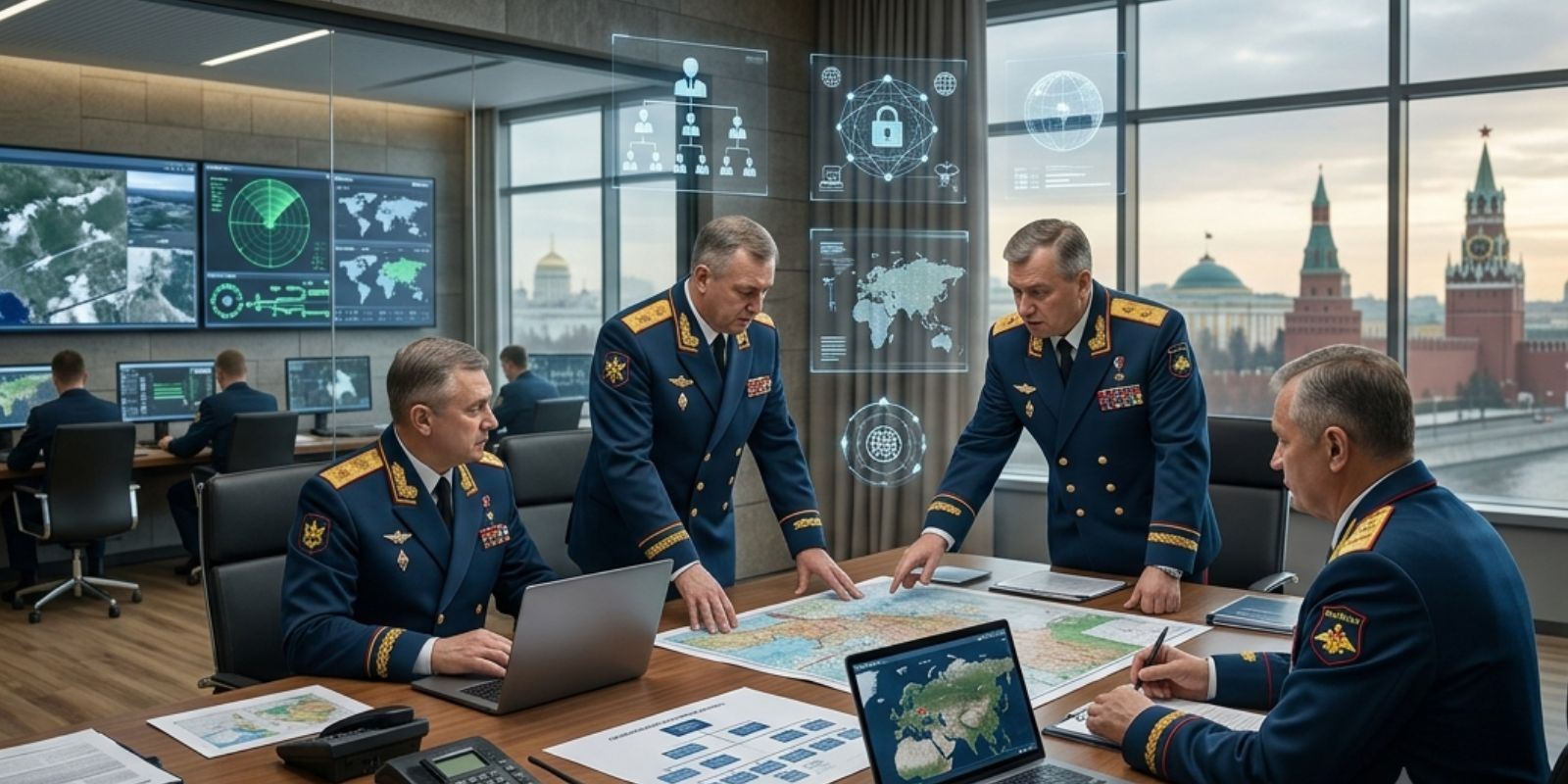
Putin reshuffles Russia’s Military Leadership at a moment when the Ukraine conflict has forced Moscow to fundamentally rethink how it organizes, supplies, and fights a war that has defied every initial expectation about its duration and character. President Vladimir Putin announced a major reshuffle across the top ranks of Russia’s military on August 5, 2026, appointing new operational commanders in Ukraine, a unified logistics chief, and a head for the newly established drone warfare branch. Putin described the changes as continuing to refine the Defense Ministry’s organizational structure to keep pace with the needs and lessons learned from the special military operation. These appointments signal far more than routine personnel rotation. They reveal how deeply the Ukraine conflict has reshaped Russian military doctrine, priorities, and institutional structure at the highest command levels.
Breaking Down the Key Appointments as Putin Reshuffles Russia’s Military Leadership
Putin reshuffles Russia’s Military Leadership through several simultaneous appointments that restructure operational command, logistics authority, and the emerging drone warfare branch in ways that reflect specific lessons absorbed from years of grinding combat in Ukraine.
The Unmanned Systems Forces Get Their Commander
Putin appointed Colonel General Denis Lyamin to head Russia’s newly established Unmanned Systems Forces. This appointment sits at the center of why Putin reshuffles Russia’s Military Leadership with such urgency at this particular moment. Drone warfare has transformed the Ukraine conflict more dramatically than any other technological development, with both sides deploying unmanned systems at scales and operational tempos that no military doctrine developed before 2022 fully anticipated.
Russia announced the creation of the Unmanned Systems Forces in 2025 and later declared they had been formally established. Yet Putin’s current instruction to Lyamin to complete their formation exposes the gap between creating a military branch administratively and making it function in practice. Training must be standardized, someone must be made responsible for purchasing and testing different platforms, manufacturers must be connected directly to military units, supply chains for spare parts and radio frequencies must be organized, counter-drone systems must be developed, and the line of authority between ground commanders and the new branch must be defined.
Lyamin faces a genuinely difficult institutional construction challenge. Lyamin most recently served as chief of staff of the Tsentr grouping and took command of the 58th Army in 2023 after his predecessor was dismissed for publicly criticizing the Defense Ministry’s leadership. His appointment signals that Putin reshuffles Russia’s Military Leadership by selecting commanders with proven organizational discipline and institutional loyalty alongside battlefield experience.
Logistics Gets Elevated to Combat Mission Status
The most strategically revealing appointment in the reshuffle involves logistics. The reshuffle includes appointing a single person in charge of military logistics and arms supplies, with Putin saying directly that leading logistics is a combat mission too.
That statement was both an admission and a call to action, because Russia now faces a stark reality: there is no longer any safe space behind the front line. Warehouses, railways, and trucks no longer belong safely to the rear. They are targets. Putin reshuffles Russia’s Military Leadership specifically to address this reality by placing an experienced combat commander rather than a bureaucratic administrator in charge of the supply chains that sustain Russian forces across the entire Ukraine theater.
Colonel General Valery Solodchuk, who most recently headed the Tsentr grouping, received the logistics appointment. Putin said the Defense Ministry’s rear services would now be concentrated in one set of hands. Elevating a battlefield commander to lead logistics sends an unambiguous message about how Russia now categorizes supply chain management within its overall military operations.
Frontline Command Rotation
Putin also reorganized frontline leadership in eastern and southern Ukraine, naming Colonel General Andrei Ivanayev commander of the Center group of forces and Lieutenant General Pyotr Bolgarev commander of the East group.
These rotations reflect the pattern that Putin reshuffles Russia’s Military Leadership uses consistently throughout the Ukraine conflict: moving proven commanders between operational roles to maintain institutional knowledge while preventing any single commander from accumulating the independent operational authority that Russian military culture historically views with suspicion.
What Putin’s Decision to Reshuffles Russia’s Military Leadership Reveals About Defense Strategy
The specific structure of these appointments reveals a Russian military establishment undergoing genuine strategic adaptation rather than simply replacing underperforming individuals with more capable alternatives.
Drone Warfare Becomes a Service Branch
The creation of the Unmanned Systems Forces as a fully independent branch of the Russian military represents the most significant structural innovation that Putin reshuffles Russia’s Military Leadership to implement. The new structure provides for centralized control of unmanned units and stronger coordination between different levels of the army amid the confrontation with Ukraine.
Previous Russian drone operations suffered from fragmented command authority where different units operated unmanned systems through separate procurement channels, training programs, and tactical doctrines that reduced operational effectiveness and created coordination failures during joint operations. Establishing a dedicated service branch with unified command centralizes these functions and creates institutional ownership of drone warfare development that mirrors how major military powers have organized other specialized capabilities.
The Defense Ministry claims that around eight thousand specialists were trained during the first half of 2026 in unmanned systems operations. The scale of that training effort confirms that Russia treats drone warfare competency as a mass capability requirement rather than a specialist niche, demanding the institutional infrastructure that a dedicated service branch provides.
Logistics as Strategic Priority
Putin reshuffles Russia’s Military Leadership with logistics elevation as a core structural change because Ukraine has demonstrated that modern high-intensity warfare consumes ammunition, equipment, and fuel at rates that strain even large industrial military powers. Russian forces have experienced significant logistical failures throughout the conflict, including the infamous convoy stalling north of Kyiv in the conflict’s opening weeks and persistent ammunition supply inconsistencies that have affected operational tempo at critical moments.
The war has changed, and Moscow has now formally acknowledged it. Managing logistics is also a combat mission. Placing a combat-experienced general rather than a career logistics administrator in charge signals that Russia intends to apply the same aggressive operational mindset to supply chain management that it applies to frontline tactical problems.
This organizational philosophy reflects lessons from how Ukrainian forces have used long-range strikes, drone attacks, and special operations to target Russian logistics infrastructure throughout the conflict. Russia now treats its own supply chain as an active battlefield requiring the same command attention and professional urgency as frontline combat operations.
Largest Administrative Reform in a Decade
The reshuffle follows Russian Defense Minister Andrei Belousov’s launch of the military’s largest administrative reform in more than a decade. Putin reshuffles Russia’s Military Leadership as one component of a broader institutional transformation that Belousov has driven since his appointment as defense minister replaced the long-serving Sergei Shoigu in 2024.
Belousov’s background as an economist rather than a military commander gave him the institutional distance to identify organizational inefficiencies that career military insiders had normalized. His reform program targets the bureaucratic friction, procurement dysfunction, and command coordination failures that the Ukraine conflict exposed with painful clarity across every operational domain.
The specific appointments Putin announced on August 5, 2026, represent the personnel dimension of structural reforms that Belousov’s administrative reorganization established as the organizational framework. Personnel and structure reinforce each other: new commanders need clear institutional mandates, and institutional reforms need capable commanders to execute them in practice.
International Observation and Intelligence Implications
NATO military planners, Ukrainian intelligence services, and defense analysts across allied nations study every instance where Putin reshuffles Russia’s Military Leadership for signals about operational intentions, strategic priorities, and institutional vulnerabilities. The specific appointments reveal where Russia believes it currently underperforms and where it intends to invest command talent and institutional energy going forward.
The drone warfare branch formalization signals that Russia intends to sustain and expand unmanned systems operations rather than treating drone capability as a temporary adaptation. The logistics elevation signals that Russia takes seriously the strategic vulnerability that supply chain disruption creates. The frontline command rotations signal continued operational pressure across the eastern and southern Ukraine theaters without indication of imminent strategic withdrawal or negotiating posture change.
Conclusion:
Putin reshuffles Russia’s Military Leadership at a moment of genuine strategic reckoning about what modern warfare demands from military institutions that designed themselves for a different kind of conflict. The drone branch formalization, logistics elevation, and frontline command rotation together reveal a military establishment absorbing hard lessons and restructuring around them with the institutional seriousness that prolonged high-intensity conflict eventually forces on any organization determined to prevail. Whether these structural adaptations deliver the operational improvements Russia needs remains the central question that the battlefield will answer. For expert analysis of military affairs, geopolitical developments, conflict reporting, and global security stories that shape the world, visit DailyInfoRoom where serious news finds the readers who engage with it seriously.