


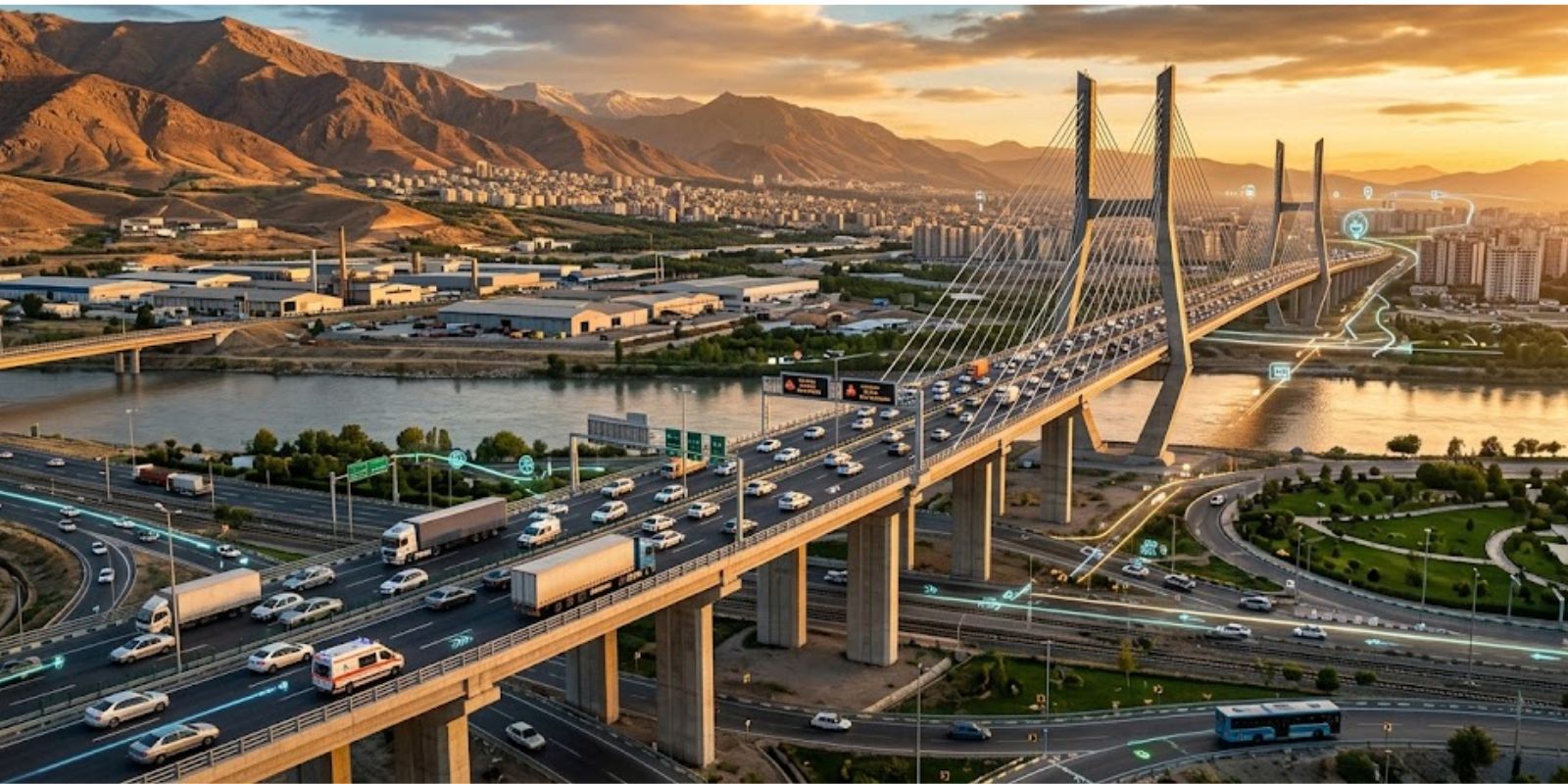
The B1 Bridge in Karaj stands as one of the most critical infrastructure assets in Iran’s Alborz Province, connecting communities, enabling commerce, and supporting the daily movement of hundreds of thousands of people across one of the country’s fastest-growing urban regions. Karaj itself ranks among the most populous cities in Iran, sitting directly west of Tehran and serving as a vital gateway between the capital and the broader northwestern corridor of the country. The B1 Bridge in Karaj does not simply carry vehicles across a physical divide. It carries economic activity, emergency response capability, supply chain logistics, and human connectivity across a region where infrastructure investment directly determines the quality of daily life for millions of residents.
Understanding the B1 Bridge in Karaj and Its Role in Urban Transportation
The B1 Bridge in Karaj occupies a position of genuine strategic importance within the city’s transportation network. Karaj has grown at a remarkable pace over recent decades, absorbing population overflow from Tehran and developing its own dense urban fabric of residential neighborhoods, industrial zones, commercial districts, and educational institutions. Infrastructure connecting these zones determines how efficiently the city functions at every level.
Physical Structure and Engineering Significance
The B1 Bridge in Karaj represents a significant engineering achievement within the regional context. The bridge spans the Karaj River, which flows through the heart of the city and historically divided urban development along both banks. Before major bridge infrastructure connected the two sides, residents faced significant detours and time losses that reduced economic productivity and complicated emergency response operations across the river boundary.
The bridge design accommodates multiple lanes of vehicle traffic while incorporating pedestrian pathways that give residents on both sides direct access to city resources, markets, and transport connections. Engineering teams designed the structure to handle the heavy daily traffic volumes that a city of Karaj’s size generates, including freight vehicles serving industrial facilities in the wider metropolitan area.
Daily Traffic Flow and Commuter Impact
The B1 Bridge in Karaj handles significant daily traffic volumes from commuters traveling between residential areas on one bank and employment centers, schools, hospitals, and commercial zones on the other. Morning and evening rush hours concentrate enormous vehicle numbers across the bridge, making its operational reliability a direct factor in daily productivity for a large portion of Karaj’s working population.
Bus rapid transit routes and public transportation networks use the B1 Bridge in Karaj as a key crossing point, making it essential not just for private vehicle owners but for the significant portion of the population that relies entirely on public transit for daily movement. Any disruption to bridge operations creates cascading delays across multiple transit lines serving tens of thousands of daily riders.
Freight transport also depends heavily on this crossing. Delivery vehicles, construction supply trucks, and commercial cargo carriers use the bridge to reach destinations on both sides of the river without adding kilometers to their routes through alternative crossings located further from the city center.
Emergency Response and Public Safety
Emergency services including fire departments, ambulances, and police units use the B1 Bridge in Karaj as a primary rapid response route connecting coverage zones on opposite riverbanks. Response time data from emergency service providers consistently shows that bridge access directly determines how quickly responders reach incidents in areas served by the crossing.
Hospital facilities located on one side of the river depend on bridge access to receive patients from neighborhoods on the opposite bank. Karaj’s growing population places increasing demand on medical infrastructure, and the bridge forms a critical link in the chain connecting people experiencing medical emergencies with the care facilities they need quickly.
Regional Connectivity and the Broader Economic Importance of the B1 Bridge in Karaj
The B1 Bridge in Karaj delivers impact that extends well beyond city limits. Its position within the broader regional transportation network connecting Karaj to Tehran and the wider northwestern corridor of Iran gives it strategic significance that national infrastructure planners and regional economic development agencies both recognize.
Connecting Karaj to the Tehran Metropolitan Corridor
Karaj functions as a satellite city within the greater Tehran metropolitan region, with millions of residents maintaining economic, educational, and social ties to the capital while living west of it. The road network connecting Karaj to Tehran carries some of the heaviest traffic volumes in Iran, and infrastructure within Karaj itself either supports or constrains that flow.
The B1 Bridge in Karaj allows vehicles moving between Tehran and destinations further west or northwest to pass through Karaj efficiently rather than routing around river obstacles. This keeps the broader corridor flowing and reduces the congestion that would otherwise back up onto major arterial roads feeding into Tehran’s western approaches.
Industrial facilities located in and around Karaj supply goods and services to businesses throughout the Tehran region and beyond. Supply chain efficiency for these facilities depends directly on the quality of local infrastructure connections like the B1 Bridge in Karaj, which enables freight movement without unnecessary delays or route extensions that add cost and reduce competitiveness.
Supporting Economic Development Along Both Riverbanks
Urban economic development concentrates naturally around areas with strong infrastructure connectivity. Commercial investment, real estate development, and business establishment all follow transportation access patterns. Areas near the B1 Bridge in Karaj benefit from the economic activity that reliable crossing infrastructure attracts, with markets, retail establishments, service businesses, and office developments clustering in zones that bridge connections make accessible.
Property values near major bridge crossings in dense urban environments consistently reflect the premium that buyers and investors place on transportation access. The B1 Bridge in Karaj creates this value effect for neighborhoods on both sides of the river, supporting tax revenue generation that the city government invests back into services and additional infrastructure.
Small business owners in areas served by the bridge cite transportation access as a primary factor in their commercial viability. Customers reach their businesses more easily. Suppliers deliver inventory without excessive route complications. Workers commute to their establishments without the time burden that alternative routing would impose. The economic fabric of neighborhoods near the B1 Bridge in Karaj depends substantially on the connectivity the structure provides.
Infrastructure Resilience and Maintenance Priorities
City authorities and regional transportation planners treat the B1 Bridge in Karaj as a high-priority maintenance asset precisely because its failure would impose disproportionate disruption on the surrounding transportation network. Regular structural inspection programs assess the bridge’s load-bearing capacity, surface condition, expansion joint integrity, and drainage system performance.
Karaj sits in a seismically active zone given its proximity to the Alborz mountain range. Earthquake resilience standards for bridge infrastructure in the region reflect the real risk that seismic events pose to structures that carry critical daily traffic loads. Engineering assessments of the B1 Bridge in Karaj incorporate seismic vulnerability analysis to ensure the structure meets safety standards appropriate to its regional risk environment.
Maintenance scheduling balances the need for inspection and repair work against the operational disruption that lane closures or full bridge shutdowns impose on daily traffic flow. Transportation planners coordinate maintenance windows with traffic management teams to minimize peak-hour impact while ensuring the structural integrity work that keeps the bridge safe and operational gets completed on schedule.
Future Development and Infrastructure Planning
Regional infrastructure plans for the Karaj area include upgrades and expansions to the transportation network that affect how the B1 Bridge in Karaj fits into the broader system going forward. Population growth projections for Karaj predict continued expansion that will place increasing demand on existing crossing infrastructure, making capacity planning a live concern for city and provincial transportation authorities.
New residential and commercial development projects on both sides of the river increase the daily traffic volumes that the bridge must handle. Infrastructure planners assess whether the existing structure’s capacity matches projected growth demand or whether expansion, supplementary crossing construction, or traffic management interventions will be needed to maintain flow quality as the city grows.
Public transit expansion plans in Karaj also affect bridge utilization patterns. New bus routes and potential future rapid transit corridor developments would route additional transit vehicles across the B1 Bridge in Karaj, changing the mix of vehicle types using the structure and requiring assessment of how transit-oriented design elements might enhance the bridge’s function within a more transit-focused urban mobility system.
Conclusion:
The B1 Bridge in Karaj represents far more than a physical structure spanning a river. It serves as a lifeline for commuters, a backbone for commerce, a critical link for emergency services, and a foundation for regional economic connectivity that benefits communities across a wide geographic area. Infrastructure of this significance deserves sustained investment, rigorous maintenance, and forward-thinking planning that anticipates the demands a growing city will place on it in the years ahead. Every resident and business that depends on this crossing has a stake in its continued quality and reliability. For more in-depth coverage of infrastructure development, urban planning, regional connectivity, and topics that shape how cities and communities function, visit DailyInfoRoom where knowledge meets the stories that matter most.












