


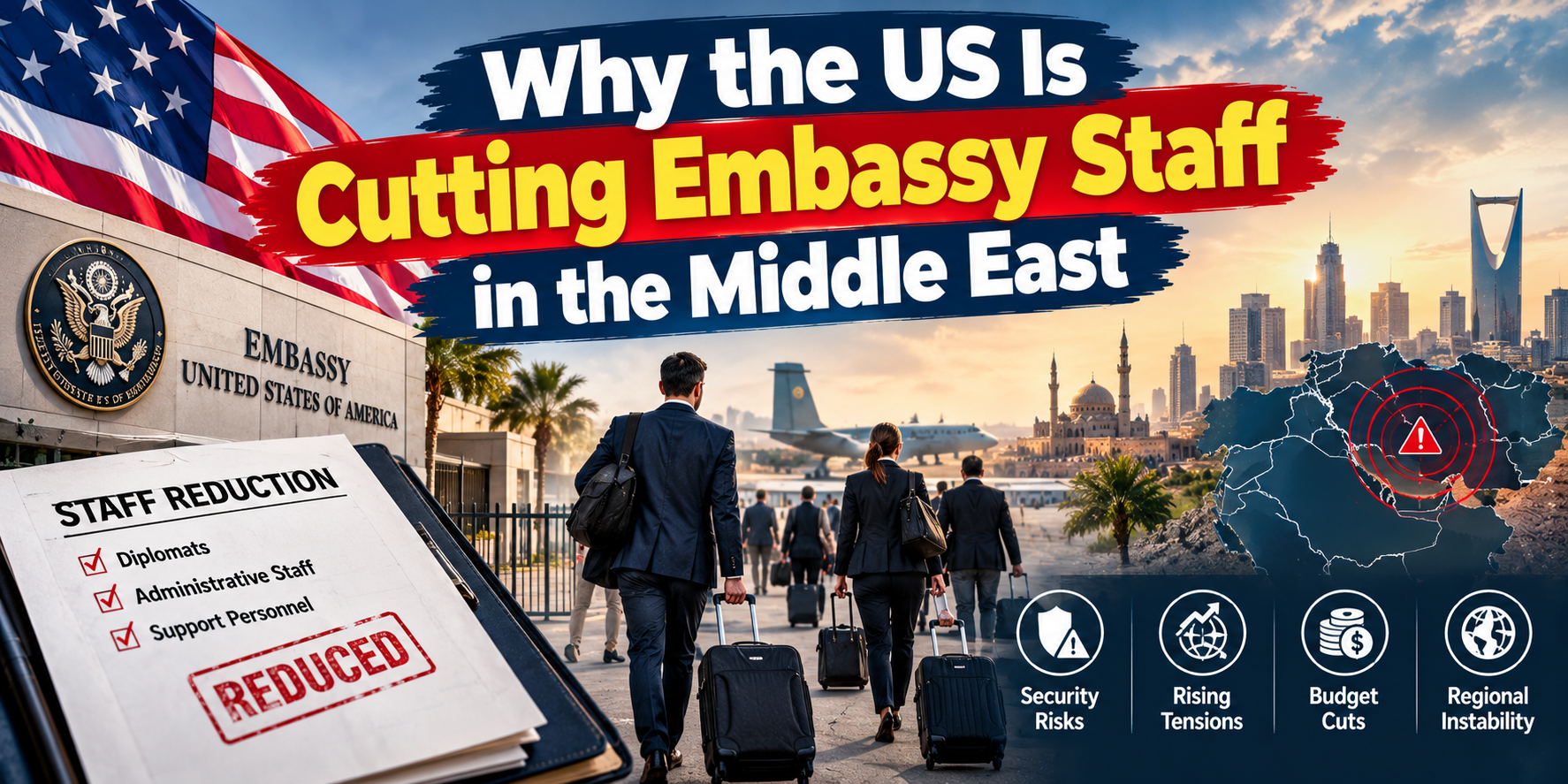
The United States is reducing the number of diplomats and other government employees at several Middle Eastern embassies as regional security concerns intensify. The decision follows intelligence warnings about possible Iranian plots against American personnel and growing threats from Iran-backed Houthi militants in Yemen. Washington must protect its diplomatic teams while maintaining important relationships across the region. The latest Embassy Staff reductions have raised questions about the risks facing American officials, the future of diplomatic operations, and the possibility of further regional escalation. Understanding these changes helps explain how security threats can influence international diplomacy and the daily work of U.S. missions abroad.
Why Is the US Reducing Embassy Staff in the Middle East?
The main reason for the latest staffing reductions is concern about threats to American personnel. On October 23, 2026, The Associated Press reported that the U.S. State Department was reducing staffing at embassies in Jordan, Lebanon, Qatar, and the United Arab Emirates. The report followed an intelligence warning from Director of National Intelligence Jay Clayton, who told Secretary of State Marco Rubio that Iran had increased efforts to target U.S. personnel.
American officials also linked the security concerns to threats from Yemen’s Houthi movement, which receives support from Iran. The Houthis have attacked targets in the region and threatened interests connected to the United States and its partners. These developments have increased concerns about the safety of diplomats and other American employees.
The regional conflict has created additional risks for U.S. diplomatic missions. American facilities and interests have faced threats during the wider conflict involving Iran, Israel, and regional armed groups. Diplomatic compounds can become potential targets during periods of military confrontation, especially when hostile groups seek to pressure the United States or its allies.
The U.S. government must assess these risks before deciding how many employees should remain at each location. Officials may reduce staffing, restrict movement, limit public services, or order nonessential personnel to leave when intelligence points to a heightened threat.
The situation differs across countries. The four embassies in Jordan, Lebanon, Qatar, and the United Arab Emirates continue to operate under restricted conditions. The State Department also ordered nonessential U.S. government employees and their families to leave Saudi Arabia. That order represents a stronger departure measure than the staffing reductions at the four other embassies.
Officials have denied that the latest staffing decisions directly signal preparations for new U.S. or Israeli strikes against Iran. The measures focus on protecting personnel amid security concerns, although regional tensions continue to influence diplomatic and military planning.
What the Embassy Staff Cuts Mean for Diplomacy and Regional Security
Reducing Embassy Staff can help the United States limit the number of people exposed to potential attacks. Smaller teams may find it easier to protect essential personnel, manage secure communications, and respond to emergencies. The government can also review staffing levels as new intelligence becomes available.
These decisions can affect every day diplomatic services. Embassies help citizens who lose passports, face legal problems, or need emergency assistance. They also process visas, maintain contact with local authorities, support trade, and coordinate diplomatic meetings. Reduced staffing may slow some services or force officials to prioritize urgent cases.
An embassy that operates under restricted conditions does not necessarily close. Essential diplomats can continue political discussions, security coordination, and other important work. Staff members may also use remote communication when security conditions prevent routine meetings or travel.
The reductions could affect regional relationships. American diplomats maintain contact with governments across the Middle East on security, trade, energy, and regional conflicts. Fewer personnel may limit some face-to-face engagement, although diplomatic channels can remain active. U.S. officials must balance these responsibilities against the need to protect employees and their families.
The latest decisions also highlight the uncertainty facing diplomats who recently returned to the region after earlier evacuations and staffing restrictions. In August 2026, the United States began returning personnel to several Middle Eastern missions as officials reassessed the risks from the Iran conflict. The renewed reductions show how quickly security conditions can change.
The wider consequences will depend on whether threats increase or decrease in the coming weeks. A reduction in violence could allow the United States to restore staffing levels. Further attacks or new intelligence warnings could lead officials to impose additional restrictions or order more personnel to leave.
Readers should distinguish confirmed government measures from speculation about future military action. A staffing reduction indicates that officials consider the security risks serious enough to change operations. It does not, on its own, prove that a new war or military strike will occur.
Conclusion: Protecting Diplomats While Keeping Communication Open
The United States faces a difficult task: protecting its personnel without abandoning important diplomatic relationships. The latest Embassy Staff reductions reflect heightened concerns about Iranian threats and Houthi attacks, while affected embassies continue essential operations under restrictions. The situation may change as officials review new intelligence and regional developments. Diplomatic communication remains important for reducing misunderstandings and managing tensions. Visit DailyInfoRoom for more informative coverage of international relations, global security, current affairs, and the events shaping our world.












