

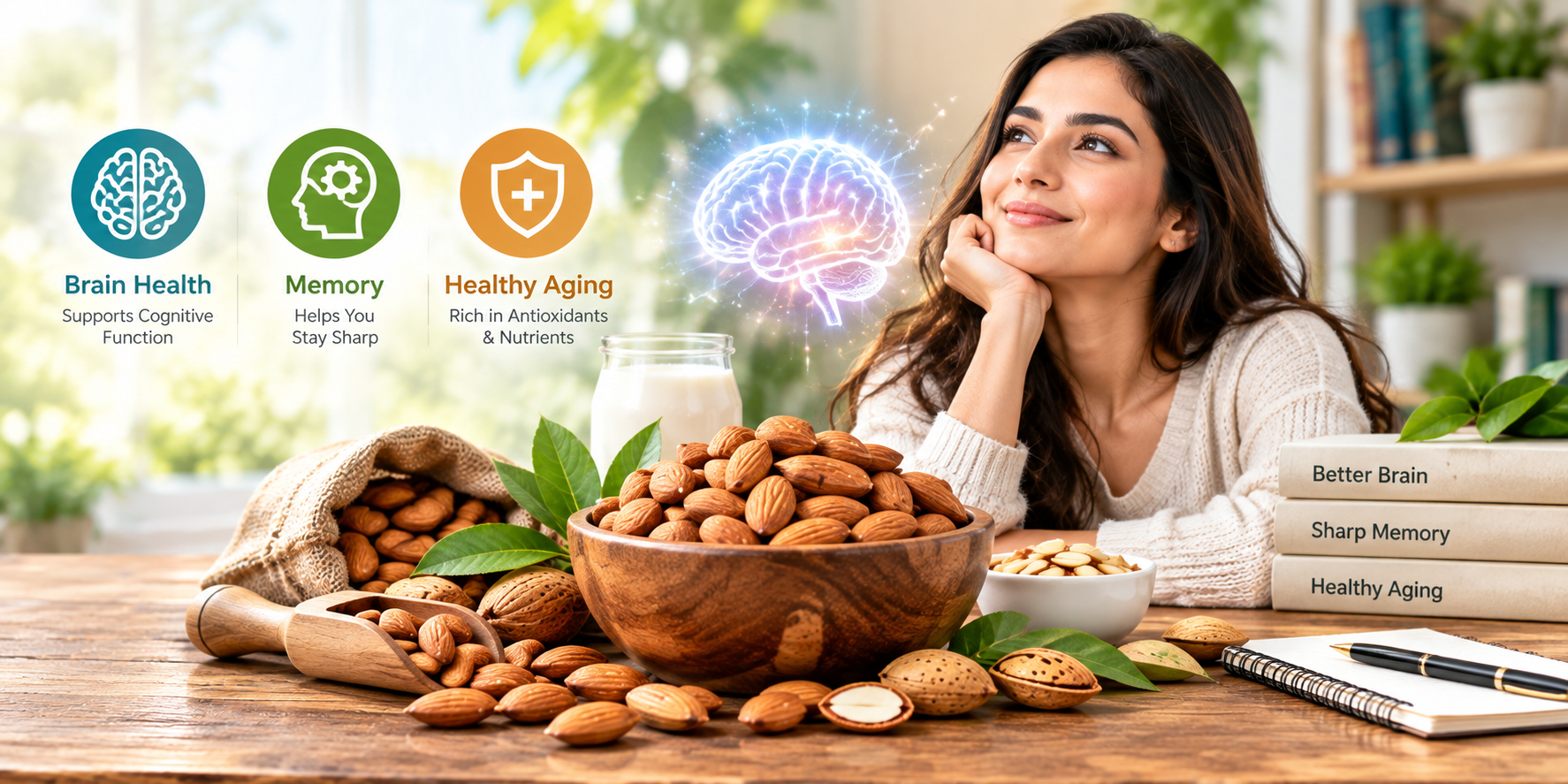
Almonds are popular nuts that provide healthy fats, vitamin E, protein, fiber, and several important minerals. These nutrients support overall health and may help protect the body from some effects of aging. Researchers have also studied how almonds and other nuts relate to brain health, memory, and cognitive function. The Almond Benefits for Brain health have attracted attention because almonds contain nutrients that support normal nerve function and help protect cells from oxidative damage. Eating almonds as part of a balanced diet can contribute to healthy aging. Understanding their nutritional value helps you make informed choices about portions, daily eating habits, and long-term wellness.
How Almonds Support Brain Health and Memory
The brain needs a steady supply of nutrients to maintain its structure and perform everyday tasks. Almonds provide several nutrients that support general health, including vitamin E, unsaturated fats, magnesium, and plant-based protein.
Vitamin E stands out because it acts as an antioxidant. Antioxidants help protect cells from oxidative stress, a process that can damage cells over time. The brain contains many fats and uses substantial energy, so researchers study the role of antioxidants in protecting brain cells. Almonds provide vitamin E, but scientists still need more research to determine whether eating almonds directly improves memory or prevents cognitive decline.
Healthy fats also contribute to the Almond Benefits for Brain health. Almonds contain mostly monounsaturated fats, which can support cardiovascular health when they replace some sources of saturated fat. Healthy blood vessels help deliver oxygen and nutrients throughout the body, including the brain. A balanced diet that supports heart health can also support long-term brain health.
Almonds contain magnesium, a mineral that supports normal nerve function, muscle function, and many chemical reactions in the body. The brain relies on communication between nerve cells, and magnesium plays a role in normal nervous system activity. Eating almonds can help you obtain magnesium through food, although almonds alone cannot meet every person’s nutritional needs.
Protein provides amino acids that the body uses to build and maintain tissues. Almonds offer plant-based protein that can contribute to a balanced breakfast or snack. Pairing almonds with foods such as fruit, oats, yogurt, or whole-grain bread can create a satisfying meal or snack with a variety of nutrients.
Memory depends on many factors, including sleep, physical activity, stress, age, and overall health. No single food can guarantee sharper memory or prevent dementia. Almonds can contribute useful nutrients, but people should combine a balanced diet with regular exercise, adequate sleep, social interaction, and activities that challenge the mind.
Researchers continue to investigate whether nut consumption can support cognitive performance over time. Some studies link healthy dietary patterns that include nuts with better health outcomes, but these findings do not prove that almonds alone produce those benefits. A varied diet remains a more reliable approach than relying on one food for brain health.
Almond Benefits for Healthy Aging and Daily Nutrition
Healthy aging involves protecting the heart, maintaining muscle strength, supporting digestion, and meeting the body’s changing nutritional needs. Almonds can fit into this approach because they provide fiber, unsaturated fats, vitamin E, and minerals in a convenient serving.
Fiber supports digestive health and can help people feel full after eating. A small handful of almonds may make a useful snack between meals. Their combination of fat, protein, and fiber can help promote satiety, which may support healthy eating habits when people manage their total calorie intake.
Almonds also support cardiovascular health when people include them in a balanced diet. Replacing snacks high in saturated fat or added sugar with a moderate portion of unsalted almonds can improve the overall quality of a person’s eating pattern. Cardiovascular health matters as people age because blood vessel health contributes to the delivery of oxygen and nutrients to the brain.
Portion size matters because almonds contain a substantial amount of calories in a small serving. A practical portion for many adults is about one ounce, or roughly 23 almonds. Individual needs vary according to activity, appetite, and overall diet. Eating large amounts can add more calories than expected.
Choose plain or unsalted almonds when possible. Flavored varieties may contain added salt, sugar, or oils. Almond butter can also provide useful nutrients, but check its ingredient list for added sugar and excess salt. People who monitor sodium intake may prefer products without added salt.
You can add almonds to oatmeal, yogurt, salads, homemade trail mix, or whole-grain meals. Chopped almonds can add texture to fruit bowls, while almond butter can accompany whole-grain toast. These options help you enjoy almonds without depending on supplements or special products.
People with nut allergies should avoid almonds and seek medical advice about safe alternatives. Anyone with difficulty chewing or swallowing may need a texture that suits their needs. Almonds also cannot replace medical treatment for memory problems, vitamin deficiencies, or age-related conditions.
A healthy aging plan should include a variety of vegetables, fruits, whole grains, legumes, nuts, and suitable protein sources. Regular physical activity, good sleep, social connection, and routine health checks also matter. Almonds can contribute to this pattern, but they work best alongside other healthy habits.
Conclusion: Make Almonds Part of a Brain-Healthy Lifestyle
The Almond Benefits for Brain health come from nutrients such as vitamin E, magnesium, fiber, protein, and unsaturated fats. These nutrients support overall wellness, while research has not established that almonds alone improve memory or prevent cognitive decline. A moderate portion of almonds can fit into a balanced diet and support healthy eating as you age. Choose unsalted varieties, watch portion sizes, and combine them with other nutritious foods. Visit DailyInfoRoom for more informative articles on nutrition, brain health, aging, and everyday wellness.