


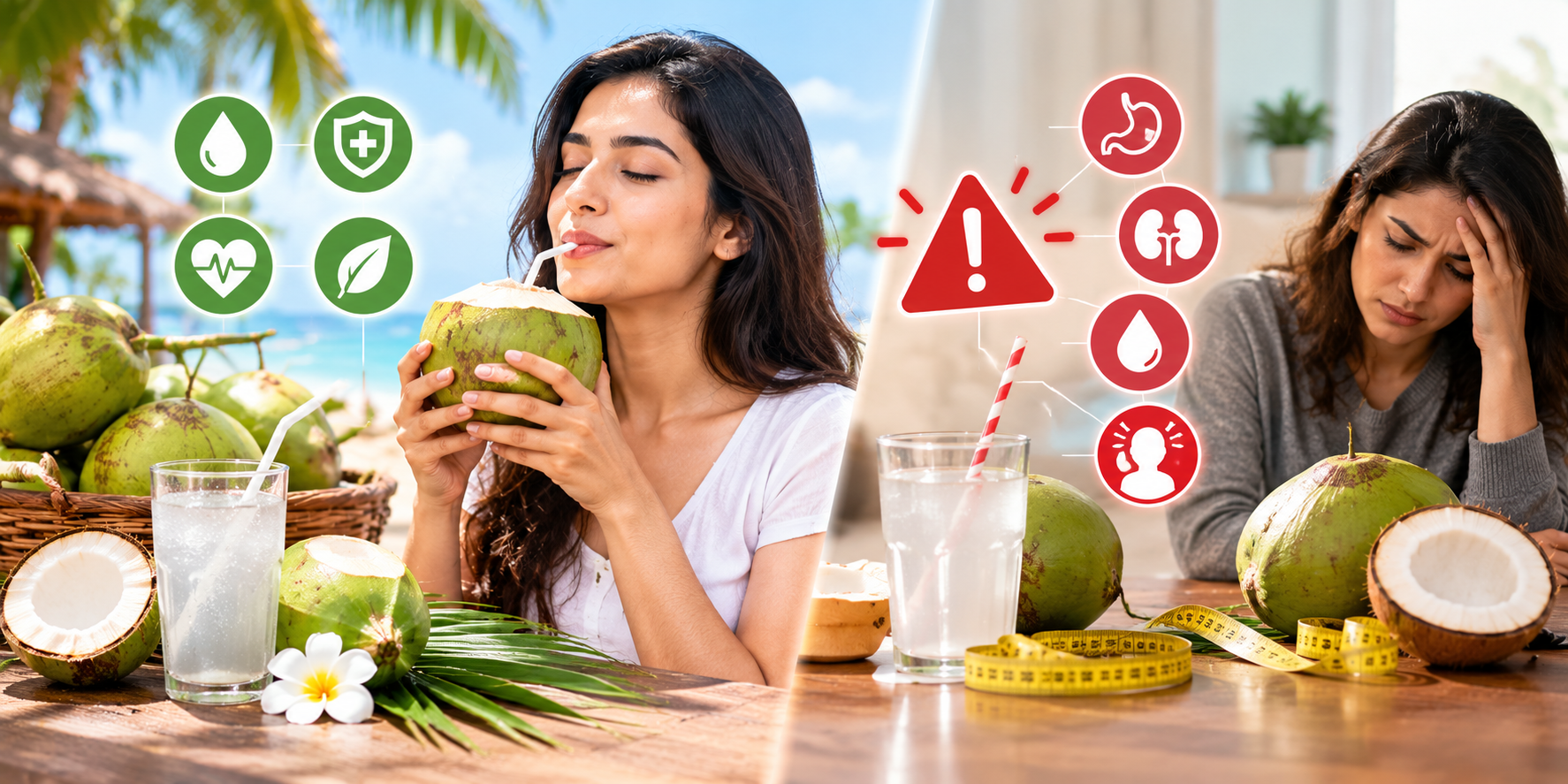
Coconut water has become a popular drink for people who want natural hydration and a refreshing alternative to sugary beverages. It contains water, potassium, and other minerals that support normal body functions. Many people enjoy it after exercise or during hot weather. Drinking coconut water in moderate amounts generally suits most healthy adults, but excessive consumption may cause problems for certain people. Kidney health, blood potassium levels, added sugar, and portion size all matter when deciding how much to drink. Understanding the benefits and possible risks of coconut water can help you make smarter choices and enjoy this tropical drink without overlooking your nutritional needs.
Health Benefits of Coconut Water and the Risks of Drinking Too Much
Coconut water contains electrolytes, including potassium, sodium, and magnesium. These minerals help regulate fluid balance and support normal muscle and nerve function. The drink can contribute to daily hydration, especially after light exercise or sweating in warm weather.
Unsweetened coconut water usually contains fewer calories than many soft drinks and sweetened juices. It can offer a refreshing option for people who want more variety in their daily drinks. Plain water remains an excellent choice for routine hydration, and coconut water does not provide a special advantage for everyone.
Potassium represents one of the main nutritional features of coconut water. This mineral supports normal heart rhythm, muscle contractions, and nerve signals. People with healthy kidneys can generally regulate potassium levels effectively through normal kidney function and dietary balance.
Drinking excessive amounts can create problems, especially for people with certain health conditions. Coconut water contains natural potassium, and large servings can add a substantial amount to daily intake. People with chronic kidney disease may struggle to remove excess potassium from their blood. High potassium levels can interfere with normal heart function and may cause serious complications.
Some people may also experience digestive discomfort after drinking large quantities. Bloating, stomach discomfort, or loose stools can occur in sensitive individuals. People with irritable bowel syndrome may notice digestive symptoms because coconut water contains fermentable carbohydrates that can trigger symptoms in some people.
Sugar intake deserves attention as well. Plain coconut water contains naturally occurring sugars, while some packaged products include added sugar or fruit juice. Drinking several bottles each day can increase your total calorie and carbohydrate intake. People managing diabetes or monitoring their blood sugar should check nutrition labels and consider serving sizes.
Coconut water also contains less sodium than many sports drinks. It may not replace the electrolytes lost during prolonged, intense exercise or heavy sweating as effectively as a properly formulated sports drink. People experiencing significant dehydration from vomiting or diarrhea should follow medical advice and use an appropriate oral rehydration solution when needed.
The main lesson is simple. Coconut water can fit into a balanced diet, but drinking more does not automatically provide greater health benefits. Your overall diet, activity level, kidney function, and medical needs should guide your choices.
How Much Coconut Water Should You Drink and Who Should Be Careful?
There is no single daily limit that suits everyone. Your appropriate intake depends on your health, diet, activity level, and the nutritional content of the product. Healthy adults can often enjoy a small glass as part of a balanced diet. An occasional serving may provide variety without adding excessive calories or sugar.
Read the product label before buying packaged coconut water. Choose unsweetened varieties with no added sugar when possible. Check the potassium, sodium, carbohydrate, and calorie content per serving. A large bottle may contain several servings, so drinking the entire container can provide more nutrients and calories than you expect.
People with chronic kidney disease, elevated blood potassium, or a prescribed low-potassium diet should consult a healthcare professional before drinking coconut water regularly. Certain medicines can also raise potassium levels. These include some medicines for high blood pressure and heart conditions, such as ACE inhibitors, ARBs, and potassium-sparing diuretics. A doctor or pharmacist can help determine whether coconut water fits safely into an individual treatment plan.
People with diabetes should account for its carbohydrate content. Unsweetened coconut water may fit some meal plans, but it still contributes natural sugar. Anyone with a fluid restriction for kidney or heart disease should also follow their clinician’s advice rather than assuming that a natural beverage always offers a safe choice.
Use coconut water as one part of your hydration routine rather than a replacement for plain water. Drink water throughout the day and adjust your fluid intake to your activity and environment. During routine daily activities, most healthy people do not need a special electrolyte drink.
Avoid treating coconut water as a cure for kidney problems, high blood pressure, or dehydration. It cannot replace prescribed treatment or professional medical advice. Seek medical attention if you experience symptoms of severe dehydration, persistent vomiting, or other concerning symptoms.
Conclusion: Enjoy Coconut Water Safely for Better Hydration
Coconut water can provide hydration and useful electrolytes, but excessive intake may increase potassium and sugar consumption or cause digestive discomfort. People with kidney disease, high potassium levels, diabetes, or certain medication requirements should take extra care. Choose unsweetened products, check serving sizes, and make plain water your main everyday drink. A balanced approach helps you enjoy coconut water without relying on exaggerated health claims. Visit DailyInfoRoom for more informative articles on nutrition, health, wellness, and healthy lifestyle choices.












