


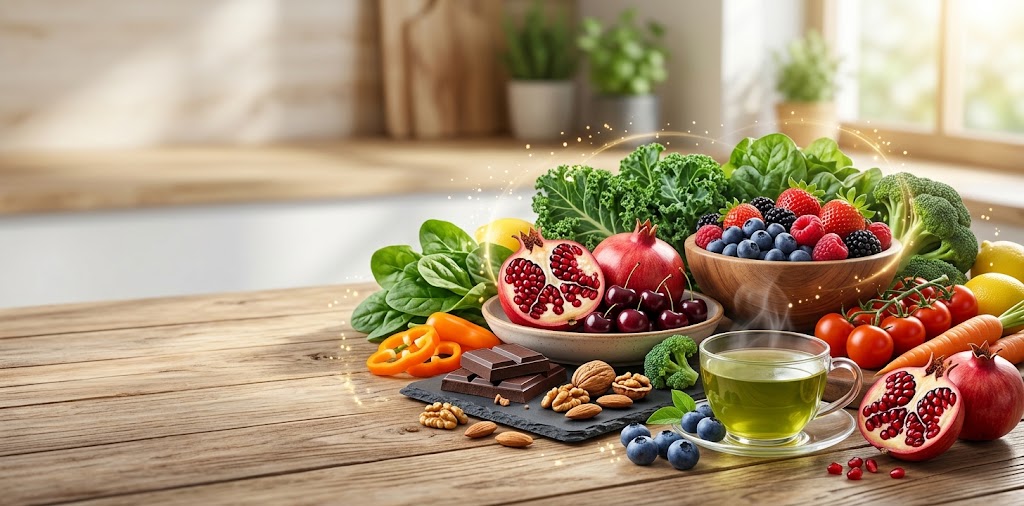
Good nutrition gives the body essential nutrients that support normal growth, energy, and daily functions. Antioxidants also play an important role because they help protect cells from oxidative stress caused by unstable molecules called free radicals. The body produces some antioxidants naturally, while many others come from foods. Antioxidant-Rich Foods include fruits, vegetables, nuts, seeds, beans, whole grains, and several beverages. These foods provide a wide range of vitamins, minerals, fiber, and plant compounds that can support overall health. No single food can provide every antioxidant the body needs. A varied diet gives the body different protective compounds and helps create healthier eating habits that people can maintain over time.
Best Antioxidant-Rich Foods to Add to Your Diet
Berries rank among the most popular Antioxidant-Rich Foods. Blueberries, strawberries, raspberries, and blackberries contain plant compounds such as anthocyanins and other polyphenols. These compounds contribute to the bright colors found in many berries. Berries also provide fiber and vitamin C. People can add fresh or frozen berries to oatmeal, yogurt, smoothies, or salads.
Dark leafy vegetables offer another strong choice. Spinach, kale, Swiss chard, and other leafy greens provide vitamins, minerals, carotenoids, and other plant compounds. These vegetables can support a nutrient-rich diet while adding fiber and volume to meals. People can include them in soups, salads, sandwiches, omelets, and cooked dishes.
Tomatoes contain lycopene, a carotenoid that gives tomatoes their red color. Cooking tomatoes can increase the availability of lycopene for the body. Tomato-based sauces, soups, and cooked tomatoes can add both flavor and nutrients to meals.
Nuts and seeds provide antioxidant compounds along with healthy fats, protein, fiber, vitamins, and minerals. Almonds, walnuts, pecans, sunflower seeds, and chia seeds can fit into many eating patterns. A small portion can make a useful snack or topping for yogurt, oatmeal, or salads.
Beans also deserve a place in a healthy diet. Black beans, kidney beans, lentils, and other legumes contain fiber, protein, minerals, and various plant compounds. Their combination of nutrients can make meals more filling and balanced.
Green tea contains plant compounds called catechins. These compounds contribute to the antioxidant activity associated with green tea. People can enjoy unsweetened green tea as an alternative to sugary beverages.
Dark chocolate with a high cocoa content contains flavanols and other plant compounds. People should choose products with less added sugar and control portions because chocolate still contains calories and fat.
Citrus fruits such as oranges, lemons, grapefruits, and mandarins provide vitamin C and various plant compounds. Whole fruit also supplies fiber, which makes it a better everyday choice than many fruit drinks that contain little fiber and added sugar.
How to Get More Antioxidants From Everyday Meals
A varied diet offers a practical way to increase antioxidant intake. People do not need expensive products or special supplements to include more antioxidant compounds in their meals. Simple changes can make a meaningful difference in overall diet quality.
Start by adding different colors to each meal. Red tomatoes, orange carrots, green spinach, purple berries, and yellow peppers contain different plant compounds. Eating a variety of colorful foods increases exposure to different nutrients and naturally occurring antioxidants.
Choose whole fruits instead of relying on juices. Whole fruits provide fiber along with vitamins and plant compounds. A piece of fruit also tends to create greater fullness than a sweetened beverage.
Include vegetables throughout the day. Add spinach to eggs, tomatoes to sandwiches, broccoli to lunch, and mixed vegetables to dinner. These small additions can increase vegetable intake without requiring major changes to familiar meals.
Use nuts and seeds in moderate portions. Their healthy fats and protein can complement fruits, vegetables, whole grains, and yogurt. Unsalted varieties can help people reduce unnecessary sodium intake.
Cooking methods can affect nutrients and plant compounds. Steaming, roasting, and quick cooking can help preserve many nutrients in vegetables. Excessive cooking can reduce certain heat-sensitive vitamins. People can combine raw and cooked vegetables to enjoy different textures and nutrient profiles.
Herbs and spices can also add plant compounds to meals. Cinnamon, ginger, turmeric, cloves, and other spices contain naturally occurring compounds that contribute to their antioxidant activity. People can use them to add flavor without depending heavily on salt or sugar.
People should also remember that antioxidant supplements do not automatically provide the same benefits as whole foods. Foods contain complex combinations of nutrients and plant compounds that work together within an overall diet. High doses of certain antioxidant supplements can also create health risks for some people.
A healthy eating pattern should include more than antioxidant intake. Adequate protein, fiber, healthy fats, vitamins, minerals, and fluids all support normal body functions. Regular physical activity, sufficient sleep, and other healthy habits also contribute to overall wellness.
Conclusion: Build Better Health With Colorful, Nutrient-Rich Foods
Antioxidant-Rich Foods can add important nutrients and beneficial plant compounds to everyday meals. Berries, leafy greens, tomatoes, nuts, seeds, beans, citrus fruits, green tea, and other plant foods offer different nutritional advantages. A varied diet provides a wider range of antioxidants than depending on one food or supplement. Simple habits such as eating colorful produce, choosing whole fruits, adding vegetables to meals, and controlling portions can support better nutrition. Focus on overall dietary quality rather than searching for a single miracle food. Visit DailyInfoRoom for more informative health, nutrition, wellness, and lifestyle content.












