


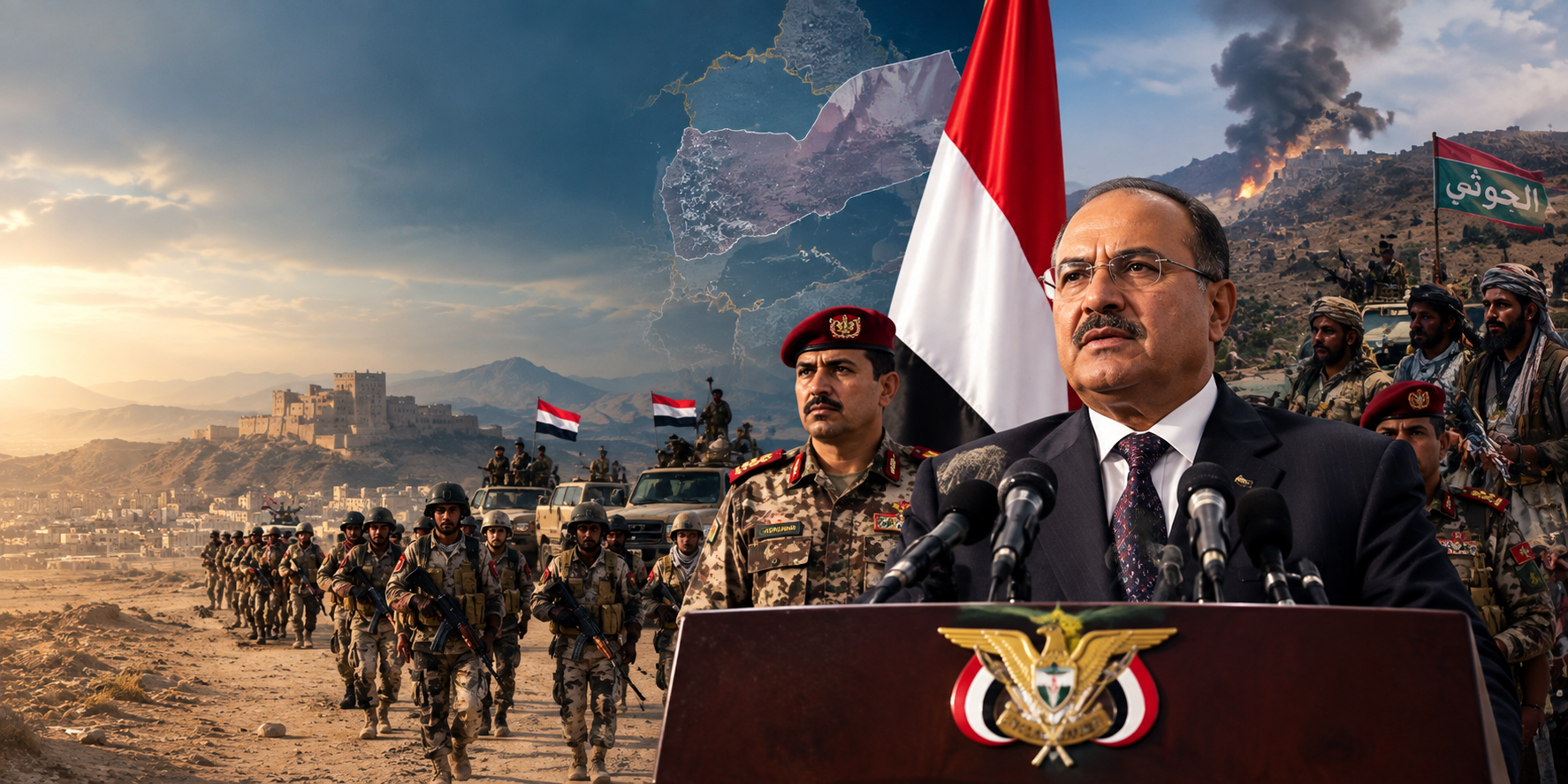
Yemen has entered another dangerous phase of its long running conflict after Rashad Al Alimi, chairman of Yemen’s Presidential Leadership Council, called for general mobilization against the Houthi movement. In a televised address on September 25, 2026, Al Alimi urged Yemenis to join government armed and security forces and support efforts to restore state institutions across the country. He also offered a future general amnesty to Houthi members who leave the group and stop fighting or supporting it. The announcement comes after recent Houthi advances along Yemen’s western coast and growing attacks connected to the wider regional conflict.
Why the Yemeni President Called for General Mobilization
The Yemeni President made his announcement as government forces face renewed military pressure from the Houthis. The Houthi movement seized Sanaa in 2014 and has maintained control over large parts of northern Yemen. Yemen’s internationally recognized government operates through the Presidential Leadership Council and receives major support from Saudi Arabia.
Al Alimi called on citizens to rally around the country’s armed and security forces. He asked people to join government forces through official channels and contribute to efforts that support the state. His speech focused on restoring government authority and protecting national institutions.
The timing reflects serious changes on the battlefield. Recent Houthi advances have placed greater pressure on government forces along the Red Sea coast. The group has moved toward areas close to the Bab al Mandeb Strait, one of the world’s most important maritime passages.
The Bab al Mandeb connects the Red Sea with the Gulf of Aden. Ships carrying commercial goods and energy supplies use routes through the region. Any prolonged fighting near the waterway can create risks for international shipping and increase concerns about regional security.
Saudi Arabia faces its own security concerns from the conflict. The Houthis have launched attacks toward Saudi territory during the latest escalation. Reuters reported that Saudi air defenses intercepted a ballistic missile aimed toward Khamis Mushait and drones headed toward Riyadh on September 26.
Al Alimi has sought greater international support during this period. Reuters reported that US President Donald Trump spoke with Al Alimi on September 20 about Houthi gains near the Bab al Mandeb Strait. Al Alimi sought US military assistance, but Trump did not commit to direct military support.
The government therefore faces pressure to strengthen its own forces while seeking assistance from regional partners.
Al Alimi’s mobilization message carries a military purpose, but his speech included another important element. He offered a path for Houthi fighters and supporters who decide to leave the movement.
Amnesty Offer and the Wider Humanitarian Crisis
The Yemeni President announced that Houthi fighters and affiliates who leave the group can receive a general amnesty under constitutional and legal procedures. The offer applies to people who stop fighting or working with the Houthi movement and choose to return to the side of the republic.
The amnesty policy gives Al Alimi a second approach alongside military mobilization. The government wants to increase its manpower while encouraging defections from the Houthi movement.
The government has described the initiative as a way to reduce bloodshed and support a return to state institutions. Al Alimi said the government wants to restore authority across Yemen, including Sanaa, which the Houthis have controlled since 2014.
The conflict creates serious risks for Yemeni civilians. Years of fighting have damaged infrastructure, disrupted education and weakened access to healthcare and food. The latest escalation has created additional displacement and humanitarian pressure.
The National reported that more than 133,000 people faced displacement during the renewed fighting. The publication cited United Nations concerns about child malnutrition, with around 2.2 million children under five projected to experience acute malnutrition in Yemen during 2026.
The humanitarian situation makes further military escalation especially concerning. More recruitment can increase the number of people exposed to fighting. New offensives can damage homes, schools, hospitals and transport networks.
The regional dimension adds another layer of uncertainty. Saudi Arabia supports the internationally recognized Yemeni government, while Iran has long supported the Houthis. Recent Houthi attacks involving Saudi territory have increased pressure on Riyadh.
Saudi Arabia, Türkiye and Pakistan have held military discussions during the current regional tensions. Their cooperation reflects broader concerns about security and the protection of Saudi territory and regional interests.
The situation around Yemen also affects international shipping. The Bab al Mandeb Strait sits near the conflict zone and connects major commercial routes. Continued fighting around the coast could create additional challenges for shipping companies and regional economies.
The Yemeni government now faces a difficult task. It must strengthen its military position, maintain relationships with regional partners and address the humanitarian consequences of renewed fighting. Al Alimi’s amnesty offer could create opportunities for some Houthi members to leave the conflict, but the government must implement any future pardon through clear legal procedures.
Conclusion: What the Mobilization Means for Yemen’s Conflict
The Yemeni President’s call for general mobilization marks a significant escalation in the government’s response to recent Houthi advances. Rashad Al Alimi wants Yemenis to support government forces and help restore state authority across the country. His offer of future amnesty gives Houthi members another option alongside continued military confrontation. The conflict still threatens civilians, regional security and important shipping routes near Bab al Mandeb. The coming weeks will show whether mobilization and diplomatic efforts can change the battlefield situation. Follow DailyInfoRoom for more informative coverage of Yemen, world affairs, politics and global security.












