


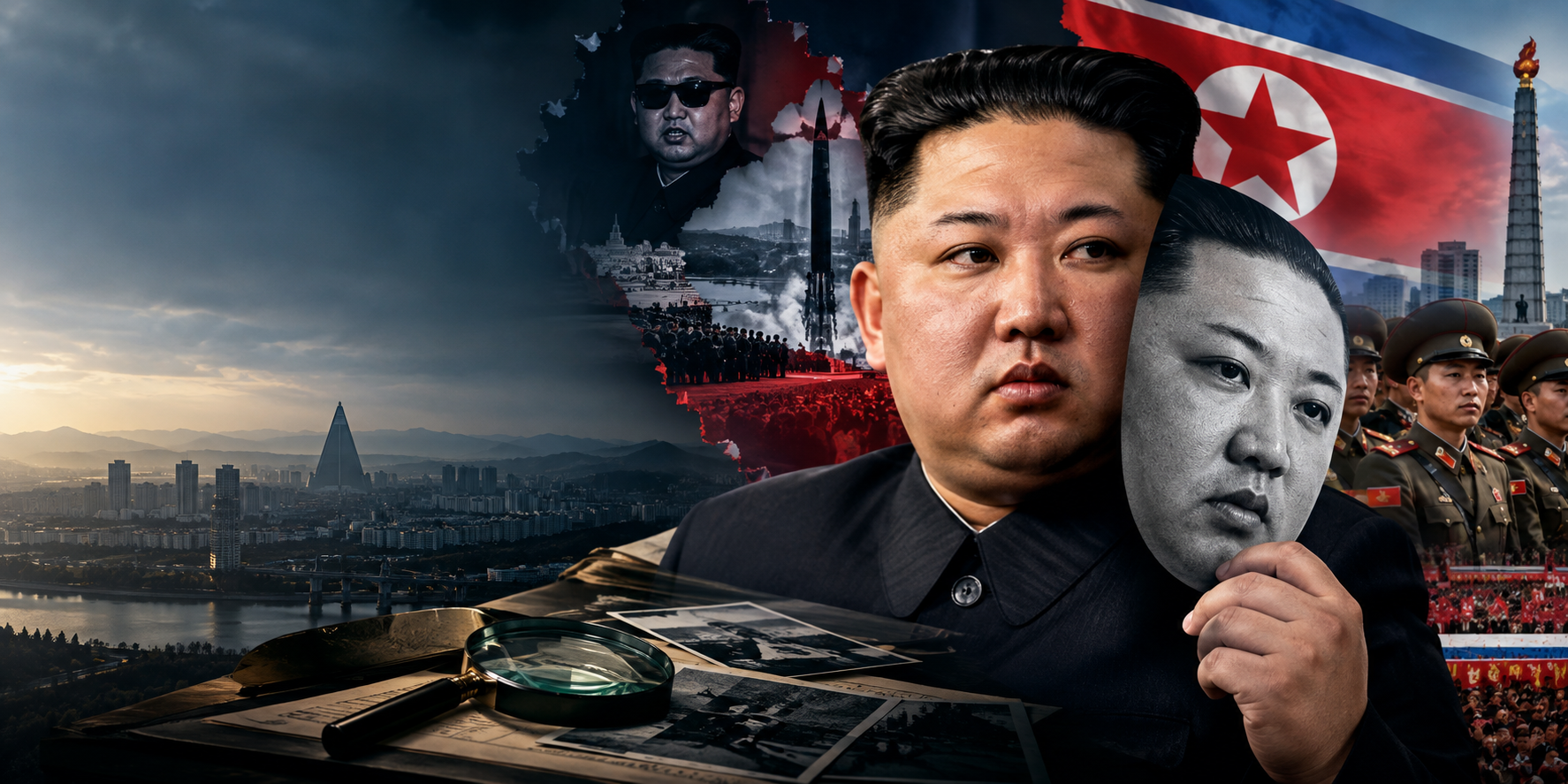
Kim Jong Un remains one of the most closely watched leaders in the world. He leads North Korea, a country that keeps tight control over information and limits outside access. These conditions create many unanswered questions about the country’s political system, military plans and daily life. Kim inherited power from his father, Kim Jong Il, in 2011 and later strengthened his control over the ruling Workers’ Party and state institutions. Recent developments show that his government continues to emphasize nuclear weapons, military modernization and national security. Understanding his background and leadership provides useful context for understanding North Korea and its role in East Asian security.
Kim Jong Un’s Rise to Power and Political Control
Kim Jong Un became North Korea’s supreme leader after the death of his father in December 2011. He belonged to the third generation of the Kim family to rule the country. His grandfather, Kim Il Sung, founded North Korea in 1948 and ruled until 1994. His father, Kim Jong Il, then governed the country until his death in 2011.
Kim Jong Un took power at a relatively young age. Early observers questioned how effectively he could manage the country’s powerful political, military and security institutions. He soon reshaped the leadership structure and strengthened the Workers’ Party as a central source of political authority.
North Korea operates under a highly centralized political system. The Kim family has maintained control over the country for decades. The ruling party, military and security organizations support the leadership structure. Analysts have documented repeated changes among senior officials during Kim Jong Un’s rule.
The government keeps strict control over information available to the public. North Korean authorities limit independent media and restrict access to outside information. This environment makes independent verification difficult and creates gaps between official statements and information gathered by foreign governments, researchers and journalists.
Kim’s leadership has focused heavily on national security. His government expanded North Korea’s nuclear and missile capabilities during his years in power. Researchers have described nuclear development as a central part of his strategic approach.
Kim has continued to promote military development in 2026. Reuters reported in September that he inspected major munitions factories and called for improvements in military capabilities. North Korean officials have continued to describe the country’s nuclear weapons as essential to national defense.
North Korea’s relationship with Russia has added another important dimension to Kim’s foreign policy. Recent reporting points to growing military cooperation between Pyongyang and Moscow. Analysts have linked this relationship to Russian support for North Korea and North Korean military assistance to Russia during the war in Ukraine.
Why Kim Jong Un Remains a Mysterious Global Figure
The mystery surrounding Kim Jong Un comes partly from North Korea’s limited transparency. Foreign governments cannot freely observe internal political discussions, military decision making or many aspects of economic activity. Researchers often need to examine satellite imagery, official statements, state media reports and information from people who leave the country.
This information environment creates uncertainty around many stories about North Korea. Reports about political changes can emerge before authorities confirm them. Foreign analysts sometimes interpret changes in official appearances, government appointments or military activity to understand developments inside Pyongyang.
Kim’s public image plays an important role in the country’s political system. North Korean state media regularly presents him at military facilities, factories, construction projects and public events. These appearances allow the government to communicate leadership messages to citizens and foreign audiences.
His government has recently placed attention on economic development and consumer activity as well. Reuters reported in September 2026 that North Korea has expanded state supported leisure facilities, shopping areas and other consumer attractions. The report linked these developments to efforts to encourage spending and economic activity under state control.
North Korea still faces major economic restrictions. International sanctions limit many forms of trade and financial activity. The country has maintained close relationships with China and increasingly with Russia while continuing to pursue its own economic and military priorities.
Kim’s relationship with South Korea remains another major issue. North Korean authorities have described South Korea as a hostile state and continue to strengthen military defenses. South Korean President Lee Jae Myung has recently promoted a proposal for dialogue and a possible freeze in North Korea’s nuclear development as an initial step toward reducing tensions.
The United States remains closely involved in the Korean Peninsula. Washington continues to coordinate with South Korea and Japan on regional security. Recent US statements have reaffirmed support for South Korea and emphasized the goal of addressing North Korea’s nuclear threat.
These developments show why Kim remains central to international security discussions. His decisions affect North Korea’s nuclear policy, relations with neighboring countries and military calculations involving the United States.
Conclusion: Understanding the Leader Behind North Korea’s Closed System
Kim Jong Un leads one of the world’s most secretive political systems. His rise continued a three generation Kim family rule that has shaped North Korea since its founding. His government has strengthened nuclear capabilities, modernized military forces and expanded strategic cooperation with Russia. Limited access to reliable information still makes many details about North Korean politics difficult to verify. Understanding confirmed developments and separating them from speculation gives readers a clearer picture of Kim’s leadership and North Korea’s global role. Follow DailyInfoRoom for more informative coverage of world affairs, politics, technology and international developments.












