


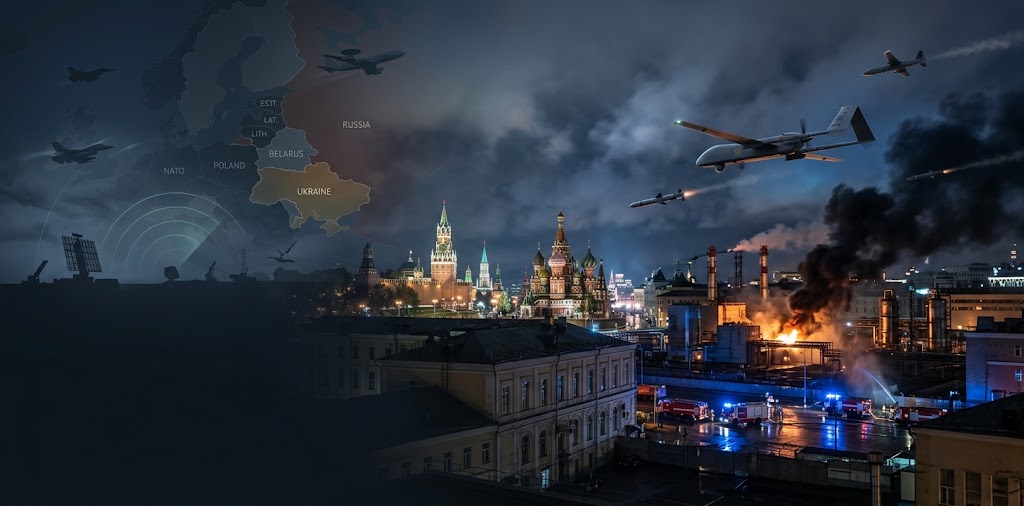
Ukraine launched one of its largest long range attacks against the Moscow region on September 20, 2026, during the final day of Russia’s parliamentary elections. Russian authorities reported more than 1,600 drones across Russia, including about 450 that headed toward Moscow. The attack damaged the Moscow oil refinery and residential property, while local authorities reported deaths and injuries. Ukrainian President Volodymyr Zelenskyy said Ukrainian forces used several domestically produced weapons, including the Pelican and Flamingo systems. The attack highlights Ukraine’s growing ability to develop and deploy long range weapons. It has raised fresh questions about Russia’s response and concerns about wider escalation involving NATO.
How Ukraine Is Expanding Its Long Range Strike Capability
Ukraine has increased its domestic weapons production during the war. Ukrainian defense companies have developed drones and long range systems that can reach targets deep inside Russian territory. The September 20 operation demonstrated this expanding capability through a large combination of drones and missiles.
Ukrainian officials said the operation included several domestically produced systems. Zelenskyy named weapons such as FP-1, RZ-100, MICH-2000, Palianytsia, Vendetta, Liutyi, Bars, Flamingo, Sichen, and Pelican.
The term DIY Missile can create confusion because it may suggest a simple homemade weapon. Ukraine’s long range systems involve organized defense production, engineering, testing, and military deployment. Analysts continue to study the exact capabilities of newer systems because Ukraine does not publicly disclose every technical detail.
The Pelican has attracted particular attention. Military analysts continue to debate whether the system qualifies as a tactical ballistic missile or a drone. Ukrainian defense officials have discussed new missile programs capable of striking targets at considerable distances.
The Moscow operation focused on strategic infrastructure. Ukrainian officials said their forces targeted oil and logistics facilities that support Russia’s military operations. Russian authorities reported damage to the Moscow oil refinery, while Reuters reported that the facility stopped crude processing after fires damaged major processing units.
The refinery holds economic importance for the Moscow region. It processes millions of tonnes of crude oil each year and produces gasoline, diesel, and other petroleum products. Damage to such infrastructure can create pressure on fuel supplies and increase repair requirements.
Russia has responded by strengthening air defenses around important cities and infrastructure. Russian authorities reported intercepting large numbers of drones during the attack. Some weapons still reached targets, showing the challenge that large coordinated attacks can create for defensive systems.
The attacks represent a wider change in modern warfare. Long range drones allow Ukraine to strike distant targets without sending large numbers of conventional aircraft into Russian airspace. Domestic production can help Ukraine maintain strike capabilities while reducing dependence on foreign weapons.
Could the Moscow Attack Lead to a NATO Conflict?
The Moscow attack has increased concerns about another round of escalation between Russia and Ukraine. Russia has already threatened stronger attacks against Ukrainian targets following the large strike. The Guardian reported that Russian officials indicated plans for intensified precision attacks against military targets in Kyiv.
The question about a possible NATO assault requires careful distinction between current evidence and speculation. The Moscow attack does not prove that Putin has decided to attack NATO.
European intelligence officials have expressed concerns about possible future Russian actions against NATO countries. Some officials have warned about potential provocations, sabotage, drone incidents, or limited military actions. Other European intelligence leaders have urged caution and questioned how quickly Russia could launch a major confrontation with NATO.
NATO members remain directly connected to the Ukraine conflict through military assistance, intelligence cooperation, sanctions, and diplomatic support. Russia has repeatedly criticized Western involvement and has accused NATO countries of supporting Ukraine against Russian interests.
The risk of escalation comes from several directions. Russian strikes can approach NATO territory, Ukrainian weapons can reach deep into Russia, and military incidents can create pressure for rapid responses. Countries such as Poland and the Baltic states closely monitor these developments because of their geographic position near Russia and Ukraine.
Recent incidents have already increased concern about conflict spillover. NATO Secretary General Mark Rutte called for continued support for Ukraine after Russian drone strikes near the Polish border.
A direct Russian attack on a NATO member would create a very different situation from the current Russia Ukraine war. NATO members operate under Article 5, which treats an armed attack against one member as an attack against all members, although each member decides what action it considers necessary.
The current evidence does not show a confirmed Russian decision to launch such an assault. Analysts continue to examine Russian military movements, political statements, intelligence assessments, and incidents around NATO territory.
The Moscow attacks can still influence Russia’s calculations. The Kremlin may increase pressure on Ukrainian infrastructure or military targets. Ukraine may continue developing longer range weapons to strike Russian military and economic assets. Each side may view deeper attacks as a way to influence the other side’s calculations.
Diplomatic efforts remain important because military escalation can produce consequences far beyond the battlefield. Fuel markets, transportation networks, civilian infrastructure, and European security can all feel the effects of continued attacks.
A New Phase in the Russia Ukraine Conflict
The September 2026 attacks demonstrate how rapidly military technology continues to change. Ukraine has expanded its domestic weapons industry and developed systems capable of reaching targets far beyond the traditional front line.
The Moscow attack does not establish that Russia plans an immediate assault on NATO. Current reporting instead shows a mixture of confirmed military escalation and growing concern among European officials about possible future Russian actions.
Russia and Ukraine now face strong incentives to protect strategic infrastructure while maintaining military pressure. Their decisions could influence the wider security environment across Europe.
Conclusion:
What the Moscow Attack Means for Regional Security
The latest attack on Moscow shows Ukraine’s growing ability to use domestically produced long range drones and missiles against important Russian targets. The operation damaged major infrastructure and created new pressure on the Kremlin. The use of newer systems has attracted attention from military analysts and highlighted Ukraine’s expanding defense industry. Claims about a future Russian assault on NATO require careful examination because current reports do not establish a confirmed decision by Putin to launch such an attack. Continued military escalation still creates serious risks for European security. Follow DailyInfoRoom for more informative coverage of global conflicts, defense developments, and international affairs.












