


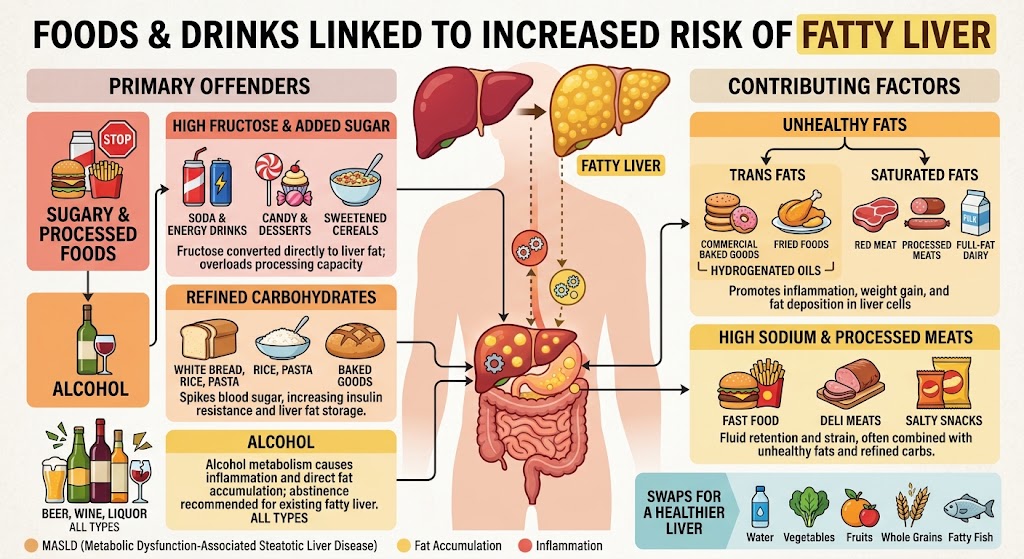
The Foods and Drinks you consume every day play a more direct role in fatty liver disease development than most people realize until a routine blood test or abdominal scan reveals a diagnosis that changes their relationship with everything on their plate. Non-alcoholic fatty liver disease now affects approximately 25% of the global adult population, making it the most common liver condition worldwide and one of the fastest-growing chronic disease categories across every developed economy. The liver processes every food and drink that enters your body, and consistently poor dietary choices force it to convert excess calories into fat deposits that accumulate within liver cells until inflammation, fibrosis, and eventually cirrhosis follow. Understanding exactly which Foods and Drinks accelerate this process gives you the knowledge to protect the organ that processes everything you consume.
The Foods and Drinks Most Directly Linked to Fatty Liver Development
Research across nutritional science, hepatology, and metabolic medicine consistently identifies specific Foods and Drinks categories that elevate fatty liver risk through documented biological mechanisms rather than general associations that leave room for doubt about causation.
Added Sugar and High-Fructose Corn Syrup
Sugar represents the most directly damaging dietary category among all Foods and Drinks that contribute to fatty liver disease, particularly in its fructose form that the liver metabolizes almost exclusively rather than distributing the metabolic load across multiple body systems the way glucose does. The liver converts excess fructose into triglycerides through a process called de novo lipogenesis that creates fat deposits within liver cells even in people who maintain normal body weight and consume appropriate total calories.
High-fructose corn syrup in soft drinks, fruit juices, packaged sauces, sweetened yogurts, and processed condiments delivers fructose at rates that overwhelm the liver’s processing capacity and drive fat accumulation independent of whether the individual appears metabolically healthy by standard body weight measures.
Research from the University of California San Francisco confirmed that reducing added sugar intake produces measurable improvements in liver fat deposits within just ten days of dietary change, demonstrating how directly the liver responds to changes in fructose load. Removing sugary Foods and Drinks from daily intake represents the single highest-impact dietary intervention for people with fatty liver disease or significant fatty liver risk factors.
Refined Carbohydrates and White Flour Products
White bread, white pasta, white rice, pastries, crackers, and packaged baked goods all qualify as Foods and Drinks categories that elevate fatty liver risk through rapid glucose release that spikes insulin levels and drives the fat storage signaling that insulin resistance accelerates over time. The glycemic load of these refined carbohydrates overwhelms insulin-mediated glucose disposal and redirects excess blood glucose toward liver fat synthesis rather than energy expenditure.
Regular consumption of refined carbohydrate Foods and Drinks replaces the fiber-rich whole grain alternatives that slow glucose absorption, support gut microbiome health, and reduce the postprandial insulin spikes that sustained fatty liver development requires. People who replace refined carbohydrates with whole grains, legumes, and vegetables consistently show lower liver fat measurements in imaging studies than matched populations consuming equivalent calorie levels from refined carbohydrate sources.
Saturated and Trans Fats From Processed Foods
Processed meats including bacon, sausage, hot dogs, salami, and pepperoni deliver high saturated fat loads alongside sodium and preservative compounds that liver function research links to elevated inflammatory markers in liver tissue. Regular consumption of these Foods and Drinks creates the chronic low-grade liver inflammation that precedes the fibrotic damage visible in advanced non-alcoholic fatty liver disease.
Trans fats from partially hydrogenated vegetable oils, present in many packaged cookies, crackers, margarine products, and fried fast foods, directly increase liver inflammation and fat deposition through mechanisms that researchers have documented in both human observational studies and controlled animal research. The Food and Drug Administration banned partially hydrogenated oils from American food products, but international markets and restaurant fryers continue using trans fat-containing oils that consumers encounter through dining out and imported processed Foods and Drinks.
Alcohol: The Direct Liver Toxin
Alcohol stands as the most directly hepatotoxic substance among all Foods and Drinks that humans consume regularly, with even moderate drinking accelerating the fatty liver progression that dietary factors drive more gradually. The liver metabolizes approximately 90% of consumed alcohol, generating acetaldehyde and free radicals during this process that damage liver cell membranes, impair mitochondrial function, and create the oxidative stress that inflammation and fibrosis follow.
Alcoholic fatty liver disease develops faster and progresses more severely than non-alcoholic fatty liver disease, and the combination of regular alcohol consumption with a high-sugar, high-fat diet creates synergistic liver damage that exceeds the harm either factor causes independently. People already diagnosed with fatty liver disease through dietary factors face dramatically accelerated disease progression if they continue consuming alcohol alongside the dietary Foods and Drinks that initiated their liver damage.
Hidden Foods and Drinks That Damage the Liver Without Most People Realizing
Beyond the obvious unhealthy categories, specific Foods and Drinks that many people consider neutral or even healthy contribute to fatty liver risk through mechanisms that popular nutritional messaging rarely communicates clearly enough to change consumption behavior effectively.
Fruit Juice: The Sugar Delivery System Without the Fiber
Fruit juice occupies one of the most misleading positions in popular nutrition understanding among all Foods and Drinks linked to fatty liver risk. A glass of orange juice delivers approximately 21 grams of sugar, comparable to a serving of regular soda, without the fiber that whole fruit contains to slow fructose absorption and reduce the liver processing burden.
People who replace whole fruit with fruit juice believing they consume equivalent nutrition increase their liver fructose load dramatically while losing the fiber and chewing-related satiety signals that whole fruit provides. Sports drinks, vitamin waters, and coconut waters also deliver hidden sugar loads that add to the cumulative fructose burden liver cells must process throughout the day.
Reading nutrition labels on all packaged Foods and Drinks specifically for added sugar content, and replacing any juice or sweetened beverage with water, whole fruit, or herbal tea reduces the liver fructose burden more effectively than any other single dietary substitution available to most people.
Energy Drinks and Caffeinated Sugar Beverages
Energy drinks combine high caffeine content with significant sugar loads and proprietary compound blends that liver function research associates with elevated liver enzyme levels in regular consumers. Case reports in hepatology journals document acute liver injury in previously healthy young adults who consumed energy drinks regularly over months, and population studies find associations between regular energy drink consumption and elevated ALT levels that signal liver cell damage.
These Foods and Drinks deliver their liver-damaging effects through multiple simultaneous pathways: high sugar content driving fat accumulation, excessive caffeine stressing liver metabolism, and proprietary compound combinations whose hepatic effects remain poorly characterized in the independent research literature that regulatory approval processes do not consistently require before market entry.
Fast Food and Ultra-Processed Combinations
Fast food meals combine multiple fatty liver risk factors simultaneously in single eating occasions: high refined carbohydrate loads from white bun bread, saturated fat from beef and fried preparation methods, high sodium that elevates blood pressure affecting liver blood flow, and often sweetened beverage accompaniments that add fructose to an already metabolically challenging meal.
Regular fast food consumption as a primary dietary pattern represents cumulative exposure to the full spectrum of Foods and Drinks that fatty liver research identifies as harmful, explaining why people who eat fast food multiple times weekly show significantly higher rates of fatty liver disease in population studies than matched cohorts who consume home-prepared whole food meals primarily.
Ultra-processed Foods and Drinks that share similar ingredient profiles with fast food items, including packaged snacks, frozen convenience meals, instant noodles, and processed cheese products, deliver comparable cumulative liver stress through the same mechanisms even when people consume them in home settings rather than restaurant environments.
Excessive Salt and Sodium-Rich Foods
High sodium intake creates liver damage risk through mechanisms beyond direct hepatotoxicity by elevating blood pressure that increases portal hypertension risk and by causing the cellular oxidative stress that high-sodium animal studies document consistently in liver tissue. Processed Foods and Drinks including canned soups, deli meats, pickled foods, soy sauce, and packaged seasoning products deliver sodium levels that kidney and liver function both struggle to manage when consumed across multiple daily meals.
Reducing sodium intake through replacing processed Foods and Drinks with fresh whole food alternatives reduces liver stress indirectly while simultaneously supporting the kidney function that determines how efficiently the body manages the fluid and mineral balance that liver health depends on as a secondary metabolic support system.
Conclusion:
The Foods and Drinks that drive fatty liver disease development leave clear biological fingerprints in liver enzyme measurements, imaging studies, and metabolic markers that clinicians use to track disease progression and dietary intervention responses. Added sugar delivers the highest direct harm through fructose-driven de novo lipogenesis. Refined carbohydrates sustain the insulin resistance cycle that fat accumulation requires. Alcohol accelerates inflammation and fibrosis beyond what dietary factors alone produce. Processed and ultra-processed Foods and Drinks combine multiple harmful mechanisms in single products that daily consumption cumulates into measurable liver damage over months and years. Identifying and replacing these Foods and Drinks with whole food alternatives represents the most evidence-based first step toward reversing early fatty liver disease naturally. For more evidence-based nutrition guides, liver health content, and practical dietary advice that genuinely protects your long-term wellbeing, visit DailyInfoRoom where the nutritional knowledge your liver needs finds the readers committed to acting on it.












