


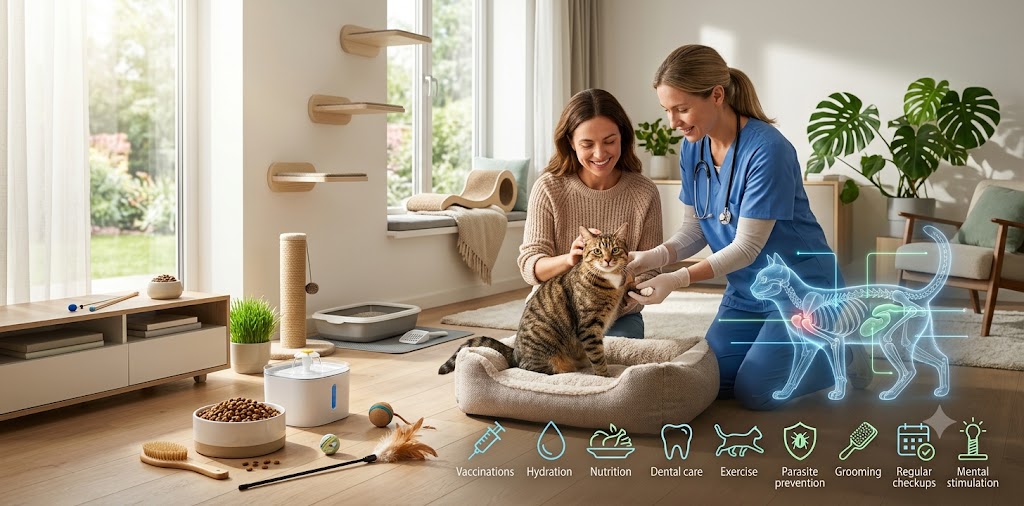
Cat Health sits at the center of every responsible pet owner’s priorities, yet millions of cat owners unknowingly miss critical warning signs, skip essential preventive care, and misunderstand the nutritional needs that keep felines thriving across their entire lifespan. Cats are masters at hiding illness and discomfort, an evolutionary survival trait that served their wild ancestors well but makes early disease detection genuinely challenging for even attentive owners. A cat that appears perfectly normal may already be managing significant pain or advancing illness internally. Understanding the fundamentals of Cat Health transforms you from a reactive owner who responds to visible symptoms into a proactive guardian who prevents problems before they escalate into expensive, painful, and potentially life-threatening conditions.
The Core Pillars of Cat Health Every Owner Must Prioritize
Cat Health depends on a combination of veterinary care, nutrition, environment, and behavioral understanding that work together to keep felines physically strong and emotionally content throughout their lives.
Nutrition Forms the Foundation of Cat Health
Cats are obligate carnivores, meaning their bodies require animal-derived protein to survive and function properly. Unlike dogs and humans, cats cannot synthesize certain essential nutrients including taurine, arachidonic acid, and vitamin A from plant sources. They must obtain these compounds directly from animal tissue in their diet.
Taurine deficiency in cats causes dilated cardiomyopathy, a serious heart condition, and retinal degeneration leading to blindness. Every high-quality commercial cat food formulated for complete nutrition includes adequate taurine levels. Homemade diets prepared without veterinary nutritionist guidance frequently create dangerous deficiencies that develop silently over months before symptoms appear.
Wet food contributes significantly to Cat Health by providing dietary moisture that supports kidney function and urinary tract health. Cats evolved in arid environments and developed low thirst drives relative to their hydration needs. Dry food alone rarely provides adequate moisture intake, and chronic mild dehydration contributes to the kidney disease that affects a substantial proportion of cats over ten years old.
Feed measured portions rather than free-feeding dry food throughout the day. Obesity represents one of the most widespread Cat Health problems in domestic feline populations, with overweight cats carrying significantly elevated risks of diabetes, arthritis, hepatic lipidosis, and reduced overall lifespan compared to cats maintained at healthy body weight.
Veterinary Preventive Care Protects Cat Health Proactively
Annual veterinary examinations represent the single most important Cat Health investment any owner makes. Cats age approximately four to five times faster than humans after reaching adulthood, meaning one calendar year represents a significant health status change window. Conditions that veterinarians catch at early examinations including kidney disease, hyperthyroidism, dental disease, heart conditions, and early-stage cancer respond dramatically better to treatment when identified early versus when owners present cats after visible symptoms have developed.
Core vaccinations protect against feline panleukopenia, feline herpesvirus, feline calicivirus, and rabies. Indoor cats still need core vaccinations because exposure routes exist through open windows, accidental escapes, and contact with shoes and clothing that carry pathogens from outdoor environments. Cats with outdoor access or exposure to other cats need additional vaccinations and more frequent parasite prevention protocols.
Dental disease affects over 70% of cats by age three according to the American Veterinary Dental College. Bacteria from periodontal infection enter the bloodstream and damage kidneys, heart valves, and liver tissue over time. Annual professional dental cleanings under anesthesia and regular home tooth brushing with feline-specific enzymatic toothpaste protect Cat Health far beyond the mouth itself.
Parasite Prevention Protects Cat Health Year-Round
Fleas, ticks, intestinal worms, and heartworm all threaten Cat Health in ways that extend beyond simple discomfort. Flea infestations cause flea allergy dermatitis, transmit tapeworms, and cause dangerous anemia in kittens through blood loss. Intestinal parasites including roundworms and hookworms impair nutrient absorption and cause severe illness in young cats and immunocompromised adults.
Monthly parasite prevention products prescribed by veterinarians provide reliable year-round protection against the most common feline parasite threats. Indoor cats still need parasite prevention because fleas enter homes on shoes, clothing, and other pets, and mosquitoes that transmit heartworm enter through window screens and open doors regularly.
Behavioral and Environmental Factors That Directly Shape Cat Health
Physical Cat Health cannot be separated from behavioral and psychological wellbeing. Stress, boredom, anxiety, and inadequate environmental enrichment drive a range of physical health problems in domestic cats that purely medical approaches cannot resolve without addressing the underlying behavioral drivers.
Environmental Enrichment Reduces Stress-Related Cat Health Problems
Domestic cats retain strong instinctual drives for hunting, climbing, territory monitoring, and scratching that indoor environments frequently fail to satisfy. Unmet behavioral needs create chronic low-level stress that suppresses immune function, contributes to feline idiopathic cystitis, drives overgrooming behaviors that cause skin lesions, and generates stress-related aggression between cats sharing household spaces.
Vertical space through cat trees, wall-mounted shelves, and window perches gives cats territory control and the elevated observation positions they instinctively seek. Scratching posts in multiple locations satisfy the territorial marking and nail maintenance behaviors that cats perform regardless of whether appropriate outlets exist. Providing inappropriate scratching outlets prevents cats from choosing furniture while meeting the behavioral need that Cat Health requires addressing rather than suppressing.
Interactive play sessions using wand toys that mimic prey movement satisfy hunting drive and provide the physical exercise that indoor cats rarely obtain spontaneously. Two ten to fifteen minute play sessions daily maintain healthy body weight, reduce stress hormones, strengthen the human-cat bond, and channel predatory energy toward appropriate outlets rather than household disruption or redirected aggression toward people and other pets.
Litter Box Management Affects Cat Health Directly
Litter box problems represent one of the most common Cat Health complaints veterinarians address, and most cases trace back to preventable management issues rather than true behavioral disorders. Cats require one litter box per cat plus one additional box in multiple locations throughout the household.
Cats instinctively avoid soiled litter boxes and frequently choose alternative elimination sites when boxes do not meet their cleanliness standards. Scooping boxes at least once daily and replacing litter completely every one to two weeks prevents the avoidance behaviors that owners misinterpret as spite or stubbornness but actually represent normal feline cleanliness preferences.
Covered litter boxes trap odors that cats find aversive even when owners cannot detect them. Unscented clumping litter suits most cats better than heavily scented varieties formulated to appeal to human preferences rather than feline sensory comfort. Any sudden change in litter box habits warrants veterinary evaluation because urinary tract infections, kidney disease, diabetes, and arthritis all manifest through litter box behavior changes before other symptoms appear.
Recognizing Early Signs of Cat Health Problems
Cats hide illness instinctively, making owner observation skills a critical Cat Health protection tool. Changes in appetite, water consumption, litter box output, grooming habits, activity level, vocalization patterns, and social behavior all signal potential health concerns before obvious physical symptoms develop.
Increased water consumption and urination together suggest diabetes, kidney disease, or hyperthyroidism. Weight loss despite maintained appetite points strongly toward hyperthyroidism, diabetes, or intestinal disease. Hiding behavior, reduced grooming, and decreased interaction with family members signal pain or systemic illness in cats that otherwise appear physically normal to casual observation.
Photograph your cat regularly to track subtle physical changes including coat quality, body condition score, and facial expression that happen gradually enough to escape day-to-day notice but become obvious when current photos compare to images from several months earlier. Present these observations to your veterinarian at annual examinations to provide the behavioral context that physical examination alone cannot capture.
Microchipping and Identification Protect Cat Health Through Safety
Microchipping provides permanent identification that reunites lost cats with owners when collar identification fails through collar loss or removal. Lost cats that reach shelters without identification face significantly higher euthanasia risk than microchipped cats whose owners shelters can contact directly.
Keeping microchip registration information current with your current address and phone number makes the technology work when it matters most. Collar identification with a current phone number provides immediate visible identification that members of the public can read without scanner access, making collar identification and microchipping complementary rather than alternative Cat Health safety measures.
Conclusion:
Cat Health demands consistent attention, proactive veterinary partnership, nutritional knowledge, and environmental understanding that evolves as your cat ages through different life stages. Providing species-appropriate nutrition, maintaining regular veterinary examinations, offering environmental enrichment that meets behavioral needs, managing parasites year-round, and developing the observational skills to detect early illness signs together create the comprehensive care foundation that keeps cats healthy, comfortable, and thriving across their entire lives. Cats give their owners companionship, comfort, and joy that research consistently shows improves human health outcomes. Returning that investment through excellent Cat Health practices honors the relationship both species benefit from. For more practical pet care guides, health information, and content that helps you provide the best possible care for the animals you love, visit DailyInfoRoom where every question about health and wellbeing finds a thoughtful, well-researched answer.












