


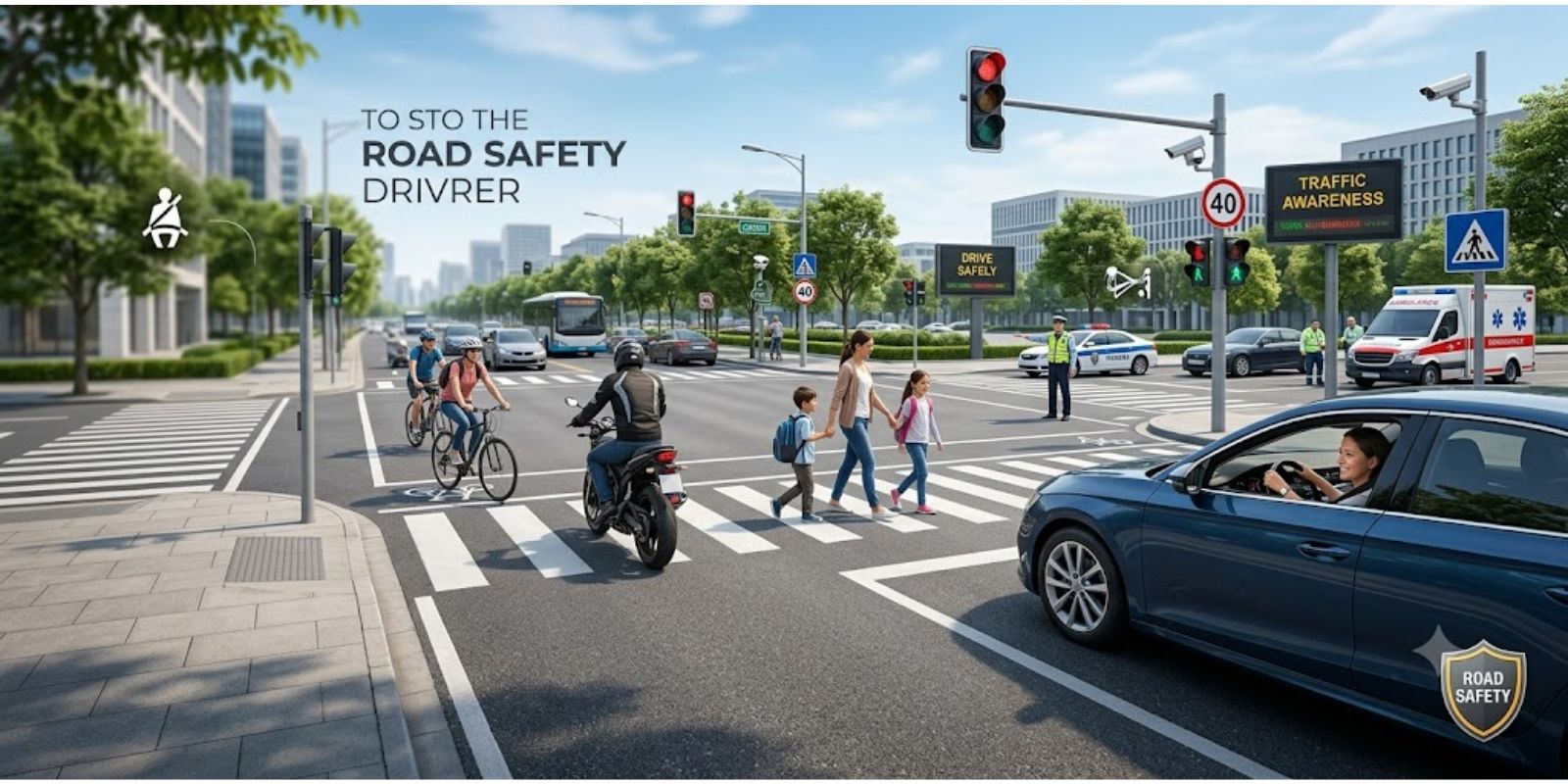
Traffic Rules exist for one fundamental reason: to keep every person on the road alive and safe. Every year, approximately 1.35 million people die in road accidents worldwide according to World Health Organization data. Millions more sustain serious injuries that change their lives permanently. Behind nearly every one of those tragedies sits a preventable cause: a driver who ignored a speed limit, ran a red light, used a phone while driving, or chose to drive under the influence of alcohol. Traffic Rules are not bureaucratic inconveniences designed to slow drivers down or generate fines. They represent decades of hard-won knowledge about human behavior, vehicle physics, and road design that saves lives every single day when people choose to follow them.
The Most Critical Traffic Rules Every Driver Must Follow Without Exception
Traffic Rules cover every aspect of road behavior from vehicle speed to lane discipline to pedestrian priority. Understanding why each rule exists makes following it a conscious choice rather than a reluctant obligation.
Speed Limits Save Lives at a Mathematical Level
Speed limits represent the most fundamental of all Traffic Rules because vehicle speed determines both the likelihood of a crash occurring and the severity of injuries when a crash happens. At 30 kilometers per hour, a vehicle striking a pedestrian kills approximately 10% of pedestrians. At 50 kilometers per hour, that fatality rate rises to 80%. At 80 kilometers per hour, survival becomes statistically unlikely.
Speed limits account for road design, pedestrian activity, visibility conditions, and the stopping distances that physics dictates for vehicles traveling at specific velocities. A driver who exceeds posted speed limits removes the safety margin that traffic engineers built into road design calculations. Every kilometer per hour above the speed limit increases both crash probability and injury severity in ways that driver skill cannot compensate for.
Red Lights and Stop Signs Prevent Intersection Collisions
Intersection crashes rank among the deadliest road accident categories globally because they involve vehicles traveling at right angles to each other with little warning and no time for defensive maneuvering. Traffic Rules governing red lights and stop signs coordinate the movement of vehicles through shared spaces where collision potential peaks.
Running a red light at a busy intersection combines two dangerous factors: the vehicle is moving fast enough to cause fatal impact force and the driver has zero warning time to brake or swerve before impact occurs. Studies from the Insurance Institute for Highway Safety confirm that red light running causes over 900 deaths annually in the United States alone. Traffic Rules at intersections save these lives every day when every driver at every intersection treats red lights as absolute stops rather than suggestions.
Lane Discipline Reduces Multi-Vehicle Crash Risk
Staying within designated lanes, signaling before changing lanes, and maintaining appropriate following distances represent Traffic Rules that prevent the chain-reaction crashes responsible for some of road accident fatalities. A driver who changes lanes without signaling removes other drivers’ ability to anticipate and react to the movement safely.
Following distance rules exist because human reaction time averages 1.5 seconds before a driver begins braking after recognizing a hazard ahead. At highway speeds, a vehicle travels over 40 meters during that reaction period before braking even begins. Traffic Rules prescribing minimum following distances give drivers the physical space that reaction time physics requires for safe stopping.
Seatbelt and Helmet Requirements Reduce Fatality Risk
Seatbelt use reduces the risk of death in a crash by 45% for front seat occupants and 60% for rear seat occupants according to Centers for Disease Control data. Motorcycle helmets reduce the risk of head injury by 69% and death by 42%. These Traffic Rules require no driving skill and cost nothing beyond the seconds required to buckle up before moving.
How Following Traffic Rules Creates a Culture of Road Safety That Protects Everyone
Individual compliance with Traffic Rules creates benefits that extend far beyond protecting any single driver. Every responsible road user contributes to a safety culture that makes roads safer for pedestrians, cyclists, children, and elderly people who carry the highest vulnerability in traffic environments.
Distracted Driving Kills More People Than Most Drivers Realize
Using a mobile phone while driving reduces reaction time to the equivalent of driving with a blood alcohol level of 0.08%, the legal limit in most countries. Traffic Rules prohibiting phone use while driving target a behavior that kills thousands of people annually across every country where smartphones have become ubiquitous.
A driver reading a text message at 90 kilometers per hour travels the length of a football field without looking at the road. Traffic Rules banning handheld device use during driving represent one of the most evidence-backed road safety interventions of the past two decades. Drivers who put their phones away before starting their vehicle protect themselves and every other road user sharing their journey.
Drunk and Drug-Impaired Driving Remains the Most Preventable Road Killer
Alcohol and drug impairment compromise every cognitive and physical function that safe driving requires: reaction time slows, judgment deteriorates, coordination weakens, and peripheral vision narrows. Traffic Rules setting blood alcohol concentration limits exist because research consistently establishes the precise impairment levels at which crash risk increases beyond acceptable thresholds.
Countries that enforce drink-driving Traffic Rules strictly through roadside testing, severe penalties, and consistent prosecution show dramatically lower alcohol-related road fatality rates than countries with weak enforcement cultures. The rule itself prevents nothing unless consistent enforcement makes compliance the only rational choice for drivers who understand the consequences of violation.
Teaching Children Traffic Rules Builds Lifelong Road Safety Culture
Children who learn Traffic Rules through school education, parental modeling, and community programs develop road safety instincts that stay with them through decades of driving. Road safety culture begins in childhood and strengthens through consistent exposure to adult role models who demonstrate compliance with Traffic Rules in everyday situations.
Parents who observe speed limits, stop at red lights, buckle seatbelts without prompting, and put phones away before driving teach their children that Traffic Rules represent the normal, expected behavior of responsible adults rather than constraints that confident drivers can selectively ignore.
Pedestrian and Cyclist Rights Deserve Equal Respect
Traffic Rules protect pedestrians and cyclists who share road environments but carry none of the physical protection that vehicle bodies provide to drivers. Yielding to pedestrians at crosswalks, giving cyclists adequate passing distance, and checking for cyclists before opening car doors in cycle lanes represent Traffic Rules that protect the most vulnerable road users from drivers who control significantly more power and mass.
Urban environments where drivers consistently respect pedestrian and cyclist Traffic Rules show dramatically lower vulnerable road user fatality rates than environments where these rules receive inconsistent enforcement or cultural acceptance.
Regular Vehicle Maintenance Supports Traffic Rule Compliance
Traffic Rules governing vehicle roadworthiness including tyre tread depth requirements, brake performance standards, and lighting functionality exist because mechanical failure contributes to a significant proportion of road crashes. A driver with bald tyres who follows every other Traffic Rule still creates dangerous road conditions because their vehicle cannot perform the emergency stopping maneuver that Traffic Rules assume all vehicles can execute.
Checking tyre pressure and tread depth monthly, maintaining brake systems according to manufacturer schedules, ensuring all lights function correctly, and addressing warning indicators promptly keeps vehicles in the condition that Traffic Rules assume when they calculate stopping distances and safety margins.
Conclusion:
Traffic Rules represent humanity’s collective response to the preventable tragedy of road accidents. Every rule carries the weight of research, engineering knowledge, and the painful lessons learned from crashes that killed real people in real communities. Following Traffic Rules consistently reduces your personal crash risk, protects your passengers, shields vulnerable road users from harm, and contributes to the road safety culture that every community deserves. Responsible driving is not a burden. It is the minimum standard of care that every person on a shared road owes to every other person using that road. Choose compliance every time you drive. For more road safety guides, health and lifestyle content, and informative topics that protect and improve your daily life, visit DailyInfoRoom where the knowledge that keeps you safe finds the readers who need it most.












