


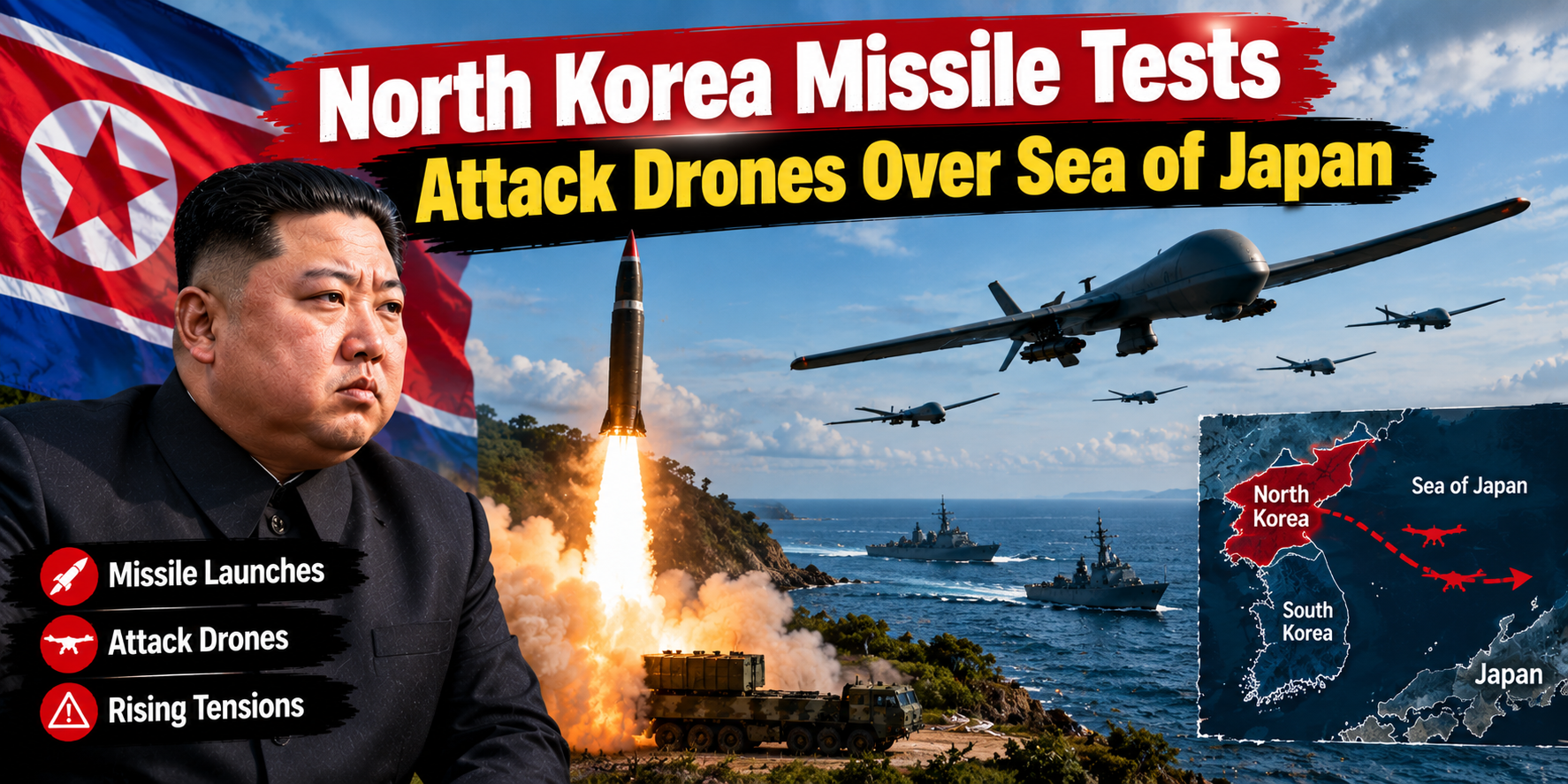
North Korea continues to develop its missile capabilities and military technology as tensions rise across East Asia. Its latest missile launches have drawn attention from South Korea, Japan, and the United States. On October 29, 2026, South Korea’s military reported that North Korea fired around 10 short-range ballistic missiles toward the eastern waters near the Korean Peninsula. The launches came during a period of growing tension between Pyongyang and Seoul. North Korea has also highlighted attack drones and other weapons during military exercises. These developments raise important questions about regional security, military readiness, and the possibility of further confrontations in the Sea of Japan, also known as the East Sea.
North Korea Missile Tests Raise Regional Security Concerns
North Korea launched around 10 short-range ballistic missiles from the Wonsan area on its eastern coast on October 29, according to South Korean military officials. The missiles traveled approximately 250 kilometers toward the sea. South Korea and the United States began analyzing information about the launches, while Japan monitored the situation.
Japan reported that the missiles appeared to fall outside its exclusive economic zone. This detail matters because the exclusive economic zone covers waters where a country holds specific rights over natural resources. A missile landing outside that zone does not remove wider concerns about regional security or the risks that military tests can create.
The latest launches followed other missile tests in October. North Korea tested an intermediate-range strategic missile on October 3, according to reports from Reuters. On October 14, North Korea also tested two types of submarine-launched strategic cruise missiles, according to its state media. These activities show that Pyongyang continues to test different weapons platforms and delivery systems.
North Korea often presents its weapons tests as efforts to strengthen national defense and respond to military activities by the United States and South Korea. Its leaders have criticized joint military exercises in the region. South Korea, Japan, and the United States view North Korea’s ballistic missile development as a serious security concern. United Nations Security Council resolutions prohibit North Korea from conducting ballistic missile launches.
The North Korea Missile program includes weapons with different ranges and possible military roles. Short-range missiles can threaten targets across the Korean Peninsula. Longer-range systems could create risks for a wider area. Analysts must examine each test carefully because missile type, flight distance, accuracy, and payload capacity affect the threat level.
Military officials have not announced that the October 29 launches caused damage to ships or aircraft. The available reports also do not establish that the latest missile barrage formed part of an imminent attack. Missile tests can increase tensions without proving that a country plans to begin a war.
Attack Drones and the Growing Military Competition in East Asia
Missiles are not the only weapons attracting attention in North Korea’s military development. Attack drones have become an important part of modern warfare because they can support surveillance, identify targets, and carry out strikes. Their relatively flexible use can create challenges for air defense systems, especially when military forces combine drones with missiles, artillery, and other weapons.
North Korea has featured attack drones among the systems discussed in reports about its military drills. A September report from Yonhap described a North Korean firepower exercise involving artillery and missile units, with systems that included attack drones, tactical cruise missiles, large-caliber multiple rocket launchers, and tactical ballistic missiles.
This reported exercise provides context for concerns about North Korea’s expanding military capabilities. It does not, by itself, confirm that attack drones flew over the Sea of Japan during the October 29 missile launches. Reliable reporting should distinguish between a confirmed event, an earlier weapons demonstration, and an unverified claim.
South Korea and Japan continue to monitor North Korean military activity. Both countries work with the United States to exchange information and assess potential threats. Their cooperation helps them identify missile launches, evaluate flight paths, and prepare responses to possible provocations.
The expanding use of drones also creates new challenges for regional defense planners. Military forces may need radar systems, electronic countermeasures, interception technology, and stronger intelligence networks to identify different types of threats. Governments must also consider the risk of miscalculation when military aircraft, drones, and missiles operate near sensitive areas.
Diplomacy remains important. Direct communication between the Korean governments could help reduce misunderstandings and lower the risk of accidental clashes. Military readiness can protect national security, but continued weapons demonstrations and hostile statements can make negotiations more difficult.
Conclusion: What North Korea’s Military Tests Mean for Regional Stability
North Korea’s recent missile launches and its reported work with attack drones highlight continuing security concerns across East Asia. South Korea, Japan, and the United States are monitoring these developments and strengthening information sharing. The confirmed missile tests deserve attention, but reports should not confuse separate military exercises or treat unverified drone activity as fact. The latest events do not prove that an attack is imminent. For clear updates on international security, military developments, and world affairs, visit DailyInfoRoom for more informative content.












