


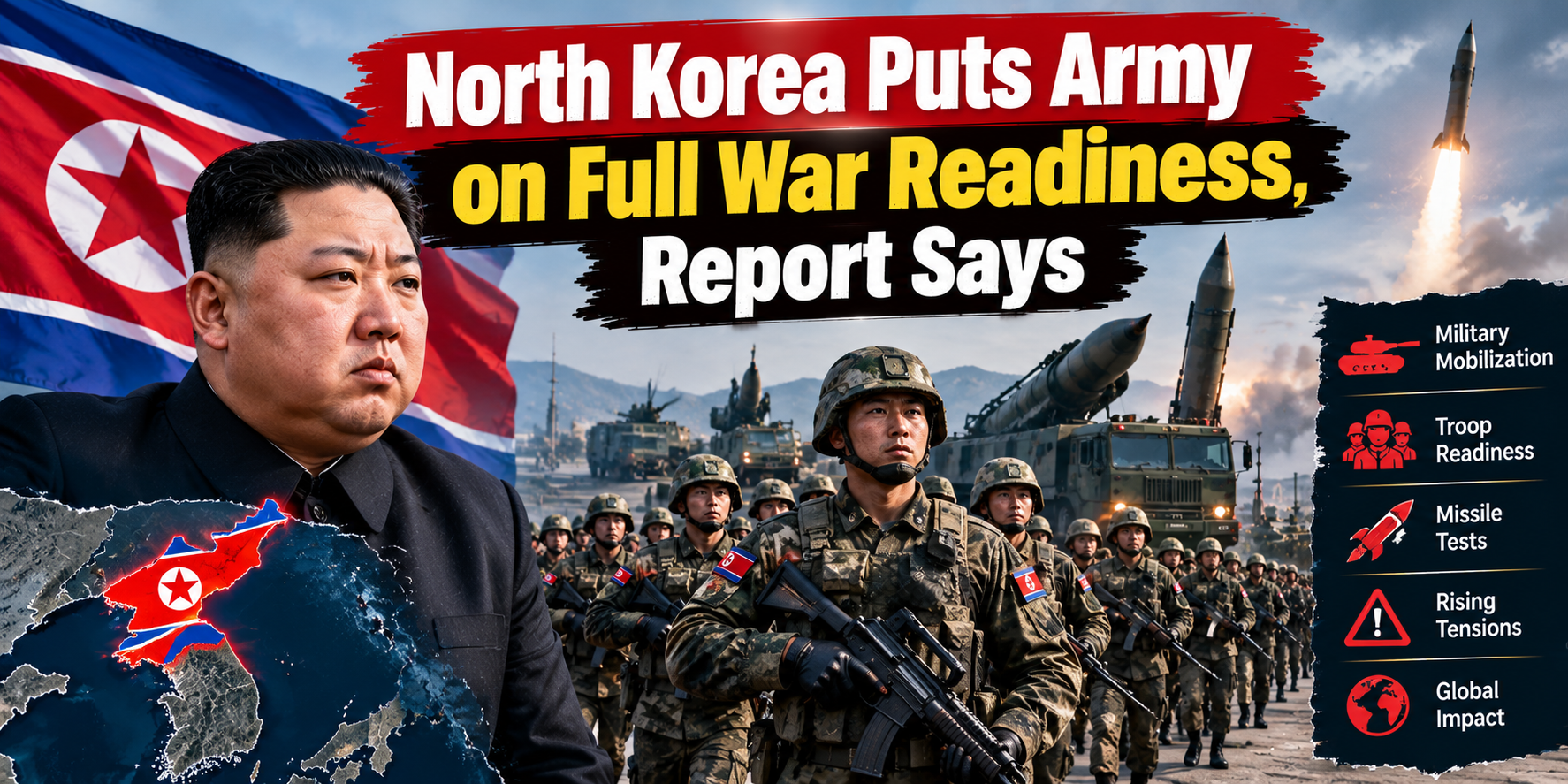
North Korea has renewed its strong military rhetoric as leader Kim Jong Un calls for tougher training and greater combat readiness across the armed forces. The statement has attracted international attention because tensions remain high between North Korea and South Korea, with the United States supporting Seoul through military cooperation. The phrase North Korea Puts Army on full war readiness reflects the seriousness of Kim’s message, but readers need to understand what officials actually announced. His latest remarks focused on preparing military units to fight if necessary. They do not, by themselves, confirm an immediate decision to launch a war or begin a nationwide mobilization.
What Kim Jong Un Said About North Korea’s Military Readiness
On October 27, 2026, Kim Jong Un met participants from the Third Meeting of Company Leaders of the Korean People’s Army in Pyongyang. North Korea’s state-run Korean Central News Agency reported his remarks the following day. Kim told company commanders that their main responsibility was to complete their units’ combat preparations and improve intensive training.
He called for stronger, more capable army units and emphasized discipline, political loyalty, and fighting efficiency. Company commanders lead basic military units, making their training and leadership important to the army’s overall readiness. Kim’s message placed responsibility on these officers to improve soldiers’ performance and prepare them for demanding combat situations.
Reuters reported that Kim also called for a military transformation that would strengthen conventional forces and support North Korea’s broader military modernization. The country’s leadership has continued to emphasize nuclear weapons and missile development alongside improvements to its conventional military capabilities. These priorities form part of Pyongyang’s long-term security strategy.
The latest statement does not establish that North Korea has declared a formal wartime emergency. Leaders often use strong military language to demand better training, demonstrate strength, and warn rival governments against actions they consider hostile. Analysts must examine troop movements, weapons deployments, official orders, and other evidence before concluding that a military statement signals an imminent attack.
North Korea also uses military announcements to reinforce domestic political messages. Kim’s government expects military commanders to demonstrate loyalty to the ruling Workers’ Party and present the armed forces as a central pillar of national security. Calls for stronger training can serve both military and political purposes.
Why Regional Tensions Matter for South Korea and the United States
The Korean Peninsula remains divided by one of the world’s most heavily militarized borders. North and South Korea have not signed a final peace treaty after the Korean War, which ended with an armistice in 1953. Both sides maintain substantial military forces, and disputes over weapons, border incidents, and military exercises continue to create tension.
Recent developments have added to those concerns. Reports say an explosion inside the Demilitarized Zone on September 21 injured three South Korean soldiers. Seoul blamed North Korea, while Pyongyang rejected the accusation. South Korea has called for renewed military communication to reduce the risk of further incidents.
North Korea’s latest readiness message comes against this tense background. Seoul and Washington regularly conduct joint military exercises to improve coordination and prepare their forces for possible threats. Pyongyang often criticizes these drills and describes them as hostile preparations. South Korea and the United States say their cooperation helps deter aggression and protect regional security.
These competing positions can create a cycle of military signaling. North Korea announces stronger readiness, South Korea and the United States emphasize deterrence, and Pyongyang responds with further warnings. Misunderstandings or an incident near the border could increase tensions even if neither side initially intends to start a wider conflict.
North Korea also possesses nuclear weapons and continues to develop missile capabilities. These weapons make the security situation especially serious because any major conflict could have consequences far beyond the peninsula. Regional governments and international observers therefore monitor changes in military activity closely.
The latest statement does not prove that a conflict will begin soon. A more reliable assessment would examine whether North Korea moves additional forces toward the border, changes its alert status, conducts unusual missile launches, or issues specific operational orders. Diplomatic signals and military communication also matter because they can help distinguish routine readiness statements from a genuine escalation.
Maintaining communication between the two Koreas and their international partners remains important. Clear messages, crisis hotlines, and careful responses to border incidents can reduce the chance that a misunderstanding turns into a military confrontation.
Conclusion: What North Korea’s War-Readiness Message Could Mean Next
North Korea Puts Army on full war readiness in the sense that Kim Jong Un has demanded stronger combat preparations and intensive training from military commanders. The statement highlights Pyongyang’s focus on military strength amid continuing regional tensions. It does not confirm an imminent attack or a new nationwide mobilization. The next signs to watch include unusual troop movements, missile activity, official military orders, and diplomatic responses from Seoul and Washington. Visit DailyInfoRoom for more informative coverage of global security, international politics, and the developments shaping world affairs.












