

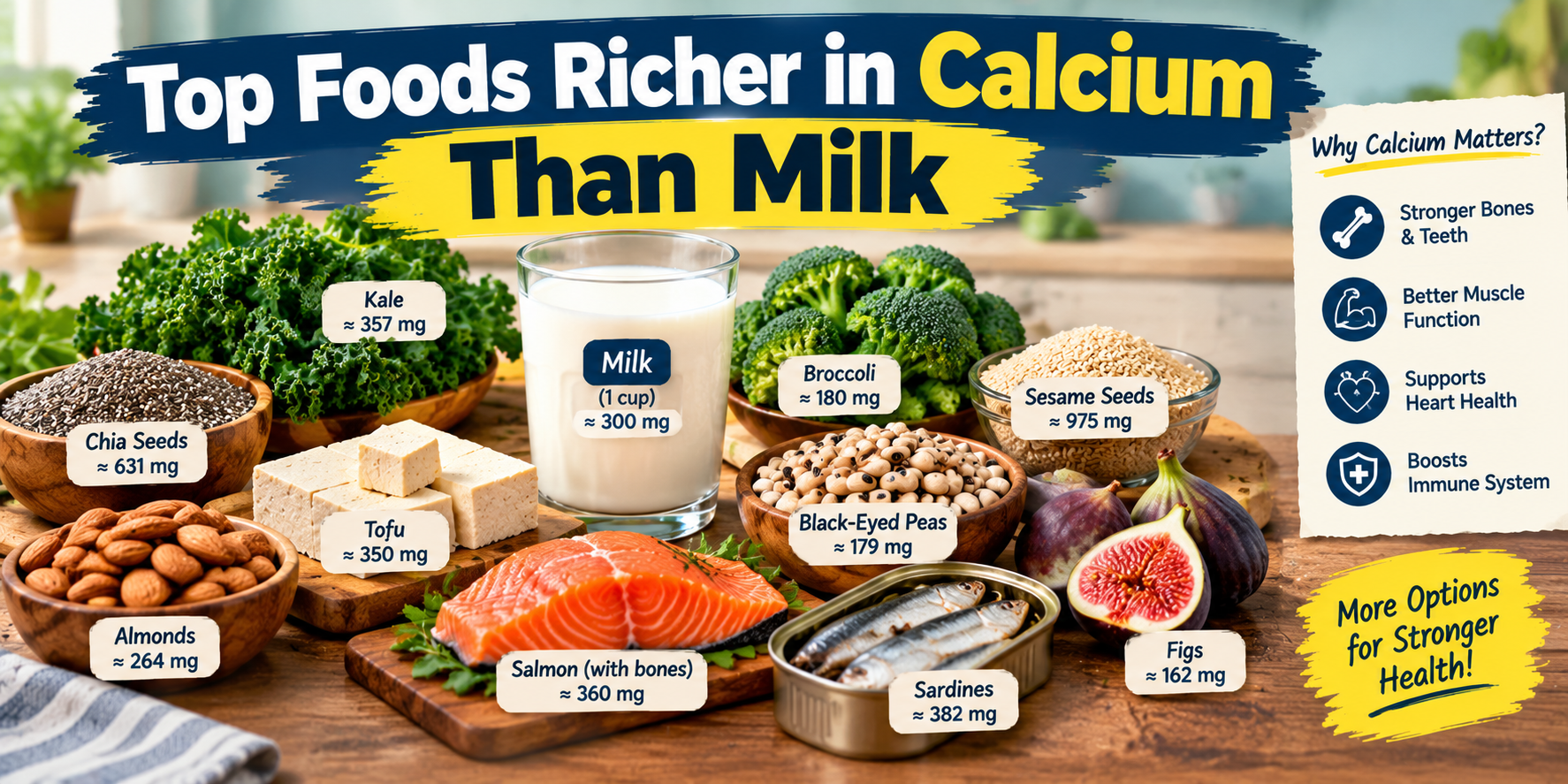
Calcium supports strong bones and teeth, muscle movement, nerve function, and normal blood clotting. Milk remains a familiar source of this mineral, but several everyday foods can provide as much calcium per serving or even more. The key is to compare realistic serving sizes and consider how well the body absorbs calcium from each food. This article explores Top Foods Richer in calcium than milk, including seeds, leafy greens, tofu, and fish with edible bones. It also explains how to add these foods to balanced meals, helping readers meet their calcium needs without relying on one food alone.
8 Foods That Can Provide More Calcium Than Milk
One cup of cow’s milk generally contains around 275–300 milligrams of calcium. Certain foods can match or exceed that amount in a typical serving. Exact values depend on the product, preparation method, and serving size.
1. Sardines with edible bones
Canned sardines rank among the strongest non-dairy calcium sources. A 3-ounce serving provides approximately 325 milligrams of calcium, which exceeds the amount in a cup of milk. The soft bones supply much of this mineral. Sardines also provide protein and omega-3 fatty acids. Add them to salads, sandwiches, or whole-grain toast for a nutritious meal.
2. Calcium-fortified orange juice
Some orange juice brands contain added calcium. A cup of fortified juice can provide around 300–350 milligrams, depending on the brand. Check the nutrition label because ordinary orange juice contains much less calcium. Choose an option with little or no added sugar, and enjoy a sensible serving as part of a balanced diet.
3. Plain yogurt
Certain yogurt varieties contain more calcium per serving than milk. An 8-ounce serving of plain, low-fat yogurt can provide around 300–400 milligrams. Yogurt also supplies protein, and some varieties contain live cultures. Choose plain yogurt when you want to limit added sugar. You can combine it with fruit, oats, or nuts for breakfast.
4. Sesame seeds
Sesame seeds offer a concentrated source of calcium. One ounce of whole sesame seeds can provide close to 280 milligrams, although the amount varies with the variety and preparation. Sprinkle sesame seeds over vegetables, stir them into salads, or use tahini, a sesame paste, in sauces and dips. Small portions can contribute useful amounts of calcium to everyday meals.
5. Calcium-set tofu
Tofu provides a useful option for people who avoid dairy or prefer plant-based meals. Manufacturers use calcium salts to set some varieties of tofu. Half a cup of firm tofu prepared with calcium sulfate can contain around 250 milligrams of calcium. Check the packaging because tofu made with different coagulants can contain much less. Add calcium-set tofu to soups, stir-fries, curries, or grain bowls.
6. Canned salmon with bones
Canned salmon that includes edible bones provides approximately 180 milligrams of calcium per 3-ounce serving. Its bones soften during processing, making them easy to eat. Salmon also provides protein and omega-3 fats. Use it in sandwiches, salads, or homemade fish patties for a practical way to increase your calcium intake.
7. Cooked collard greens
Collard greens provide calcium along with fiber, vitamin K, and other nutrients. Half a cup of cooked collard greens can contain around 175–180 milligrams. This amount falls below the calcium in a cup of milk, but the greens still make a valuable contribution. Add them to soups, stews, or vegetable dishes as part of a varied diet.
8. Calcium-fortified plant-based milk
Some fortified soy, almond, and other plant-based drinks provide around 300 milligrams of calcium per cup. Certain brands match the calcium content of cow’s milk, while others contain much less. Shake the carton if the label recommends it, since added calcium can settle during storage. Check whether the drink also contains vitamin D and choose an unsweetened variety when possible.
The U.S. National Institutes of Health lists sardines with bones, calcium-fortified beverages, yogurt, and calcium-set tofu among useful calcium sources.
How to Get More Calcium From Your Daily Diet
You do not need to eat large quantities of one food to support healthy bones. A varied diet can provide calcium alongside protein, vitamins, and other important nutrients. Combine calcium-rich foods with vegetables, fruits, whole grains, and suitable protein sources.
Your body also needs vitamin D to absorb calcium effectively. Eggs, oily fish, and fortified foods can help supply vitamin D. Your skin can produce vitamin D through sunlight exposure, although the amount depends on several factors.
Calcium content does not tell the whole story. Your body absorbs calcium differently from different foods. Spinach contains calcium, but its oxalates limit absorption. Kale, broccoli, and bok choy offer calcium that the body can absorb more readily.
Adults aged 19–50 generally need 1,000 milligrams of calcium daily. Women aged 51 and older and adults aged 71 and older generally need 1,200 milligrams. Individual needs can differ by age and life stage.
People who avoid dairy can meet their needs through suitable fortified drinks, calcium-set tofu, fish with edible bones, and selected vegetables. Read food labels carefully because calcium levels vary widely between brands. Speak with a healthcare professional if you have concerns about calcium intake or think you may need a supplement.
Conclusion : Build Stronger Bones With Smart Food Choices
The Top Foods Richer in calcium than milk include sardines with bones, certain yogurts, fortified orange juice, sesame seeds, and calcium-fortified drinks. Calcium-set tofu and leafy greens can also help you meet your daily needs. Serving size and calcium absorption matter as much as the number on a nutrition label. Choose a variety of nutritious foods and get enough vitamin D to support bone health. Visit DailyInfoRoom for more informative articles about nutrition, healthy living, food choices, and everyday wellness.