

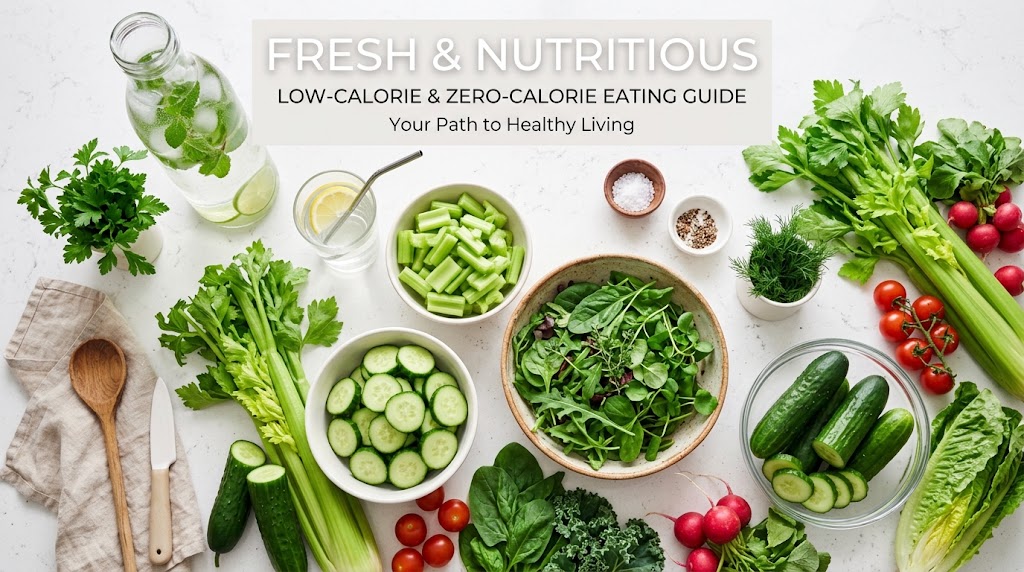
Healthy eating does not mean giving up satisfying meals or eating tiny portions. Some foods contain very few calories while providing water, fiber, vitamins, and minerals that support everyday health. These Nutritious Foods can help you build balanced meals, manage hunger, and enjoy a wider variety of flavors. Vegetables, certain fruits, and fresh herbs offer simple ways to add volume and nutrients to your plate without adding many calories. No food provides literally zero calories in every serving, but several options contain so few that people often describe them as nearly calorie-free. Understanding these choices can help you make healthier decisions without sacrificing taste or variety.
10 Foods That Contain Almost No Calories
Many low-calorie foods contain plenty of water, which contributes to their low energy content. Their nutritional value makes them useful additions to a balanced eating plan.
1. Cucumbers
Cucumbers contain around 15 calories per 100 grams. Their high water content makes them refreshing and easy to add to salads, sandwiches, and snacks. Eat cucumber slices with lemon juice or pair them with a yogurt-based dip for extra flavor.
2. Lettuce
Lettuce provides roughly 15 calories per 100 grams, depending on the variety. It adds crunch and volume to salads, wraps, and sandwiches. Romaine lettuce also supplies vitamin K and some folate. Combine it with tomatoes, cucumbers, beans, or lean protein to create a more balanced meal.
3. Celery
Celery contains approximately 14 to 16 calories per 100 grams. Its crisp texture makes it a convenient snack between meals. Add chopped celery to soups, salads, or vegetable dishes. Pair it with a small amount of hummus or peanut butter if you want a more filling snack.
4. Zucchini
Zucchini contains about 17 calories per 100 grams. You can grill, roast, steam, or sauté it with a little oil. Use thin zucchini strips as an alternative to some pasta in your favorite dishes. Its mild flavor works well with herbs, garlic, and other vegetables.
5. Radishes
Radishes provide roughly 16 calories per 100 grams. Their peppery taste adds flavor and crunch to salads, sandwiches, and vegetable plates. They also supply vitamin C. Slice them thinly or enjoy them with a light dip.
6. Tomatoes
Tomatoes contain around 18 calories per 100 grams. They provide vitamin C, potassium, and lycopene, a plant compound with antioxidant properties. Add fresh tomatoes to salads, sandwiches, or homemade salsa. Cooking tomatoes with a modest amount of oil can help your body absorb lycopene.
7. Spinach
Raw spinach contains approximately 23 calories per 100 grams. It supplies folate, vitamin K, and other important nutrients. Add spinach to salads, omelets, soups, or smoothies. A cooked serving takes up less space than raw leaves, so its calories per cup may differ.
8. Mushrooms
Many common mushrooms contain about 20 to 35 calories per 100 grams, depending on the type. They provide B vitamins and useful minerals. Grill them, add them to soups, or use them in stir-fries. Cooking methods and added oils can increase the final calorie count.
9. Watermelon
Watermelon contains about 30 calories per 100 grams. Its water content makes it a refreshing snack, especially during hot weather. Enjoy fresh slices or combine watermelon with mint for a simple fruit salad. Keep portions appropriate for your appetite and dietary needs.
10. Strawberries
Strawberries contain around 32 calories per 100 grams. They provide vitamin C, fiber, and beneficial plant compounds. Add them to plain yogurt, oatmeal, or a fruit bowl. Choose fresh or frozen strawberries without added sugar for a simple, nutrient-rich option.
These Nutritious Foods can make meals more varied and satisfying. Calorie values represent approximate amounts and may change with preparation, serving size, and the specific variety.
How to Add Low-Calorie Foods to a Balanced Diet
Low-calorie foods can support healthy eating when they complement meals that provide enough energy, protein, healthy fats, and essential nutrients. You do not need to build your entire diet around vegetables or fruits alone.
Start meals with vegetables. Add lettuce, cucumber, tomatoes, or spinach to lunch and dinner. Their water and fiber content can help you feel satisfied while increasing your intake of plant foods.
Choose fresh snacks. Keep washed strawberries, watermelon, cucumber slices, or celery ready in the refrigerator. Easy access makes it simpler to choose nutritious snacks when hunger strikes.
Use herbs and spices for flavor. Fresh mint, coriander, parsley, black pepper, and other herbs can improve taste without adding many calories in typical portions. Lemon juice and vinegar can also add brightness to salads.
Pay attention to cooking methods. Steaming, grilling, and roasting with modest amounts of oil help preserve the low-calorie nature of many vegetables. Deep-frying, heavy dressings, butter, and creamy sauces can substantially increase the calorie content.
Build complete meals. Pair vegetables with protein sources such as eggs, beans, fish, chicken, or tofu. Include whole grains or other suitable carbohydrate sources and some healthy fats. This approach helps your body receive the nutrients it needs.
Avoid extreme calorie restriction. Your body needs enough energy to support movement, concentration, temperature regulation, and other essential functions. Eating only very low-calorie foods may leave nutritional gaps and cause fatigue. If you want to lose weight, choose a sustainable eating pattern that suits your health needs.
Conclusion: Enjoy More Nutrition Without Excess Calories
Foods that contain almost no calories can help you add variety, hydration, and valuable nutrients to your daily meals. Cucumbers, lettuce, celery, zucchini, tomatoes, spinach, and berries offer practical choices for snacks, salads, and balanced dishes. Focus on variety, sensible portions, and healthy preparation methods instead of chasing zero-calorie foods. Combine these options with adequate protein, whole grains, and healthy fats to meet your nutritional needs. Visit DailyInfoRoom for more informative articles on nutritious foods, healthy eating, and everyday wellness.